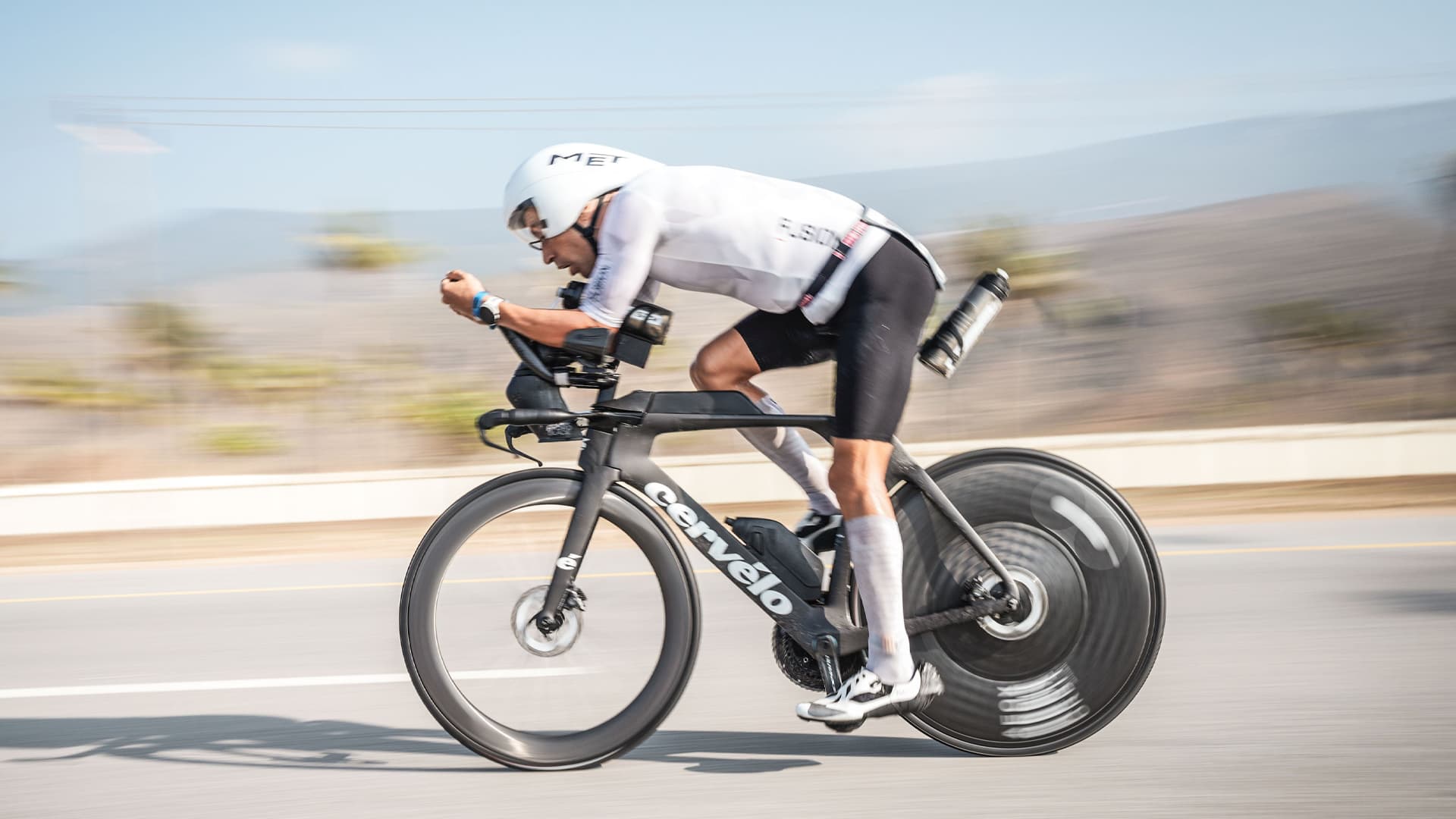
Flat and rolling bike · Run gain up to 241 m · Fast profile
Difficulty
6.5 / 10
While the terrain is flat and physically fast, the high humidity, 31°C midday heat, and coastal winds elevate the overall environmental demand.
There's still hope!
Only 1 week to go — but it's not too late.
The ideal build for this course is 16 weeks, and you have 1. We'll compress the essentials into your remaining time, prioritizing the demands that matter most on this course to get you to the finish line.
A calm and protected swim through the turquoise saltwater channels of the Hawana Lagoons, finishing directly in the marina. Because it is a sheltered lagoon, you will experience virtually no ocean swells, though slight wind drift is possible.
02
Bike
The Highway to Mirbat
Salalah to Mirbat Coastal Highway
DISTANCE
90.1 km
FORMAT
Out-and-back
ELEVATION
426 m
WIND
4.1 m/s South
SURFACE
High-quality asphalt
A flat, rolling, and fast out-and-back coastal highway course stretching along the Indian Ocean. While designed for speed, you will face rising morning heat and variable crosswinds, tailwinds, and headwinds.
03
Run
The Resort Loops
Hawana Salalah Resort Streets
DISTANCE
21.1 km
LOOPS
3 loops
ELEVATION
241 m
SHADE
Minimal
PEAK TEMP
31°C
A flat, fast three-loop course winding through resort streets, paved paths, and alleys. With minimal shade and midday temperatures reaching 31°C, this final leg is a pure test of thermal management and pacing.
03·AVG beginners' Training Timeline
From zero to the finish line
16 weeks
This 16-week progression systematically prepares you for the specific demands of Salalah. We focus initially on building robust aerobic capacity, transition to developing sustained power against coastal headwinds, and finish with intensive thermal-tolerance and hydration practice to conquer the intense 31°C midday run.
Today · WK 0Race Day
WK 1–5
Aerobic Base & Heat Prep
Build a strong aerobic engine and initiate early metabolic efficiency training.
WK 6–10
Strength & Wind Resilience
Develop sustained flat-land power to counter coastal highway winds.
WK 11–14
Race-Specific Thermal Build
Integrate heat-tolerance training, high sodium/hydration protocols, and brick runs.
WK 15–16
Taper & Strategy Polish
Reduce training volume to shed fatigue while locking in your target race pacing.
Adapts to your fitness, schedule & recovery every week.
Temperatures climb from 23°C to 31°C by midday alongside high coastal humidity. Actively utilize aid stations for ice and cold water to douse your head and body, keeping your core temperature down on the highly exposed run course.
Fuel & hydration
Target 90g of carbohydrates, 1000mg of sodium, and 800ml of fluids per hour to combat the high sweat rate in these tropical conditions. Begin your aggressive hydration strategy early on the bike to avoid starting the run dehydrated.
Pacing
Avoid over-exerting yourself on the flat, tempting bike highway, especially when fighting the 4.1 m/s southern crosswinds. Save your energy for the flat but brutally hot three-loop run where pacing errors will be heavily penalized by the midday sun.
Gear & logistics
Fly into Salalah International Airport, a 30-minute drive away, and book lodging directly inside the Hawana Salalah resort for walking access to the venue. Use deep-section wheels cautiously if sensitive to crosswinds, and opt for a high-ventilation helmet and white, UV-protective race apparel.
Frequently Asked Questions
What is the water temperature and wetsuit rule for the IRONMAN 70.3 Dhofar swim?
The water temperature in the tranquil Hawana Lagoons averages around 27°C (80°F), which means this is a non-wetsuit swim for age-group athletes. You will enjoy a self-seeded rolling start in calm, protected saltwater channels with virtually no ocean swells, though you may feel a very slight drift from the coastal winds.
How hard is the IRONMAN 70.3 Dhofar bike course?
Physically, the 90.1 km bike course is flat, rolling, and designed for high speeds, featuring a total elevation gain of only 385 to 426 meters along the coastal highway from Salalah to Mirbat. However, the true difficulty comes from environmental factors, specifically high exposure to Southern winds of about 4.1 m/s that create variable crosswinds and headwinds, alongside rising midday heat.
What is the run course like for IRONMAN 70.3 Dhofar?
The run is a flat, fast, three-loop course totaling 21.1 km that winds through the paved paths and streets of the Hawana Salalah resort. While it features great spectator support and a low elevation gain of 61 to 241 meters, the course is highly exposed with minimal shade, meaning you will face peak midday temperatures reaching up to 31°C (88°F).
What nutrition and hydration strategy should I use for IRONMAN 70.3 Dhofar?
Due to the intense coastal heat reaching over 30°C (88°F) and high tropical humidity, you must prepare for a very high sweat rate. We recommend a baseline strategy of consuming 90 grams of carbohydrates, 1000mg of sodium, and approximately 800ml of fluids per hour. It is critical to start this hydration protocol early on the bike to prevent thermal distress before you transition to the run.
Where should I stay when traveling to IRONMAN 70.3 Dhofar?
For the most convenient logistics, you should book accommodations directly within the Hawana Salalah resort, such as the Fanar Hotel & Residences or the Juweira Boutique Hotel. Staying here puts you within walking distance of the swim start, transition zone, expo, and finish line. The venue itself is just a 30-minute drive from Salalah International Airport (SLL).
Your Personalized Plan
Stop guessing your intervals. Train for this course.
FE26 builds your plan around your Strava data, your real schedule, and the exact demands of IRONMAN 70.3 Dhofar— then adapts every week to how you actually perform.