Port Macquarie, AustraliaOctober 18, 2026140.6 mi — Full Distance2 min readPublished July 13, 2026
Share
01·Course Characteristics
The Crucible of Port Macquarie
A historic test defined by a unique river weir crossing, a relentless, chip-seal bike course with a punishing 17% climb, and an exposed, multi-loop run.
Climate
23°C
Peak air · water 20-23°C · mid-October
Conditions
Windy
Afternoon coastal winds · rough chip-seal roads · high afternoon sun exposure
Elevation
1,767 m
Hilly hinterland loops · 17% gradient on Matthew Flinders Drive · 109 m run gain
Difficulty
8.5 / 10
Demanding 1,767 m bike elevation with extreme 17% spikes, rough chip-seal road vibration, and afternoon coastal winds make pacing crucial before an exposed four-loop run.
There's still hope!
Only 1 week to go — but it's not too late.
The ideal build for this course is 24 weeks, and you have 1. We'll compress the essentials into your remaining time, prioritizing the demands that matter most on this course to get you to the finish line.
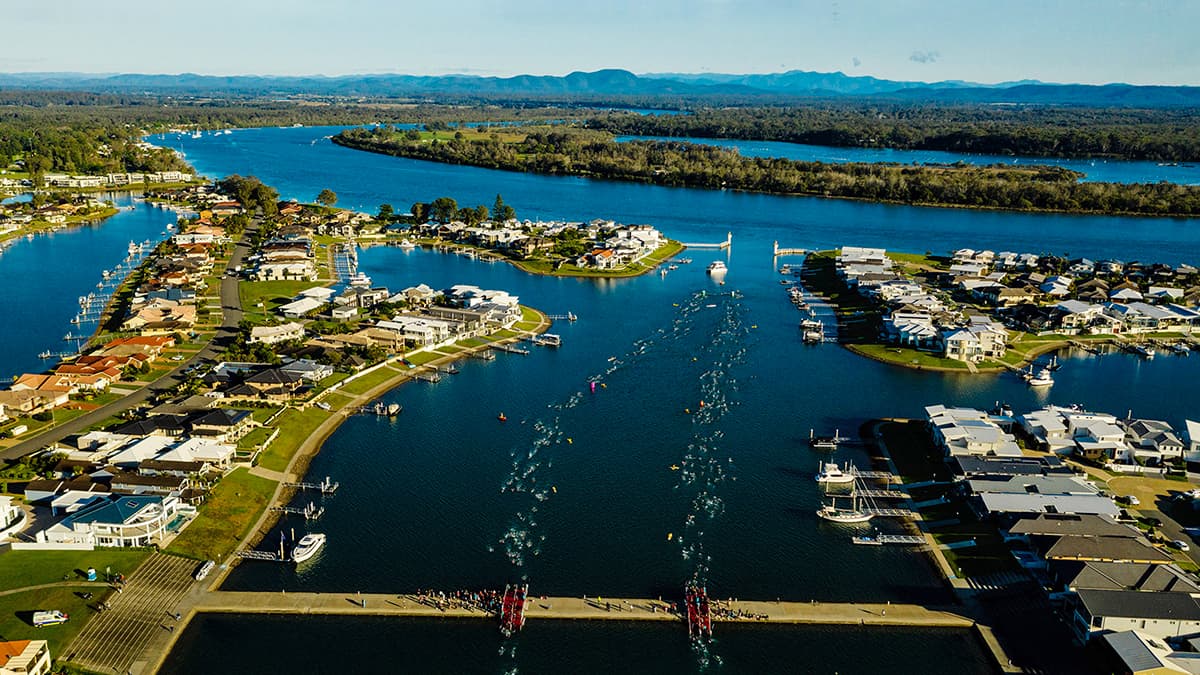
A protected single-loop river swim in the Hastings River featuring a unique carpeted weir crossing at the 1 km mark. Athletes must exit the brackish water, climb over the flood control weir via stairs, and dive back in to complete the course.
02
Bike
Hinterland and Coastal Grinds
Hinterland Loops & Ocean Drive
DISTANCE
180 km
LOOPS
2
ELEVATION
1,767 m
TERRAIN
Highly undulating
SURFACE
Rough chip-seal
WIND
18-19 kph coastal
A highly undulating two-loop course that spans the rolling hills of Wauchope and the exposed coastal stretches of Ocean Drive. The signature challenge is the brutal Matthew Flinders Drive, an extremely steep climb hitting 17% gradients that you must conquer twice on rough, speed-sapping chip-seal roads.
03
Run
The Breakwall Loops
Westport Park to Town Green
DISTANCE
42.2 km
LOOPS
4
ELEVATION
109 m
SURFACE
Flat urban path
SHADE
Partial
PEAK TEMP
23°C
A flat but highly energetic four-loop run along the iconic painted breakwall, Kooloonbung Creek, and the vibrant TriClub Village at Westport Park. While flat, the course has open, unshaded coastal sections that expose you to the direct afternoon sun.
03·AVG beginners' Training Timeline
From zero to the finish line
24 weeks
This 24-week plan focuses on building a resilient aerobic engine before transitioning to specific high-torque strength work to conquer the 17% grades. The build phase integrates low-cadence climbing and simulated rough-road riding, ensuring your body is fully adapted to the energy-sapping chip-seal surface.
Today · WK 0Race Day
WK 1–8
Aerobic Foundation
Establish a strong aerobic engine and durability to handle the high-volume training demands of a full-distance event.
WK 9–16
Strength & Hilly Prep
Develop muscular endurance and high-torque climbing capacity to prepare your legs for the 17% ramps of Matthew Flinders Drive.
WK 17–21
Course-Specific Build
Simulate the rough chip-seal vibrations and back-to-back coastal headwind conditions on key long rides and brick runs.
WK 22–24
Taper & Sharpen
Reduce training volume systematically while keeping intensity high to ensure you arrive at Port Macquarie fresh, restored, and ready.
Adapts to your fitness, schedule & recovery every week.
Prepare for spring temperatures ranging from 12°C to 23°C, which can feel much warmer under direct afternoon sun. Utilize aid station water and ice to douse your head and body on the exposed portions of the run.
Fuel & hydration
Consume your calories and fluids on the flatter hinterland sections of the bike course where control is highest. Avoid fueling during technical descents or the steep 17% gradients of Matthew Flinders Drive, and target steady sodium intake to offset the 67% humidity.
Pacing
Exercise extreme discipline on the first loop of the bike and spin a low gear up Matthew Flinders Drive to avoid burning matches. Save your legs for the flat but relentless rhythm of the four-loop marathon where consistency is rewarded.
Gear & logistics
Choose a medium-depth front wheel to handle the variable 18-19 kph coastal winds along Ocean Drive. Book your accommodation near Westport Park early, and use a high-traction rear tire to prevent slipping on the steep 17% climb.
Frequently Asked Questions
How hard is the IRONMAN Australia bike course?
The bike course is highly challenging, featuring 1,767 meters (5,796 feet) of rolling climbing over a two-loop, 180 km route. You will have to tackle the infamous Matthew Flinders Drive climb, which reaches a punishing 17% gradient, twice. Additionally, the rough Australian chip-seal road surface increases rolling resistance and physical fatigue, while variable coastal winds add extra difficulty along the exposed oceanfront segments.
What is the water temperature for the IRONMAN Australia swim?
The water temperature in the Hastings River typically averages between 20°C and 23°C (68°F to 73°F) during mid-October. This generally makes the 3.8 km swim wetsuit-legal for age-group athletes. Be prepared for brackish water, possible tidal currents, and a unique flood control weir crossing at the 1 km mark where you will exit and re-enter the water.
What are the typical weather conditions for IRONMAN Australia in October?
With the race moving to mid-October, you can expect typical spring temperatures in Port Macquarie ranging from a cool 12°C (54°F) in the morning to a mild 23°C (74°F) in the afternoon. Average relative humidity is around 67%, and winds of 11 to 12 mph (18 to 19 kph) often pick up from the southeast in the afternoon. This wind can create challenging headwind and crosswind conditions on the coastal portions of the bike leg.
Where does the IRONMAN Australia run course go?
The run is a highly energetic, flat, four-loop course that starts by heading east from transition alongside the painted breakwall towards Town Beach. You will then head south along the shady banks of Kooloonbung Creek, run north to a turnaround near Settlement Point Road, and pass through the lively TriClub Village at Westport Park. The marathon finally finishes down the red carpet at the historic Town Green.
How should I plan my nutrition strategy for IRONMAN Australia?
Because the bike course features relentless rolling hills and technical sections, you should consume your fluids and calories on the flatter, controlled hinterland sections or straightaways. Avoid trying to fuel during technical descents or while tackling the steep 17% gradient of Matthew Flinders Drive. Given the shifting spring weather, maintaining a steady sodium and hydration schedule on the bike is critical to preventing late-day dehydration before you start the exposed run.
Your Personalized Plan
Stop guessing your intervals. Train for this course.
FE26 builds your plan around your Strava data, your real schedule, and the exact demands of IRONMAN Australia— then adapts every week to how you actually perform.