Sacramento, United StatesOctober 18, 2026140.6 mi — Full Distance2 min readPublished July 13, 2026
Share
01·Course Characteristics
The speed of the Sacramento delta
An incredibly fast downstream swim yields rapid times, but the pancake-flat bike and run courses demand relentless pedaling and running against open-delta headwinds with absolutely no coasting.
Climate
26°C
Peak air · water 16-19°C · late October
Conditions
Windy
Open delta headwinds · low 30-40% humidity · chilly mornings
Elevation
234 m
Minimal bike gain · pancake flat · zero climbing
Difficulty
4.5 / 10
Fast downriver swim offset by relentless pedaling with no coasting and grueling delta winds.
There's still hope!
Only 1 week to go — but it's not too late.
The ideal build for this course is 24 weeks, and you have 1. We'll compress the essentials into your remaining time, prioritizing the demands that matter most on this course to get you to the finish line.
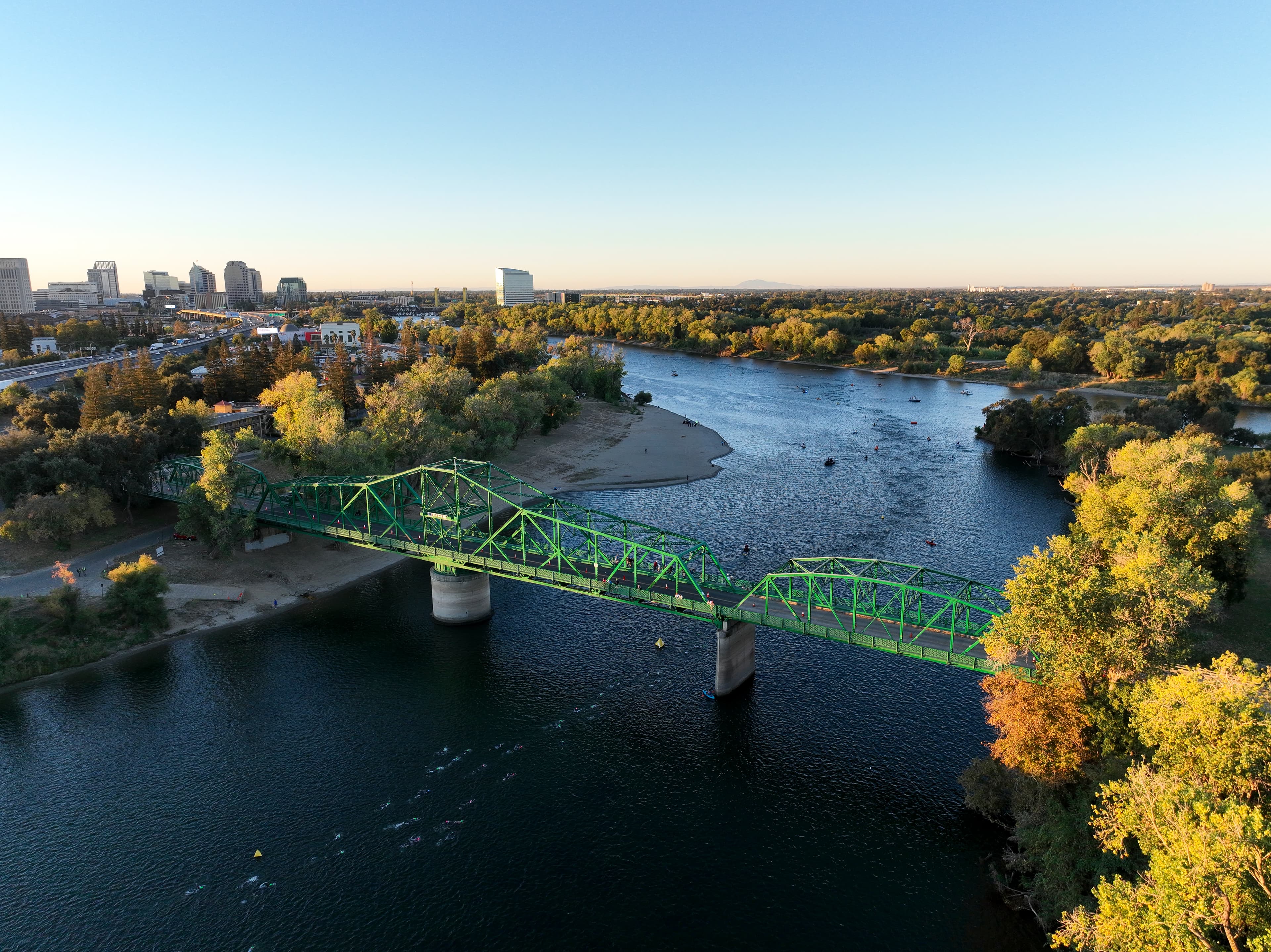
A fast point-to-point downriver swim starting in the American River and finishing in the Sacramento River. The exceptionally strong downstream current provides massive assistance, cutting down overall swim times significantly. Ensure you stay to the right side of the river when the streams merge to avoid missing the left turn buoy.
02
Bike
Relentless Aero Delta
Sacramento River Delta and Central Valley
DISTANCE
180 km
LOOPS
2
ELEVATION
234 m
SURFACE
Mostly smooth asphalt
WIND
15-30 mph headwind
A flat, fast two-loop tour through the agricultural Central Valley and Sacramento River delta. While elevation gain is negligible, the open terrain exposes you to headwinds and crosswinds up to 30 mph on the return legs. The flat profile requires constant pedaling under power without any opportunities to coast.
03
Run
Capital Finish
River Walk and Old Sacramento
DISTANCE
42.2 km
LOOPS
2
ELEVATION
135 m
SURFACE
Pavement, trail, gravel
PEAK TEMP
26°C
A flat two-loop course along the Sacramento River and through the historic streets of Old Sacramento, ending at the California State Capitol. The course features a mix of paved paths, roads, and short gravel segments. While flat, the lack of shade and late afternoon dry heat can build fatigue.
03·AVG beginners' Training Timeline
From zero to the finish line
24 weeks
This 24-week arc is tailored to the unique demands of Sacramento. By prioritizing base aerobic capacity and early core durability, we prepare you for the lack of coasting. Middle phases build flat-course muscular endurance, culminating in a short, sharp taper so you hit the start line fresh and ready.
Today · WK 0Race Day
WK 1–8
Base Aerobic & Neck Durability
Build your aerobic engine and strengthen core, neck, and back for long-duration aero holds.
WK 9–16
Flat Power & Wind Resistance
Develop sustained pedaling endurance and muscular endurance to fight relentless delta winds.
WK 17–21
Race-Specific Build & Nutrition
Practice race-pace simulation efforts and continuous gut training on flat terrain.
WK 22–24
Taper & Mental Resilience
Reduce volume while maintaining intensity to arrive fresh and mentally sharp for the flat grind.
Adapts to your fitness, schedule & recovery every week.
Expect chilly morning temperatures around 7-12°C, warming up to a dry 18-26°C peak in the afternoon. Layer with discardable clothing for the swim start and transition, then monitor hydration as low 30-40% humidity increases fluid loss without heavy sweating.
Fuel & hydration
With zero coasting on the bike, you must stay tucked in aero while continuously taking in nutrition. Target 60-90 grams of easily digestible carbohydrates per hour, and consume fluids on a strict timer to combat dry delta winds.
Pacing
Do not over-cook the fast downriver swim; exit fresh and transition smoothly. On the flat bike, pace strictly by power or heart rate rather than speed, as fighting the 15-30 mph delta headwinds will quickly drain your legs for the marathon.
Gear & logistics
Prepare for long transitions by having running-friendly footwear or transition shoes ready. Run a mid-depth front wheel to maintain control during crosswind gusts up to 30 mph, and wear a full sleeve wetsuit for the chilly 16-19°C water.
Frequently Asked Questions
What is the water temperature and swim course like for IRONMAN California?
The 2.4-mile swim is a point-to-point, downriver course with average water temperatures ranging from 62°F to 67°F (16–19°C), making it highly wetsuit-legal. The downstream current in the American and Sacramento Rivers is exceptionally strong, often shaving 15 to 30 minutes off personal bests. You should stay to the right side of the river when the waters merge to avoid being swept past the left turn buoy near the Tower Bridge finish.
How hard is the IRONMAN California bike course?
While the 112-mile bike course is extremely flat with a minimal elevation gain of 700 to 769 feet, it is deceptively challenging. The lack of hills means you must pedal constantly without the chance to coast, and you will likely face 15 to 20 mph headwinds and crosswinds in the open delta flatlands. Additionally, you must navigate a brief, rough, and technical section with 90-degree turns on Babel Slough Road around Mile 10.
What is the weather usually like for IRONMAN California in October?
You can expect mild, dry, and temperate fall conditions with low humidity around 30% to 40%. Mornings are chilly, starting around 45°F to 53°F (7–12°C), while afternoon peaks warm up to a comfortable 65°F to 78°F (18–26°C). The main weather elements to prepare for are the wind gusts, which typically range from 15 to 30 mph across the open terrain.
What should I expect on the IRONMAN California run course?
The run is a flat, fast, two-loop course covering 26.2 miles with a gentle elevation gain of approximately 444 feet. You will run on a mix of paved bike paths, roads, and brief dirt or gravel segments, taking you along the Sacramento River, through Discovery Park, and into Old Sacramento. The course culminates in a scenic finish right in front of the historic California State Capitol building.
How do logistics and transition work for IRONMAN California?
Athletes and spectators typically park at Sutter Health Park in West Sacramento and take shuttles to the swim start at Township 9 Park. Both T1 and T2 transitions have historically been quite long, requiring a significant run on foot, so you should plan your transition footwear and timing accordingly. The race is highly accessible for travel, with Sacramento International Airport (SMF) located nearby.
Your Personalized Plan
Stop guessing your intervals. Train for this course.
FE26 builds your plan around your Strava data, your real schedule, and the exact demands of IRONMAN California— then adapts every week to how you actually perform.