Langkawi, MalaysiaNovember 21, 2026140.6 mi — Full Distance2 min readPublished July 13, 2026
Share
01·Course Characteristics
The measure of IRONMAN Malaysia
Prepare for a grueling tropical test of survival. Suffocating humidity and extreme heat meet a highly technical bike course with steep 20% pitches, followed by a flat but fully exposed coastal marathon under intense sun.
Climate
34°C
Peak air · water 28-29°C · late November
Conditions
Humid
80-95% humidity · afternoon downpour risk · high UV
Elevation
1500 m
Bike gain · steep technical descents · flat run
Difficulty
9 / 10
Extreme tropical heat, suffocating humidity, and a technical bike leg with steep 20% climbs make this one of the world's most demanding survival tests.
There's still hope!
Only 4 weeks to go — but it's not too late.
The ideal build for this course is 28 weeks, and you have 4. We'll compress the essentials into your remaining time, prioritizing the demands that matter most on this course to get you to the finish line.
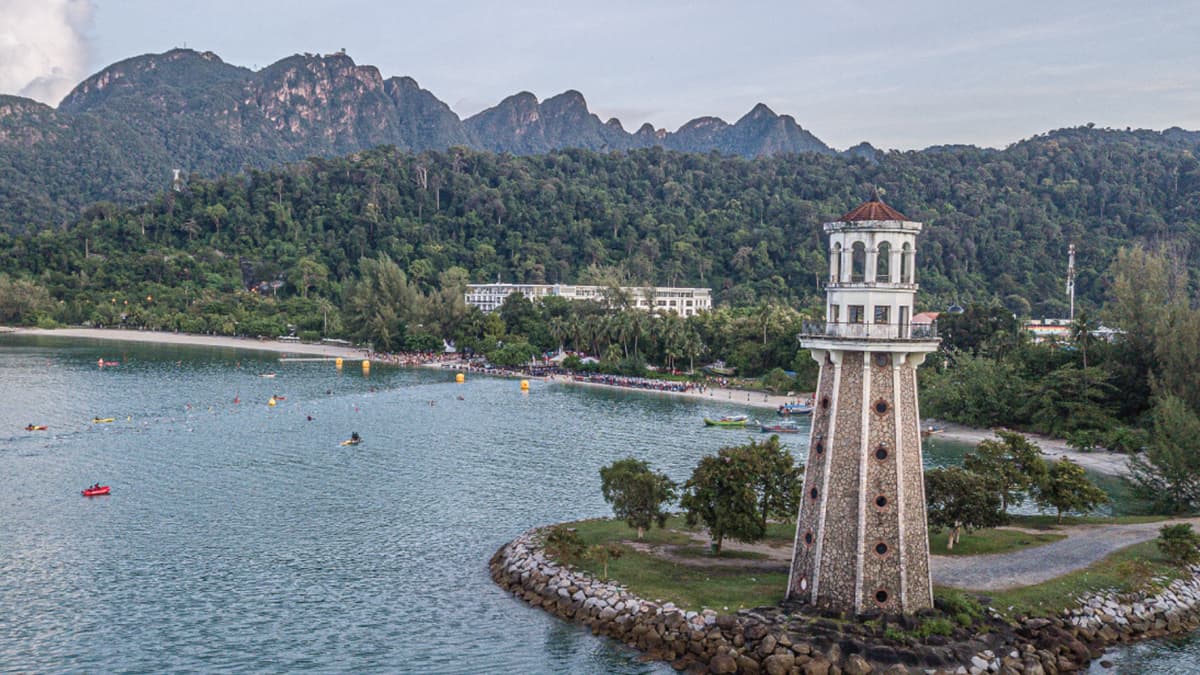
A calm, two-loop ocean swim in the protected waters of Pantai Kok. While the sea is generally wave-free, mild currents can occur on the outer loops, and sudden afternoon storms can rapidly whip up choppy conditions.
02
Bike
The Monkey Zone
Langkawi Island Loop
DISTANCE
180 km
LOOPS
1.5 to 2 loops
ELEVATION
1500 m
TERRAIN
Hilly and rolling
SURFACE
Rough chip-seal asphalt
A scenic yet grueling bike course featuring rough chip-seal roads that generate high vibration. Key sections like Bukit Hantu feature brutal pitches averaging 8-10% with maximum ramps of 20%, followed by highly technical descents with blind corners, potholes, and local monkeys.
03
Run
The Airport Runway Flat
Cenang Beach coastal loop
DISTANCE
42.2 km
LOOPS
2 to 2.5 loops
ELEVATION
< 50 m
SURFACE
Paved roads
PEAK TEMP
35°C+
An extremely flat multi-loop run past Cenang Beach and directly alongside the airport runway. You will face intense, unshaded afternoon sun driving real-feel temperatures above 35°C, punctuated by a brief cooling respite as you pass through the air-conditioned exhibition hall transition area.
03·AVG beginners' Training Timeline
From zero to the finish line
28 weeks
This 28-week path is custom-engineered to systematically prepare you for Malaysia's unique triple threat: relentless humidity, 20% bike ramps, and an unshaded run. By progressively layering climbing strength and structured heat acclimatization, we ensure you arrive at Pantai Kok robust, adapted, and ready to survive and conquer.
Today · WK 0Race Day
WK 1–8
Aerobic Foundation & Heat Prep
Build a resilient aerobic base and introduce early low-intensity heat exposure to prepare for tropical humidity.
WK 9–16
Strength & Steep Climbing
Develop muscular force to conquer Bukit Hantu's 20% gradients while building high-volume durability.
WK 17–24
Tropical Specific Build
Execute race-pace brick workouts in high-heat environments and lock in your high-sodium hydration strategy.
WK 25–28
Taper & Heat Acclimatization
Reduce training volume to shed fatigue while executing precise passive and active heat-adaptation protocols.
Adapts to your fitness, schedule & recovery every week.
Expect air temperatures peaking at 34°C with up to 95% humidity and severe UV exposure. Maximize cooling by utilizing ice at every aid station, wearing light-colored UV-blocking gear, and taking full advantage of the air-conditioned T2 transition hall to lower your core temperature.
Fuel & hydration
Consume 1.0 to 1.5 liters of fluids per hour on the bike to match extreme sweat rates. Prioritize a high-sodium electrolyte strategy to prevent cramping and hyponatremia in the tropical humidity.
Pacing
Govern your effort early on the bike's steep climbs like Bukit Hantu to save matches for the unshaded marathon. Allow your heart rate to guide you rather than speed, keeping a conservative cap during the peak afternoon heat index of 35°C.
Gear & logistics
Use deep-section wheels cautiously if coastal winds rise, and opt for high-volume tires to absorb the rough chip-seal road vibration. Plan travel via Kuala Lumpur with a domestic connection to Langkawi, arriving at least 4-5 days early to acclimatize to the tropical climate.
Frequently Asked Questions
What is the water temperature and wetsuit rule for the IRONMAN Malaysia swim?
The swim water temperature in Pantai Kok consistently sits around 28°C to 29°C (82°F to 84°F), which makes it strictly a non-wetsuit swim, though swimskins are allowed. You will face a rolling beach start into calm, protected ocean waters, but you should prepare for mild currents on the outer edges of the 2-loop, 3.8 km course.
How hard is the IRONMAN Malaysia bike course?
The 180 km bike course is exceptionally challenging, featuring approximately 1,500 to 1,600 meters of elevation gain and a rough chip-seal road surface. You will face steep pitches averaging 8-10% with maximum ramps of 20% on Bukit Hantu in the highly undulating 'Monkey Zone.' Technical descents with blind corners, coastal winds, and intense tropical sun make this a true test of your technical and physical limits.
What is the run course like for IRONMAN Malaysia?
The run is an extremely flat, 42.2 km multi-loop course with under 50 meters of total elevation gain, taking you past Cenang Beach and alongside the airport runway. While the paved terrain is flat, you will be highly exposed to the sun with peak afternoon temperatures feeling well above 35°C (95°F) with the heat index. Fortunately, you will get a brief cooling respite as the route repeatedly passes through the air-conditioned transition exhibition hall.
How should I manage nutrition and hydration for the extreme heat at IRONMAN Malaysia?
To manage extreme sweat rates in humidity levels of 80% to 95%, you must focus heavily on sodium and electrolyte replacement. It is highly recommended to consume upwards of 1 to 1.5 liters of fluids per hour on the bike and utilize the ice provided at the run aid stations. Heat acclimatization training prior to arriving in Langkawi is also critical to your racing success and safety.
How do I travel to Langkawi for IRONMAN Malaysia?
You should fly into Kuala Lumpur International Airport (KUL) and then take a short, 1-hour domestic flight to Langkawi International Airport (LGK). The Langkawi airport is located very close to both transition areas, making logistics straightforward. Once on the island, you can easily and affordably get around using 'Grab,' the local ride-sharing app.
Your Personalized Plan
Stop guessing your intervals. Train for this course.
FE26 builds your plan around your Strava data, your real schedule, and the exact demands of IRONMAN Malaysia— then adapts every week to how you actually perform.