Cambridge, United StatesSeptember 19, 2026140.6 mi — Full Distance2 min readPublished July 13, 2026
Share
01·Course Characteristics
The measure of IRONMAN Maryland
A deceptively flat profile that demands continuous pedaling, while brackish, tidal waters, shifting winds, and high coastal humidity test your physical and mental resilience.
Climate
27°C
Peak air · water 22-24°C · late September
Conditions
Exposed
Shifting coastal winds · high humidity · potential tidal flooding
Elevation
109 m
Bike gain · flat wetland route · constant pedaling
Difficulty
6.5 / 10
While extremely flat, the continuous pedaling, brackish tides, potential jellyfish, and heavy coastal humidity elevate the physical toll.
This edition has passed
Training for a future IRONMAN Maryland?
Registration for the next edition opens on a rolling basis. Start building your base now and we'll size a full plan the moment a new date is set.
A two-loop counterclockwise swim in the brackish Choptank River. Swimmers face tidal currents that shift from headcurrents to tailcurrents, along with wind-induced chop and the seasonal presence of stinging sea nettles.
02
Bike
Blackwater Wetlands
Dorchester County & Blackwater National Wildlife Refuge
DISTANCE
180 km
LOOPS
2-loop
ELEVATION
109 m
TERRAIN
Extremely flat
EXPOSURE
Highly exposed
WIND
Notorious shifting winds
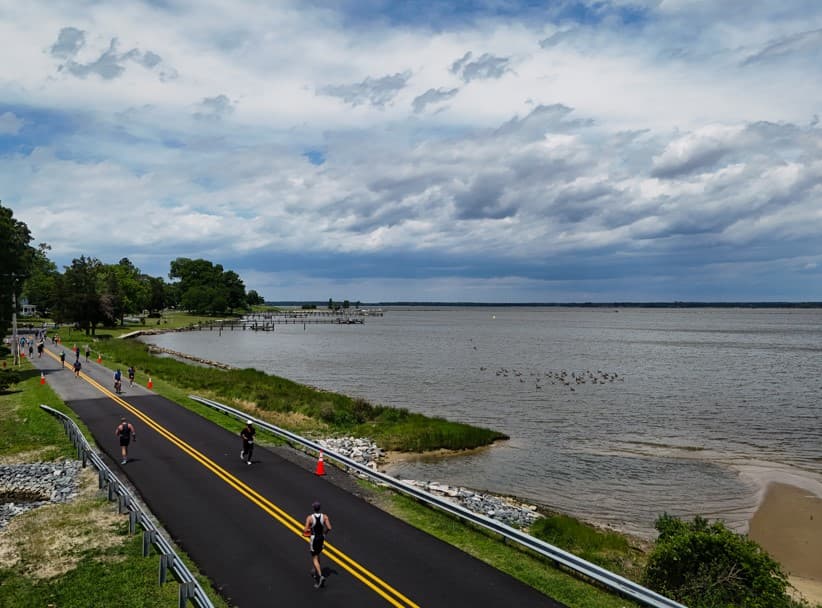
A flat, two-loop route through Dorchester County and the scenic wetlands of the Blackwater National Wildlife Refuge. The flat terrain requires continuous, relentless pedaling with zero opportunity to coast, made harder by shifting coastal winds and sections of rumble strips.
03
Run
Choptank & Historic Town
Cambridge & High Street
DISTANCE
42.2 km
LOOPS
3-loop out-and-back
ELEVATION
77 m
SURFACE
Asphalt, brick & gravel
SHADE
Very little
TEMP
Up to 27°C
A spectator-friendly, three-loop run along the Choptank River and historic Cambridge. The route is highly exposed with minimal shade, featuring brick pavers on High Street, a short gravel path, and the potential for ankle-deep water if coastal tidal flooding occurs.
03·AVG beginners' Training Timeline
From zero to the finish line
28 weeks
This 28-week plan is customized for Maryland's unique flat-but-relentless profile. Because there are no hills to coast down on the bike, we prioritize steady-state muscular endurance and aero-position hold, alongside progressive heat-tolerance run sessions to prepare your body for the humid East Coast late summer.
Today · WK 0Race Day
WK 1–8
Aerobic Base & Technique
Build aerobic endurance across all three disciplines and establish comfortable open-water breathing patterns.
WK 9–16
Continuous Muscular Endurance
Perform long, continuous trainer sessions to build the specific muscular resilience needed for non-stop flat pedaling.
WK 17–22
Specific Heat & Humidity Build
Acclimatize to heat with progressive brick runs in simulated humid conditions to prepare for the exposed run.
WK 23–26
Peak Specificity & Tides
Complete race-pace simulation workouts and lock in your nutrition strategy in simulated race-intensity blocks.
WK 27–28
Taper & Mental Readiness
Recover fully, maintain neuromuscular sharpness, and plan logistics for transition navigation and jellyfish protection.
Adapts to your fitness, schedule & recovery every week.
With afternoon highs of 27°C and high humidity, your core temperature will rise quickly. Take advantage of every aid station to pour cold water over your head and shoulders, maximizing cooling when humidity limits natural sweat evaporation.
Fuel & hydration
Target 60 to 90 grams of carbohydrates per hour on the bike to offset the glycogen drain of continuous pedaling. Pair this with a strict sodium replacement protocol, such as salt tablets every 30 to 60 minutes, to counter heavy sweat losses in the humid air.
Pacing
Manage your power meticulously on the flat bike course, resisting the temptation to push too hard early just because there are no climbs. Save structural leg strength for the flat run, where shifting headcurrents on the swim and relentless pedaling will have already fatigued your muscles.
Gear & logistics
Apply petroleum jelly to your face and wrists to protect against sea nettles during the swim. Bring cleat covers or carry your bike shoes to the mount line, as Transition 1 is on a grass field that becomes muddy easily. Book accommodations early in nearby Easton, as Cambridge options fill quickly.
Frequently Asked Questions
What is the water temperature and wetsuit policy for IRONMAN Maryland?
The water temperature in the Choptank River typically averages between 72°F and 75°F (22°C to 24°C), which usually makes the swim wetsuit legal. Because of the presence of sea nettles (jellyfish) in the brackish water, wearing a wetsuit or swimskin is highly recommended for skin protection. You should also apply petroleum jelly to exposed skin like your face and wrists to help prevent stings.
How hard is the IRONMAN Maryland bike course?
While the course is exceptionally flat with only about 358 feet (109 m) of elevation gain, it is highly challenging because you must pedal continuously with virtually no opportunities to coast. The 112-mile route through the Blackwater National Wildlife Refuge is also highly exposed to shifting winds and offers very little shade. Additionally, you must stay alert for a section of rumble strips on the back loop and potential coastal flooding on the road.
What is the run course like for IRONMAN Maryland?
The run is a flat, 26.2-mile marathon consisting of three spectator-friendly out-and-back loops through historic Cambridge and along the Choptank River. The terrain is mostly paved but features a brief section of brick pavers on High Street and a short gravel path in the park. Because there is very little shade and high humidity, you must prepare for elevated core temperatures and the potential of running through ankle-deep water if tidal flooding occurs.
What should my nutrition and hydration strategy be for IRONMAN Maryland?
Because the flat bike course requires non-stop pedaling, your glycogen reserves will drain rapidly, making a disciplined intake of 60 to 90 grams of carbohydrates per hour essential. The high humidity in Cambridge limits evaporative cooling, so you must implement a strict sodium replacement protocol, such as taking salt tablets every 30 to 60 minutes. To manage your core temperature, utilize the aid stations to pour cold water over your head.
Where should I stay and park for IRONMAN Maryland?
Since Cambridge is a small town and local accommodations fill up quickly, you should book rentals or hotels in nearby Easton, which is about 20 minutes north. On race day, athlete parking is located off-site at local schools, with shuttle buses providing transport to the transition area. Be sure to bring cleat covers or carry your bike shoes to the mount line, as Transition 1 is on a grass field that can become very muddy if it rains.
Your Personalized Plan
Stop guessing your intervals. Train for this course.
FE26 builds your plan around your Strava data, your real schedule, and the exact demands of IRONMAN Maryland— then adapts every week to how you actually perform.