San Juan, ArgentinaNovember 1, 2026140.6 mi — Full Distance2 min readPublished July 13, 2026Updated July 23, 2026
Share
01·Course Characteristics
The measure of IRONMAN San Juan
Prepare for a grueling test of endurance through the arid landscapes of San Juan, where intense desert heat, gusty canyon winds, and rolling elevations challenge your pacing and thermal management.
Climate
31°C
Peak air · water 19-21°C · early November
Conditions
Arid
Desert winds · zero shade · high UV
Elevation
1400 m
Bike gain · rolling · dam passes
Difficulty
8.5 / 10
High heat exposure, desert winds, and a challenging 1400 m bike elevation gain demand exceptional heat adaptation and pacing.
There's still hope!
Only 2 weeks to go — but it's not too late.
The ideal build for this course is 24 weeks, and you have 2. We'll compress the essentials into your remaining time, prioritizing the demands that matter most on this course to get you to the finish line.
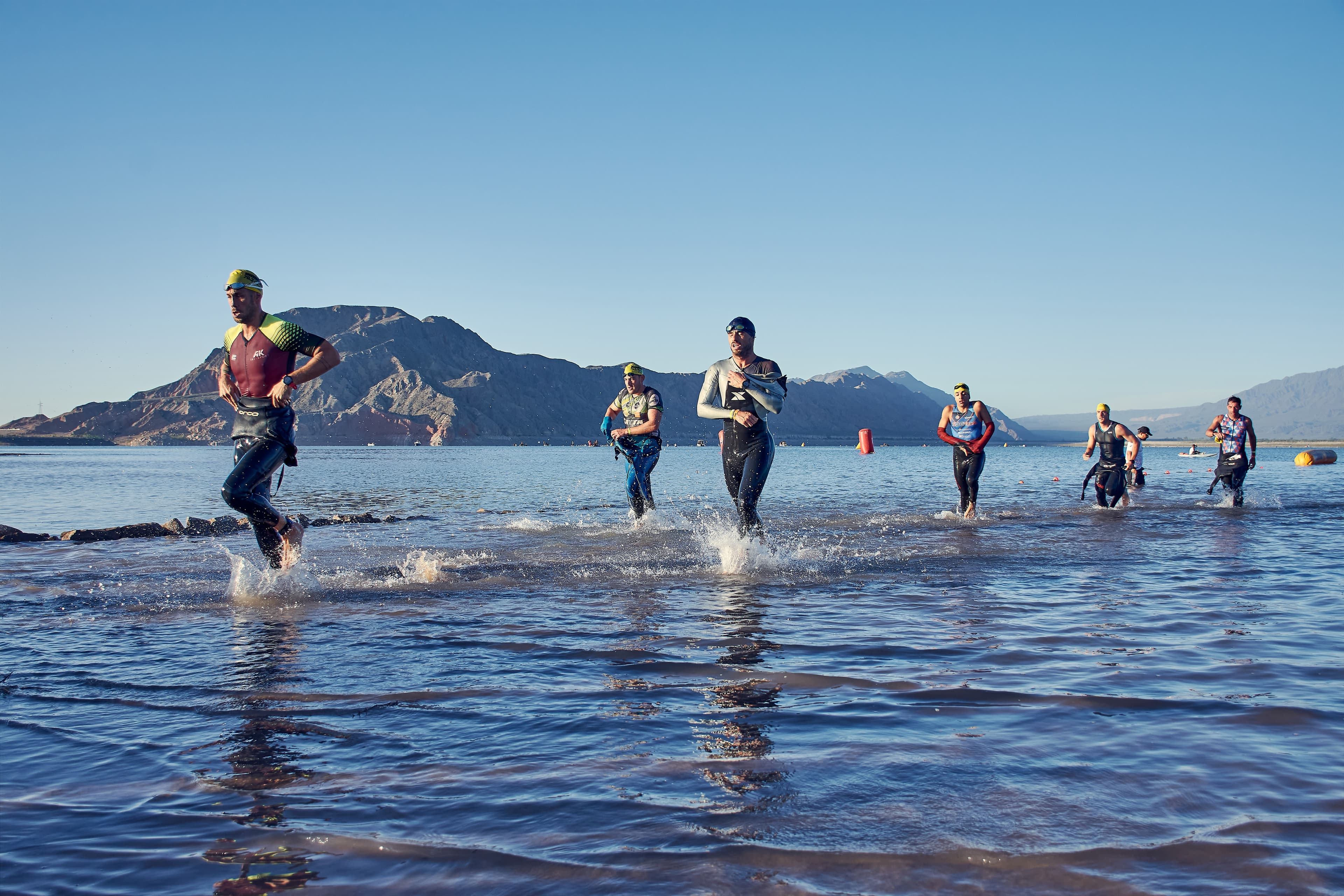
A clear freshwater swim in the Ullum Reservoir surrounded by arid Andean foothills. Water is typically calm in the early morning but can develop a light chop if the breeze picks up early.
02
Bike
Ruta Interlagos Loop
San Juan Highway & Dam Passes
DISTANCE
180 km
LOOPS
Two loops
ELEVATION
1400 m
TERRAIN
Rolling
SURFACE
Smooth asphalt
WIND
High risk
A scenic yet brutal ride crossing spectacular dams with continuous rolling climbs and fast descents. The relentless sun and dry desert winds will test your aerodynamics and mental fortitude.
03
Run
The Sun-Drenched Marathon
San Juan City & Plaza Walkways
DISTANCE
42.2 km
LOOPS
Four loops
ELEVATION
180 m
SURFACE
Asphalt & concrete
SHADE
Minimal
PEAK TEMP
31°C
A multi-loop city course with virtually zero shade, exposing you to the intense afternoon heat. Energetic local crowds provide a boost, but the dry mountain air accelerates dehydration.
03·AVG beginners' Training Timeline
From zero to the finish line
24 weeks
This 24-week progressive plan prepares you step-by-step for the unique dry heat, climbing, and wind of San Juan. By systematically layering aerobic volume, rolling climbing power, and targeted heat adaptation, you will arrive at the start line confident, resilient, and ready to conquer the desert.
Today · WK 0Race Day
WK 1–6
Aerobic Base Build
Develop a strong aerobic foundation and swimming endurance in neutral conditions.
WK 7–12
Strength & Rolling Power
Build muscular endurance and climb-specific power to prepare for the 1400 m bike elevation.
WK 13–18
Heat & Specific Build
Incorporate sustained race-pace intervals while starting initial heat-adaptation protocols.
WK 19–21
Peak & Simulation
Execute course-specific simulation blocks combining wind-resistance riding with brick runs.
WK 22–24
Taper & Sharpen
Reduce volume to shed cumulative fatigue while maintaining short, high-intensity efforts to stay sharp.
Adapts to your fitness, schedule & recovery every week.
Expect dry desert heat reaching up to 31°C with intense UV exposure. Use ice and cold water at every aid station to lower your core temperature, and apply sweat-resistant SPF 50+ before the start and at T2.
Fuel & hydration
Due to the extremely dry air, sweat evaporates instantly, masking fluid loss. Target 800 to 1000 ml of fluid containing 800 mg or more of sodium per hour, alongside 80 to 90 grams of carbohydrates to sustain performance.
Pacing
Hold back on the rolling climbs of the bike course, keeping your intensity strictly capped to save your legs for the run. Start the marathon at a conservative pace, utilizing a run-walk strategy if the heat spikes.
Gear & logistics
Opt for a highly ventilated aero helmet and light-colored, full-zip tri suit to assist with heat management. Choose a mid-depth front wheel to maintain stable bike handling in gusty crosswinds.
Frequently Asked Questions
What is the water temperature and swim format for IRONMAN San Juan?
You can expect the water temperature in the Punta Negra dam to range between 19°C and 22°C (66°F to 72°F), making it highly likely to be a wetsuit-legal swim. The 3.8-kilometer swim features a rolling start format, where athletes self-seed based on their projected finish times to ensure a smooth, safe flow into the water. This pristine, freshwater reservoir offers excellent visibility and calm conditions surrounded by the Andes foothills.
How difficult is the IRONMAN San Juan bike course elevation?
The bike course in San Juan is challenging and demanding, featuring an accumulated elevation gain of approximately 1,200 meters (3,937 feet) over the 180-kilometer distance. You will tackle a rolling profile that climbs through the scenic Quebrada de Zonda and along the Punta Negra dam. Proper pacing and gear selection are crucial, as the high desert altitude and potential headwinds can amplify the difficulty of these climbs.
What is the run course profile for IRONMAN San Juan?
The 42.2-kilometer run is a flat, fast multi-loop course that winds through the historic heart of San Juan and its scenic parkways. Unlike the hilly bike segment, the run terrain is highly runnable with minimal elevation changes, allowing you to establish a steady, consistent rhythm. However, because there is very little natural shade along the streets, managing your hydration and core temperature will be key to a strong finish.
What weather conditions should I expect for IRONMAN San Juan in November?
San Juan features an arid, high-desert climate, which brings warm daytime temperatures averaging 28°C to 32°C (82°F to 90°F) and very low humidity in early November. While the mornings are crisp and comfortable, the afternoon sun can be intense, and dry wind gusts are common on the bike course. Staying ahead of your electrolyte and fluid replacement from the very start of the race is essential to combatting these dry conditions.
When should I arrive in San Juan, Argentina before the race?
It is highly recommended that you arrive in San Juan at least 3 to 4 days prior to the November 1st race date. This window gives you ample time to adjust to the dry desert air, complete your athlete check-in, and attend the mandatory athlete briefings without rushing. Additionally, arriving early allows you to perform a practice swim in the reservoir and scout the key climbs on the bike course.
Your Personalized Plan
Stop guessing your intervals. Train for this course.
FE26 builds your plan around your Strava data, your real schedule, and the exact demands of IRONMAN San Juan— then adapts every week to how you actually perform.