Madison, United StatesSeptember 13, 2026140.6 mi — Full Distance2 min readPublished July 13, 2026
Share
01·Course Characteristics
The relentless test of America's heartland
A highly technical, rolling bike course and a deceptively hilly run make this one of North America's most physically demanding full-distance challenges.
Climate
23°C
Peak air · water 21°C · mid-September
Conditions
Volatile
Unpredictable wind · potential cold rain · high humidity
Elevation
1800 m
Bike gain · relentless rollers · technical turns
Difficulty
8.5 / 10
One of the toughest full-distance courses in North America, dominated by a brutal 1800 m climbing bike leg and a deceptively hilly 288 m run.
This edition has passed
Training for a future IRONMAN Wisconsin?
Registration for the next edition opens on a rolling basis. Start building your base now and we'll size a full plan the moment a new date is set.
A single-loop rectangular swim in the waters of Lake Monona starting and finishing at the Frank Lloyd Wright-designed Monona Terrace. Strong morning sun glare is common on the backstretch, and you must navigate a run up the concrete parking helix to enter transition.
02
Bike
The Rolling Lollipop
Dane County Rural Farmland
DISTANCE
180 km
ELEVATION
1800 m
LOOPS
2 loops plus stick
TERRAIN
Hilly & technical
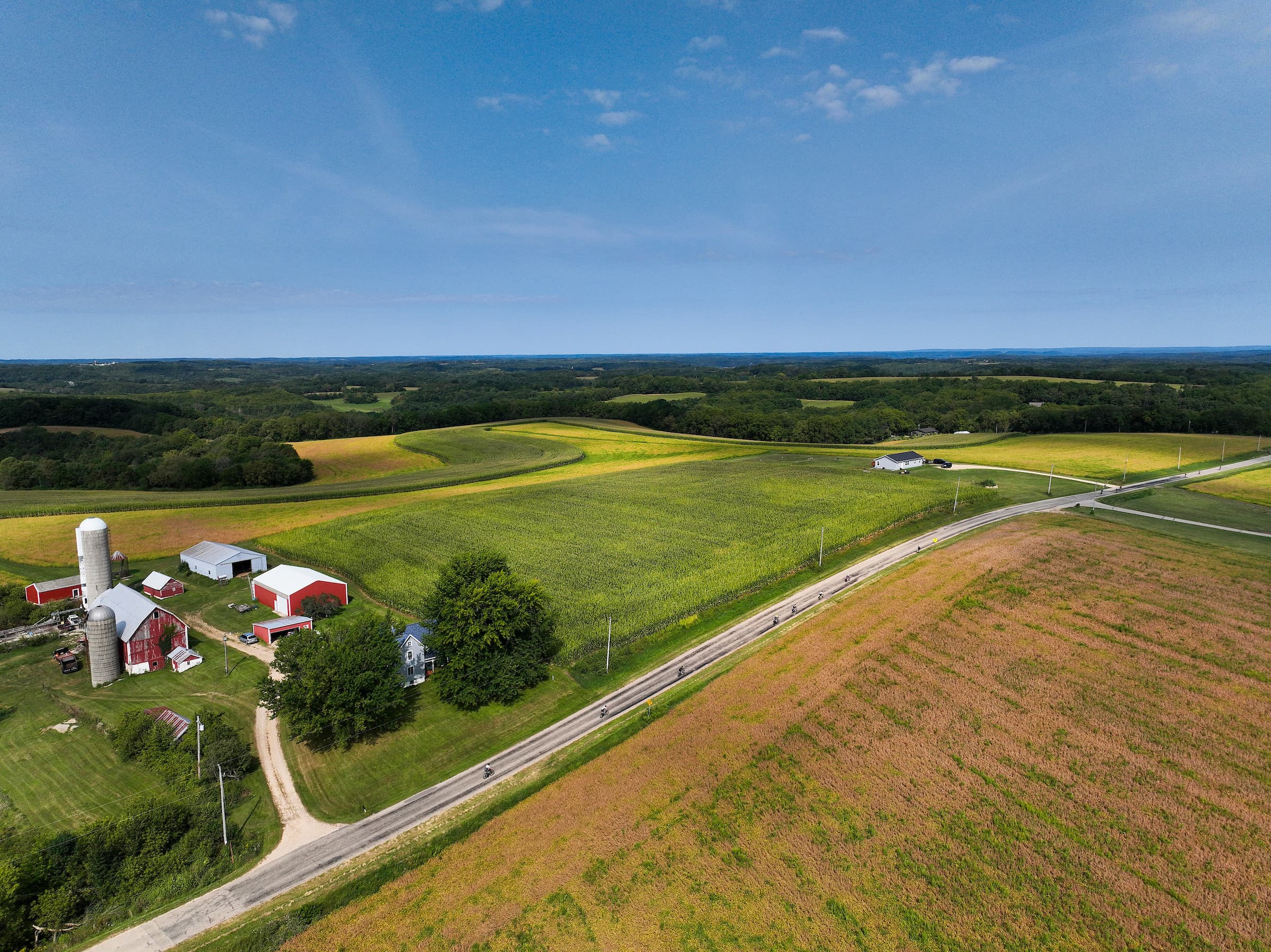
A highly demanding course featuring a 26-kilometer stick and two 64-kilometer loops through rural farmland. Expect constant undulating hills, technical turns, significant head or crosswinds, and famous steep climbs like the Three Bitches and Barlow Hill before biking back up the helix.
03
Run
The Campus & Capitol
Downtown Madison & UW-Madison
DISTANCE
42.2 km
ELEVATION
288 m
LOOPS
2 loops
SURFACE
Asphalt & paved
A deceptively hilly two-loop urban course that winds around the Capitol building, through the university campus, and enters Camp Randall Stadium. Shade is highly variable, ranging from exposed campus segments to tree-lined residential neighborhoods.
03·AVG beginners' Training Timeline
From zero to the finish line
24 weeks
This 24-week progressive plan prepares your body for the grueling physical demands of Madison. By focusing first on aerobic capacity, then transitioning to specific hill strength, you will develop the durability needed to conquer the steep climbs on the bike and the rolling campus run.
Today · WK 0Race Day
WK 1–8
Aerobic Foundation
Build a strong aerobic engine and initial endurance for the 3.8 km swim and long run segments.
WK 9–16
Strength & Rolling Power
Develop low-cadence muscular torque to handle the relentless climbs of the Dane County bike course.
WK 17–21
Race-Specific Endurance
Execute hilly simulation rides and brick runs targeting the 1800 m bike and 288 m run profiles.
WK 22–24
Taper & Sharpen
Shed fatigue while maintaining neuromuscular intensity to peak for Madison's volatile race-day conditions.
Adapts to your fitness, schedule & recovery every week.
Prepare for high volatility with gear for both a chilly 10°C rain and a humid 29°C day. Apply SPF early for the exposed campus run segments, and stay adaptable to sudden wind changes on the bike.
Fuel & hydration
Consume your 60-90 grams of carbohydrates and fluids primarily on flatter stretches or downhills rather than on steep climbs. Use the on-course aid stations to adjust your hydration rate if the weather shifts to humid conditions.
Pacing
Control your effort strictly on the steep bike climbs like Barlow Hill to avoid over-powering. Save matches for the deceptively hilly 288-meter run course, which demands conservative early pacing on the campus hills.
Gear & logistics
Choose a moderate-depth front wheel to handle unpredictable crosswinds on the exposed rural roads. Book downtown accommodations near Capitol Square well in advance and prepare for the unique indoor transition inside Monona Terrace.
Frequently Asked Questions
How hard is the IRONMAN Wisconsin bike course?
The bike course is highly demanding and physically brutal, featuring a lollipop layout with a 16-mile stick and two 40-mile loops that rack up 5,600 to 6,100 feet of cumulative elevation gain. You will face relentless rolling terrain, technical turns, and steep climbs like the 'Three Bitches' and 'Barlow Hill'. Pacing is critical here, and you should plan to consume your nutrition on the flatter sections or downhills rather than on the steep climbs.
What is the water temperature for the IRONMAN Wisconsin swim?
The single-loop swim in Lake Monona features water temperatures that historically range from 69°F to 73°F (20.5°C to 22.8°C), making it consistently wetsuit legal. Because you may face significant morning sun glare on the backstretch of this rectangular course, wearing goggles with dark or mirrored lenses is highly recommended. The swim starts and finishes at the Monona Terrace, where you will run up the concrete parking helix structure to reach transition.
What is the total elevation gain for the IRONMAN Wisconsin run course?
The two-loop run course has a total cumulative elevation gain of approximately 946 feet (288 meters), making it a deceptively hilly route. The course takes you on asphalt and paved paths through downtown Madison, around the Capitol building, through the UW-Madison campus, and into Camp Randall Stadium. Shade is highly variable along the route, ranging from exposed campus stretches to shaded, tree-lined neighborhoods.
What weather conditions should I expect at IRONMAN Wisconsin in September?
Weather in mid-September in southern Wisconsin is highly volatile, with average daily highs of 74°F (23°C) and overnight lows of 51°F (11°C). However, you must prepare for extremes ranging from cold, wet days in the 50s°F (10°C) with heavy headwinds and crosswinds to hot, humid conditions in the mid-80s°F (29°C). Your hydration and clothing plans must remain flexible to adapt to these unpredictable shifts on race day.
How difficult is the overall course at IRONMAN Wisconsin?
IRONMAN Wisconsin is widely considered one of the toughest full-distance courses in North America, earning a hard difficulty rating of 8.5 out of 10. While the swim in Lake Monona is straightforward, the brutal bike course features relentless rolling climbs that accumulate deep fatigue, followed by a deceptively hilly run with nearly 1,000 feet of elevation gain. You will also have to navigate unique challenges, such as running and biking up the concrete parking helix of the Monona Terrace to access transition.
Your Personalized Plan
Stop guessing your intervals. Train for this course.
FE26 builds your plan around your Strava data, your real schedule, and the exact demands of IRONMAN Wisconsin— then adapts every week to how you actually perform.