IRONMAN 70.3 Desaru CoastTraining Plan & Race Guide 2026
Desaru, MalaysiaJuly 12, 202670.3 mi — Half Distance2 min readPublished June 17, 2026Updated July 23, 2026
Share
01·Course Characteristics
The Heat of Desaru Coast
Success at Desaru Coast is defined by extreme climate management. While the swim and smooth bike courses are physically forgiving, the punishing tropical humidity and hilly run require conservative pacing and a strict hydration strategy to survive.
Climate
32-38°C
Peak air · water 28-29°C · mid-July
Conditions
Humid
80%+ humidity · coastal crosswinds · no wetsuit
Elevation
462 m
Bike gain · rolling rollers · flat to hilly run
Difficulty
7.5 / 10
The swim and bike are beginner-friendly, but the oppressive humidity and hilly run elevate the overall difficulty.
This edition has passed
Training for a future IRONMAN 70.3 Desaru Coast?
Registration for the next edition opens on a rolling basis. Start building your base now and we'll size a full plan the moment a new date is set.
A single-loop clockwise swim in the warm waters of the South China Sea. Sighting is critical during the final 700-meter return stretch due to lateral currents pushing right to left. Be prepared for tiny, stinging planktons and a long, carpeted run to transition.
02
Bike
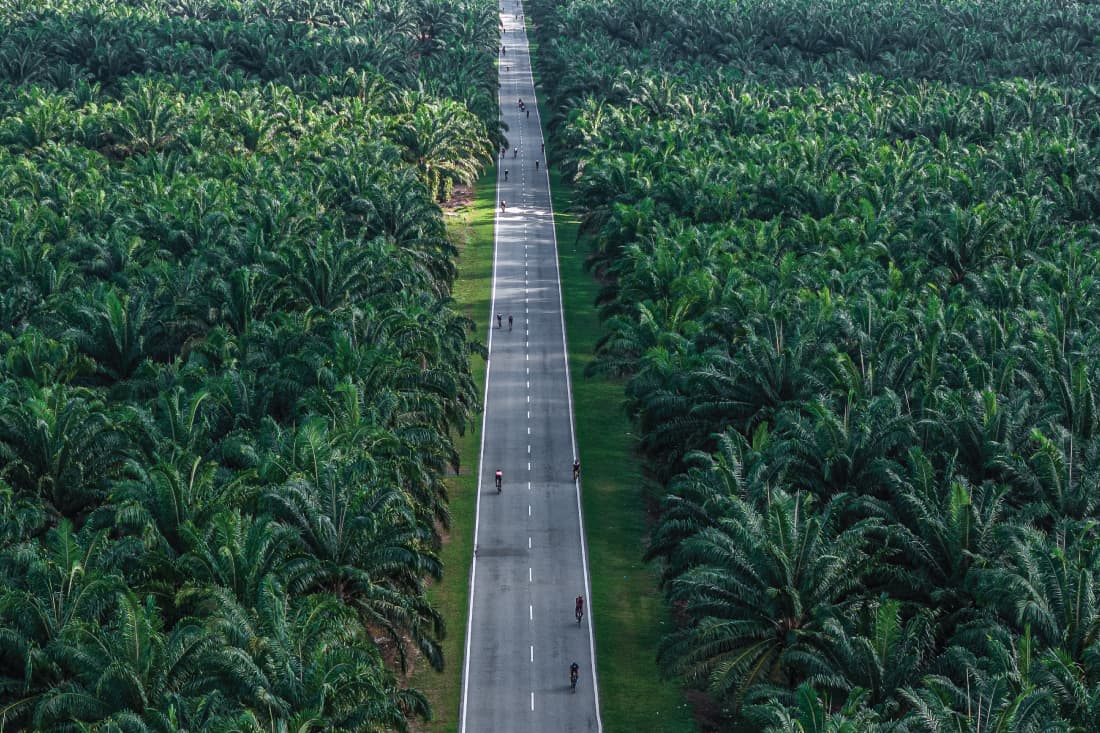
Fast and Rolling Loops
Desaru Coast Highway
DISTANCE
90 km
LOOPS
2 loops
ELEVATION
462 m
SURFACE
Smooth tarmac
WIND
Coastal crosswinds
A fast, two-loop undulating course featuring some of the smoothest tarmac in Asia. Beware of a steep, short climb right out of transition and coastal crosswinds on the heavily exposed second loop. Watch for cobblestone sections at some roundabouts and sharp U-turns.
03
Run
The Hilly Golf Course Circuit
The Els Club Desaru Coast
DISTANCE
21.1 km
LOOPS
2 to 3 loops
ELEVATION
200-500 m
PEAK TEMP
32-38°C
SHADE
Partial canopy
A challenging run weaving past the ferry terminal and golf club. The terrain is paved but highly undulating with three distinct climbs per loop. Portions are shaded, but sections near the terminal are fully exposed to blistering late-morning sun.
03·AVG beginners' Training Timeline
From zero to the finish line
16 weeks
Your 16-week journey focuses on building muscular resilience to handle the rolling terrain while progressively adapting your cardiovascular system to extreme tropical humidity. Front-loading base mileage ensures you have the durability to tackle the hilly run, while the final specific build prepares your body to execute under oppressive heat.
Today · WK 0Race Day
WK 1–5
Aerobic Base & Heat Prep
Establish a resilient aerobic foundation and begin progressive heat acclimation.
WK 6–9
Rolling Power & Muscular Endurance
Build strength on rolling bike climbs and hilly running paths.
WK 10–13
Specific Race Build
Simulate race-pace efforts in hot conditions with high-volume brick workouts.
WK 14–16
Taper & Strategy Execution
Reduce volume to shed fatigue while maintaining intensity and practicing hydration protocols.
Adapts to your fitness, schedule & recovery every week.
With peak temperatures reaching 38°C and humidity above 80%, active cooling is your primary defense. Grab ice and cold water at every aid station to douse your head and body, and stuff sponges down your tri-suit.
Fuel & hydration
Due to extreme tropical sweat rates, target 750 to 1000 ml of fluid and 600 to 1000 mg of sodium per hour. Pre-freeze your hydration bottles or use insulated ones to keep your fluids cool during the bike leg.
Pacing
Avoid chasing speed on the bike rollers; over-riding the first loop will ruin your run. Run conservatively on the rolling golf course hills, adjusting your pace downward to match the blistering feels-like heat index.
Gear & logistics
Pack a high-performance swimskin as wetsuits are strictly prohibited. Book host hotels like The Westin or Hard Rock months in advance, and plan for a 2 to 2.5-hour road transfer if flying into Singapore Changi.
Frequently Asked Questions
What is the water temperature and wetsuit policy for the IRONMAN 70.3 Desaru Coast swim?
The water temperature in the South China Sea averages between 28 and 29 degrees Celsius (82 to 84 degrees Fahrenheit), making wetsuits strictly prohibited for this race. You should plan on wearing a high-performance swimskin instead. Keep in mind that you may encounter mild lateral currents on the final 700-meter return stretch, along with tiny, stinging planktons known as sea lice.
How hard is the IRONMAN 70.3 Desaru Coast bike course?
The 90km bike course is fast and undulating with a 7.5 out of 10 overall difficulty rating, featuring approximately 462 meters (1,515 feet) of total elevation gain over two rolling loops. It is highly beginner-friendly because of its immaculate, smooth tarmac, though you must navigate a sharp climb right out of the resort, two sharp U-turns, some roundabout cobblestones, and coastal crosswinds on the second loop.
What is the run course profile like for IRONMAN 70.3 Desaru Coast?
The run course is a rolling and surprisingly hilly circuit around The Els Club Desaru Coast and Ferry Terminal, featuring cumulative elevation gains between 200 and 500 meters depending on the final loop layout. This segment represents the hardest part of the race, forcing you to tackle three distinct climbs per loop under blistering sun exposure and late-morning temperatures that can feel hotter than 40 degrees Celsius (104 degrees Fahrenheit).
What hydration and nutrition strategy should I use for the hot climate in Desaru?
To combat the extreme tropical sweat rates, you should aggressively aim for 600 to 1000 mg of sodium and 750 to 1000 ml of fluid per hour. Pre-freeze your hydration bottles to keep them cool, and do not rely solely on bike aid stations, as they may distribute smaller, partially filled 500ml bottles. Grab cold water, wet sponges, and ice at every run aid station to pour over your body to maximize external cooling.
How do I travel to the IRONMAN 70.3 Desaru Coast venue?
You can fly into Singapore Changi Airport (SIN) and book a private 2 to 2.5-hour door-to-door transfer across the border to Desaru. Alternatively, you can fly into Senai International Airport (JHB) in Johor Bahru, which is a shorter 1-hour drive from the race venue. For maximum convenience, book your accommodations early at the host hotel, The Westin Desaru Coast Resort, or the adjacent Hard Rock Hotel.
Your Personalized Plan
Stop guessing your intervals. Train for this course.
FE26 builds your plan around your Strava data, your real schedule, and the exact demands of IRONMAN 70.3 Desaru Coast— then adapts every week to how you actually perform.