IRONMAN 70.3 Mossel BayTraining Plan & Race Guide 2026
Mossel Bay, South AfricaNovember 22, 202670.3 mi — Half Distance2 min readPublished July 13, 2026
Share
01·Course Characteristics
The Winds of Mossel Bay
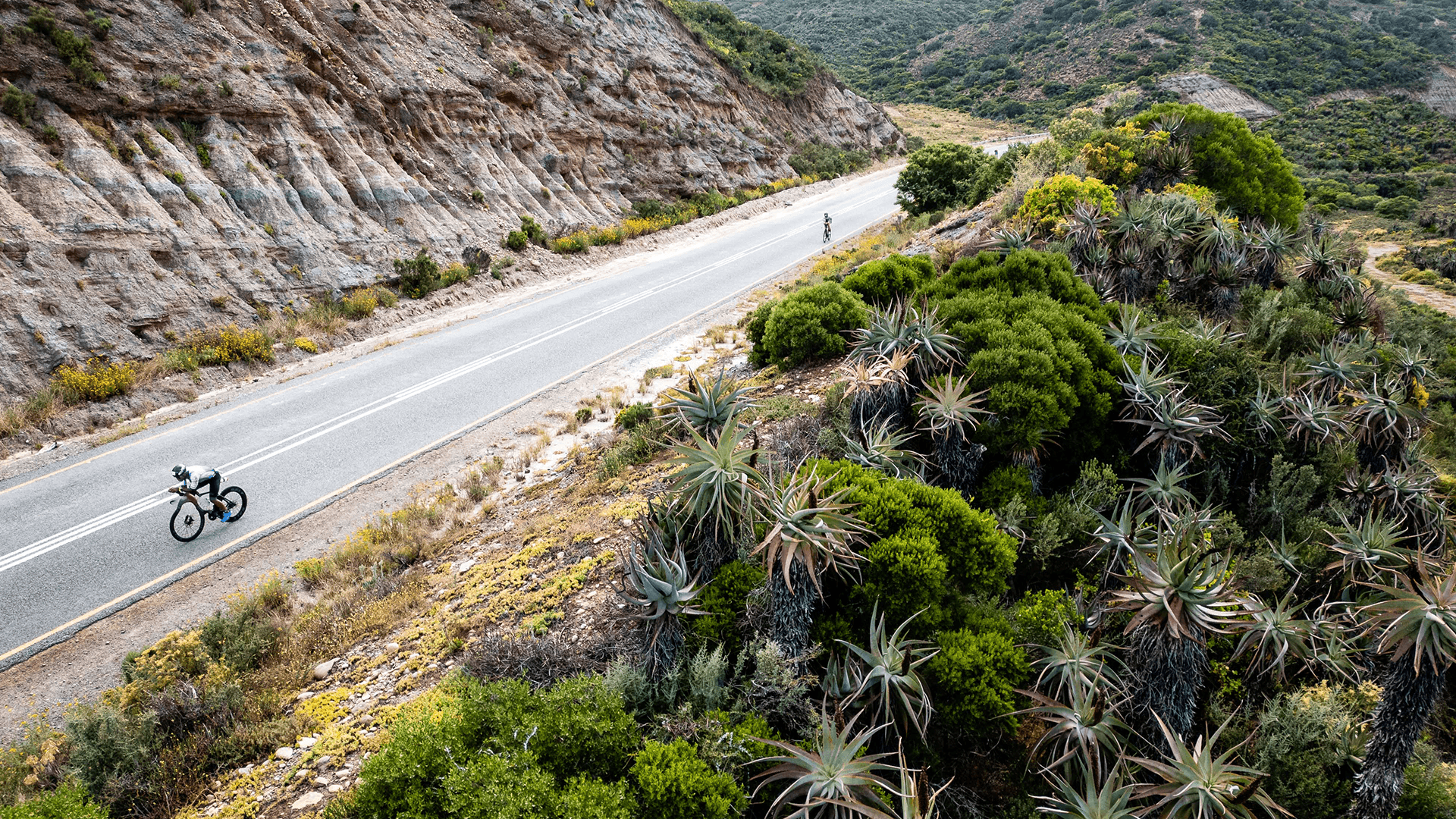
A sheltered bay swim transitions into a rolling, windswept bike leg with over 1000 meters of climbing, before finishing on a highly exposed coastal run course.
Climate
28°C
Peak air · water 19.1-21°C · late November
Conditions
Exposed
Coastal winds · high UV exposure · seaside terrain
Elevation
1020 m
Bike gain · rolling hills · 6km sustained climb
Difficulty
6.5 / 10
A moderately challenging course featuring coastal crosswinds, a significant 1020m bike climb, and an undulating 365m run.
There's still hope!
Only 5 weeks to go — but it's not too late.
The ideal build for this course is 16 weeks, and you have 5. We'll compress the essentials into your remaining time, prioritizing the demands that matter most on this course to get you to the finish line.
A scenic, relatively sheltered ocean swim starting at Santos Beach and finishing at De Bakke Beach. The rolling age-group start in Santos Bay provides calmer coastal waters than the open ocean.
02
Bike
The Gouritz Valley Loop
N2 Highway & Herbertsdale Road
DISTANCE
90 km
LOOPS
1
ELEVATION
1020 m
WIND
Strong head/crosswinds
A single-loop out-and-back course with heavy rollers on Louis Fourie Road and a major 6km climb on Herbertsdale Road (R327) toward the Gouritz River valley. Strong, unpredictable winds buffet the highly exposed N2 highway sections.
03
Run
The Coastal Lighthouse Run
Point Coastal Walkway and Old Town
DISTANCE
21.1 km
LOOPS
2.5 to 3
ELEVATION
365 m
PEAK TEMP
28°C
An undulating multi-loop run on paved coastal paths and old town roads. While offering stunning sea views, the course is highly exposed to both strong sea breezes and high solar radiation, finishing right under the Cape St Blaize lighthouse.
03·AVG beginners' Training Timeline
From zero to the finish line
16 weeks
This 16-week structured plan is tailored specifically to Mossel Bay's demanding profile. Early phases prioritize building climbing strength to handle the 1,020m bike leg, transitioning into wind-resistance workouts and rolling run preparation to ensure you can manage the late-stage heat and undulating terrain on race day.
Today · WK 0Race Day
WK 1–4
Aerobic Base & Sighting
Build a robust aerobic foundation and progress open-water swim comfort.
WK 5–8
Strength & Hill Climbing
Develop muscular endurance on the bike to conquer the 1020m elevation gain and 6km R327 climb.
WK 9–12
Wind & Heat Adaptations
Perform long brick efforts simulating coastal crosswinds and rolling run pacing.
WK 13–16
Peak & Taper
Consolidate race-pace efficiency, practice fuel intake, and rest for peak race-day output.
Adapts to your fitness, schedule & recovery every week.
Temperatures rise from a cool 14°C at dawn to a peak of 28°C. Rely heavily on the run aid stations for cold water, douse your head and body frequently, and apply high-SPF waterproof sunscreen to handle intense seaside UV exposure.
Fuel & hydration
Aim for 60-90g of carbohydrates per hour on the bike using the three available aid stations. Formulate an aggressive electrolyte and fluid plan to combat high sweat rates if midday run temperatures approach 28°C.
Pacing
Ride conservatively on the early rollers and do not burn matches on the 6km climb on Herbertsdale Road. Conserve energy for the highly exposed, undulating run course where the coastal wind and 365m of climbing can easily derail over-extended legs.
Gear & logistics
A mid-depth front wheel (40-60mm) balances aerodynamics and stability against unpredictable coastal gusts on the N2. Plan to fly into George Airport (GRJ) at least 3-4 days early and rent a car to transport your bike box.
Frequently Asked Questions
What is the water temperature and wetsuit policy for the IRONMAN 70.3 Mossel Bay swim?
The ocean temperature in Santos Bay typically averages between 19.1°C and 21°C (66.4°F to 69°F) for the 1.9km swim. Because of these mild temperatures, the swim is usually wetsuit-optional, though wearing a wetsuit is highly recommended to improve your buoyancy and overall comfort in the water.
How hard is the IRONMAN 70.3 Mossel Bay bike course?
The 90km bike course is moderately challenging, featuring approximately 1,020 meters (3,346 feet) of total elevation gain in a single-loop out-and-back format. You will face rolling hills along the N2 highway and a sustained, notable 6km climb on Herbertsdale Road (R327) heading toward the Gouritz River valley turnaround. Strong headwinds and crosswinds on the exposed coastal sections add to the physical demand.
What should I expect from the IRONMAN 70.3 Mossel Bay run course?
The 21.1km run consists of 2.5 to 3 loops on an undulating paved path and old town roads, accumulating about 365 meters (1,197 feet) of total elevation gain. Because the route travels through the historic harbor and along the scenic Point coastal walkway, it is highly exposed to the sun and coastal winds. Staying on top of pacing is critical as you head toward the finish line directly underneath the landmark Cape St Blaize lighthouse.
What are the expected weather conditions for IRONMAN 70.3 Mossel Bay in November?
You should prepare for a wide temperature range, with cool morning air lows of 14°C (57°F) rising to warm afternoon highs of 28°C (81°F). The coastal setting also introduces high humidity and unpredictable seaside winds, meaning you must plan for a high sweat rate on the run and potential crosswinds on the bike.
How do I travel to the IRONMAN 70.3 Mossel Bay race venue?
The most convenient option is to fly into George Airport (GRJ), which is located about 40 kilometers (30 to 40 minutes) away from the race venue. It is highly recommended to rent a car at the airport for easy transport of your bike boxes and gear, and you should book your accommodation near Santos Beach or De Bakke early to remain close to the transition zones.
Your Personalized Plan
Stop guessing your intervals. Train for this course.
FE26 builds your plan around your Strava data, your real schedule, and the exact demands of IRONMAN 70.3 Mossel Bay— then adapts every week to how you actually perform.