IRONMAN 70.3 Zell am See-KaprunTraining Plan & Race Guide 2026
Zell am See, AustriaAugust 30, 202670.3 mi — Half Distance2 min readPublished July 13, 2026
Share
01·Course Characteristics
The Alpine Challenge of Zell
A spectacular test of endurance, this course combines a flat, pristine lake swim and run with a grueling, highly technical alpine climb over the Filzensattel mountain pass.
Climate
28°C
Peak air temperature · water 18-22°C · late August
Conditions
Variable
Cold alpine morning · gusty winds · minimal run shade
Elevation
1,030 m
Bike total gain · 1280 m peak at Filzensattel · steep descent
Difficulty
7.5 / 10
The swim and run are flat, but the mountainous bike segment with steep 12-14% gradients and technical descents pushes this course into demanding territory.
This edition has passed
Training for a future IRONMAN 70.3 Zell am See-Kaprun?
Registration for the next edition opens on a rolling basis. Start building your base now and we'll size a full plan the moment a new date is set.
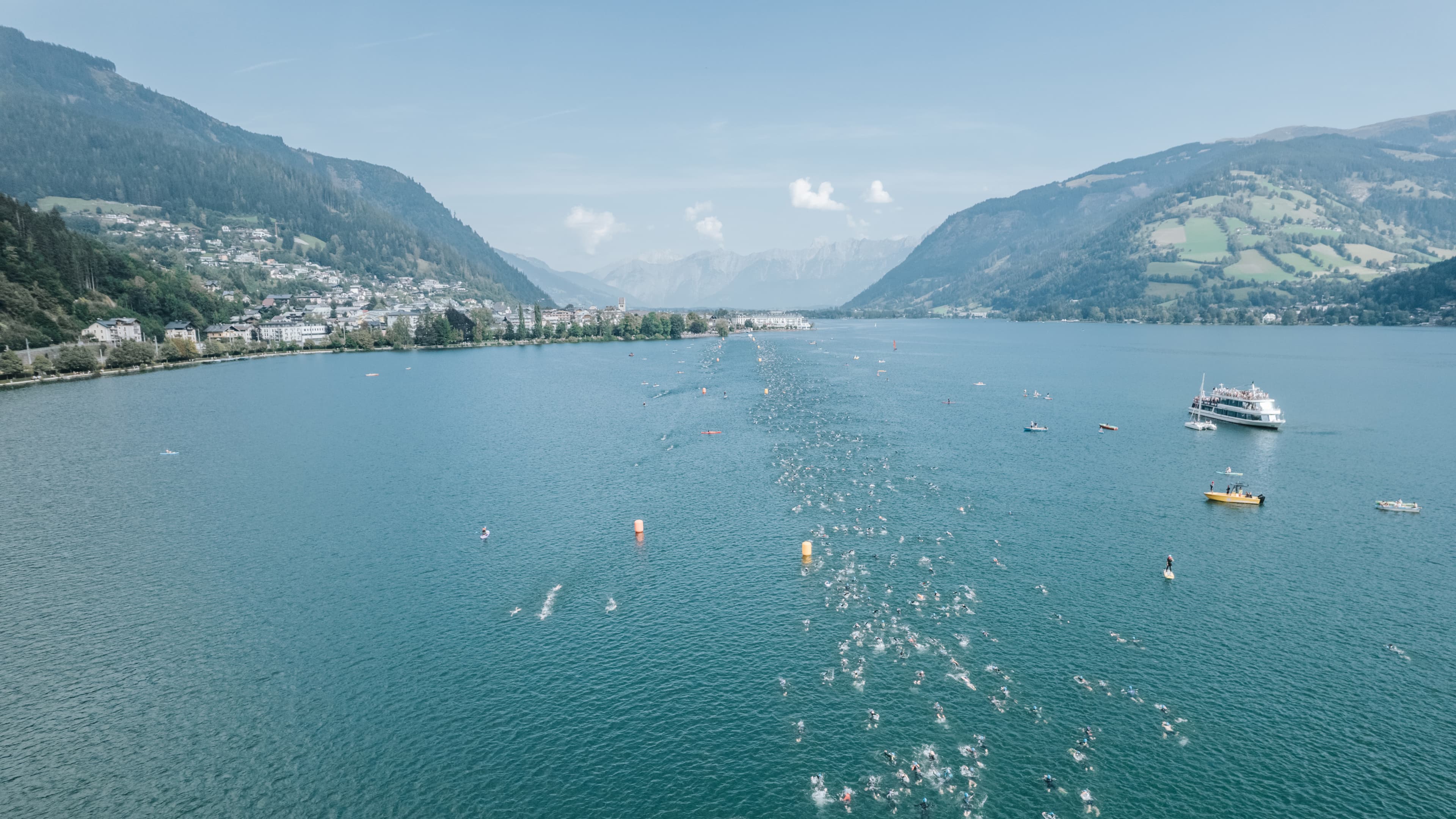
A single-loop, rectangular out-and-back swim in the crystal-clear, drinking-water quality of Lake Zell. The deep alpine lake features almost no current and is highly protected, providing ideal conditions. Wetsuits are almost always legal due to the cooler alpine temperatures.
02
Bike
The Filzensattel Climb
Single-loop Alpine Pass
DISTANCE
90 km
LOOPS
1
ELEVATION
1,030 m
TERRAIN
Mountainous
SURFACE
99% Austrian asphalt
WIND
Alpine gusts
A breathtaking but brutal mountain course featuring a major ascent up to the Filzensattel at 1,280 meters. The steepest sections near Dienten am Hochkönig ramp up to 12-14% gradients. After the peak, a rapid, technical descent down high-quality asphalt requires strong bike handling skills, especially if wet.
03
Run
The Lakefront Loop
Two-lap lakeside course
DISTANCE
21.1 km
LOOPS
2
ELEVATION
200 m
SURFACE
80% asphalt, 20% gravel
SHADE
Sparse
PEAK TEMP
28°C
A flat-to-rolling two-lap run alongside the lake shoreline and through the historic old town of Zell am See. The course is fast but highly exposed, leaving you vulnerable to peak afternoon temperatures. Support is robust with spectators filling the town center.
03·AVG beginners' Training Timeline
From zero to the finish line
16 weeks
This 16-week progression is specifically tailored to conquer the alpine demands of Zell am See. It builds a robust aerobic foundation before introducing targeted low-cadence climbing work and high-speed bike-to-run pacing, ensuring you have the strength to climb the Filzensattel and the durability to run the exposed lakeside loops.
Today · WK 0Race Day
WK 1–4
Aerobic Base building
Develop consistent aerobic engine and swim endurance in cold water.
WK 5–8
Alpine Strength
Build leg strength and low-cadence climbing torque for the 14% gradients.
WK 9–13
Race-Specific Build
Integrate high-speed descending skills with transition runs in warm conditions.
WK 14–16
Taper & Sharpen
Reduce training volume to shed fatigue while maintaining intensity for peak race performance.
Adapts to your fitness, schedule & recovery every week.
Prepare for extreme temperature swings from cold 8°C mornings to hot 28°C afternoons. Utilize the run aid stations spaced every 2 km to grab ice, water, and wet sponges to actively manage your core temperature.
Fuel & hydration
Consume highly digestible carbohydrates before and during the steep Filzensattel climb to avoid cramping on 14% gradients. Stay ahead of your hydration on the early flat bike sections using the aid stations located every 20 km.
Pacing
Ride conservatively through the lakeside flats and Rauriserhöhe, saving your legs for the grueling Filzensattel climb. Avoid burning too many matches on the 14% ramps so you can run strong on the flat, exposed half marathon.
Gear & logistics
Bring a wetsuit as water temperatures typically range from 18°C to 22°C. Choose a mid-depth front wheel to handle potential alpine wind gusts, and book early to use the official event shuttle service from Kaprun on race morning.
Frequently Asked Questions
How hard is the IRONMAN 70.3 Zell am See-Kaprun bike course?
The bike course is rated as moderate-to-difficult, presenting a true alpine challenge with an elevation gain of 870 to 1,030 meters. The signature test is the grueling climb up to the Filzensattel mountain pass, where the steepest sections near Dienten am Hochkönig ramp up to demanding 12% to 14% gradients. You should prepare for an intense ascent followed by a rapid, technical descent that requires confident handling skills, especially if wet weather or alpine gusts occur.
What is the water temperature for the IRONMAN 70.3 Zell am See-Kaprun swim?
The water temperature in Lake Zell typically hovers between 18°C and 22°C (64°F to 71°F). Because the wetsuit cutoff is 24.5°C (76.1°F), wetsuits are almost always legal and highly recommended for this pristine, freshwater swim. You can expect a calm, single-loop course parallel to the shoreline with virtually no current.
What are the cut-off times for IRONMAN 70.3 Zell am See-Kaprun?
This race enforces strict time limits to ensure athlete safety across the alpine terrain. You must complete the 1.9 km swim within 1 hour and 10 minutes. Additionally, you are required to finish the bike segment within 5 hours and 30 minutes after your swim exit, with an overall race cut-off time of 8 hours and 30 minutes.
What is the run course terrain like for IRONMAN 70.3 Zell am See-Kaprun?
The run is a flat to rolling two-lap course composed of 80% paved asphalt and 20% hard-packed gravel along the shoreline of Lake Zell and through the historic old town. While the terrain itself is fast, you should prepare for high exposure to the sun as the lakeside paths offer very little shade. Midday temperatures can reach 20°C to 28°C (68°F to 82°F), making the aid stations every 2 kilometers critical for cooling down.
How should I handle logistics and parking on race day in Zell am See?
Parking close to the transition area is extremely limited on race day, so you should utilize the official event shuttle services from the designated parking lots in nearby Kaprun. For travel, the town is highly accessible via the Austrian Federal Railways (ÖBB) which runs directly into the center of Zell am See. If you are flying in, Salzburg Airport (SZG) is the closest option at 1.5 hours away, followed by Munich Airport (MUC).
Your Personalized Plan
Stop guessing your intervals. Train for this course.
FE26 builds your plan around your Strava data, your real schedule, and the exact demands of IRONMAN 70.3 Zell am See-Kaprun— then adapts every week to how you actually perform.