All Race Guides

IRONMAN 70.3 MuskokaTraining Plan & Race Guide 2026

Huntsville, CanadaJuly 5, 202670.3 mi — Half Distance8 min read

Race & Course Analysis

Mastering the Beast of the North: Course Guide

For triathletes seeking a true test of grit, the IRONMAN 70.3 Muskoka in Huntsville, Ontario, stands as one of the most honest challenges on the North American circuit. Affectionately dubbed "The Beast of the North" (or "Beauty and the Beast"), this race trades flat, fast highway loops for a relentless, undulating landscape. Consisting of a 1.2-mile (1.9 km) swim, a 56-mile (90 km) bike, and a 13.1-mile (21.1 km) run, this course demands versatile physical preparation rather than pure aerodynamic specialization.

This race is ideally suited for strong climbers and mentally disciplined athletes who can manage their energy output across highly variable terrain. It is a venue where strategic training overrides raw, flat-course speed. If you are designing your IRONMAN 70.3 Muskoka training plan, understanding the specific biomechanical and physiological demands of this unique course profile is the first step toward a successful finish.


Swim Course

  • Distance & Format: 1.2 miles (1.9 km) single-loop, featuring an in-water, deep-water wave start.
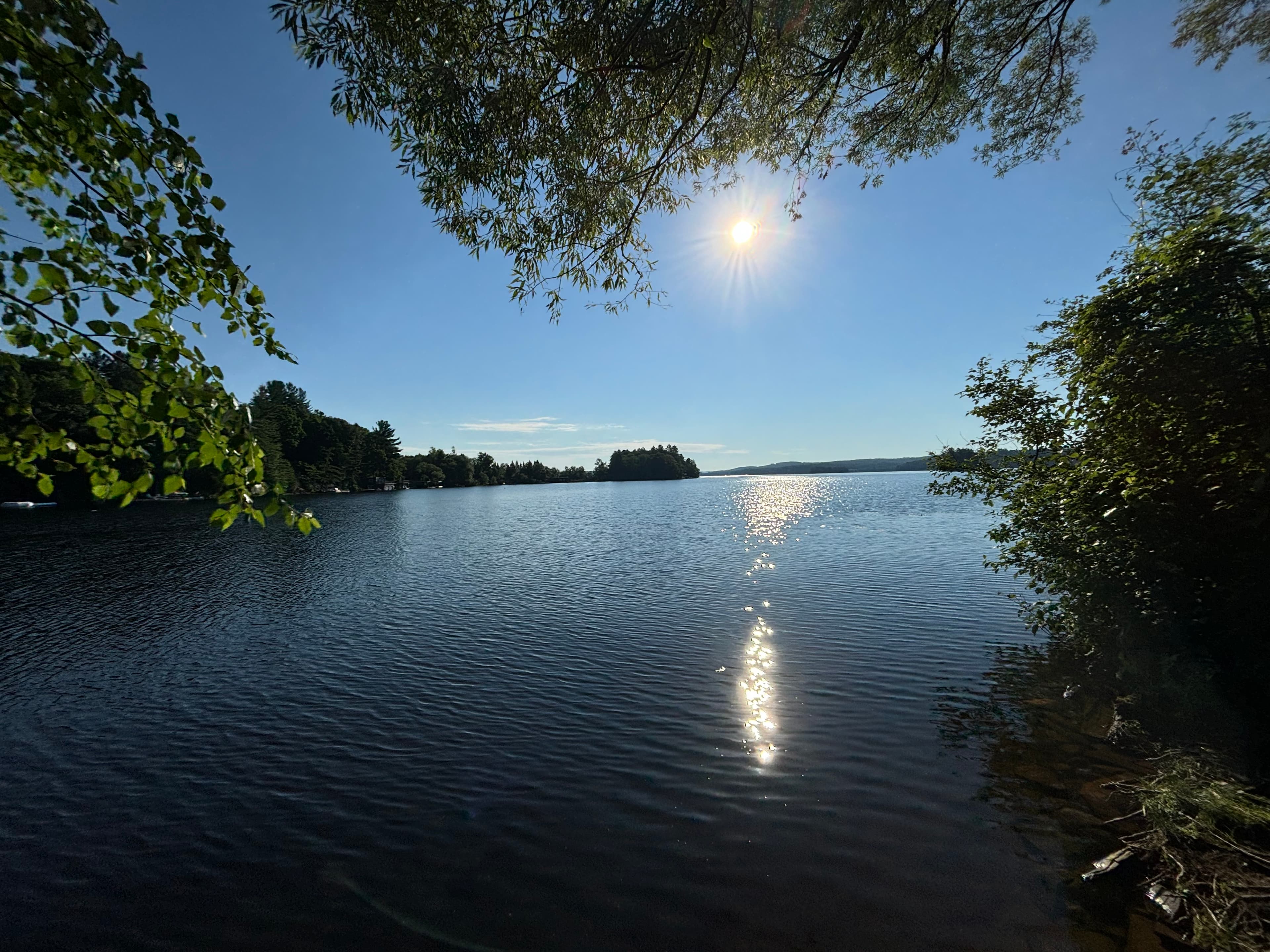
  • Water Conditions: Typically clean, calm freshwater in Fairy Lake with an average temperature of 74°F (23°C).
  • Layout: The first portion crosses the open water of Fairy Lake before entering a narrow, protected river channel for the final 500 to 700 meters.

The defining characteristic of the Muskoka swim is its split personality. While the open-water section in Fairy Lake requires clean sighting and drafting in deep water, the final stretch funneling into the river channel introduces a physical bottleneck. In this canal, athletes must swim directly upstream against a mild but persistent head current.

Training Implication: Your swim training must prepare you for sustained, high-torque efforts under fatigue. Incorporate resistance-based swim sets into your weekly routine, such as band-only swimming, ankle-strap drills, and paddle-and-buoy intervals. These sets build the shoulder endurance and upper-body force production required to maintain momentum when you hit the river current in the final quarter of the swim.


Bike Course

  • Distance & Elevation: 56 miles (90 km) with approximately 3,111 to 3,400 feet (950 to 1,036 meters) of total elevation gain.
  • Terrain & Route: A modern out-and-back course along Brunel Road and Highway 117 (replacing the legacy Lake of Bays loop since 2018).
  • Key Climbs: Punchy, aggressive rollers on Brunel Road peaking at gradients of 8.8%, transitioning to longer, gradual climbs on Highway 117.

The IRONMAN 70.3 Muskoka course profile is famously relentless. Immediately upon exiting transition, riders face a sharp, steep climb that shocks cold legs. The terrain never truly flattens out; athletes are either climbing or descending at high speeds (often touching 75 km/h). Shifting wind patterns are common, frequently presenting a headwind on the outbound leg and a tailwind on the return.

[Transition] -> [Brunel Rd: Short, steep rollers (up to 8.8%)] -> [Hwy 117: Long, gradual climbs] -> [Turnaround]

Training Implication: To prepare for this bike course, your training must focus on muscular endurance and high-torque efficiency. Regular low-cadence intervals (50–60 RPM) at sweet-spot and threshold power are essential to build the leg strength required to handle the repeated 8.8% gradients without redlining. Avoid spending all your training time on flat virtual routes; instead, practice over-gear climbing to condition your neuromuscular system for the constant changes in resistance.


Run Course

  • Distance & Elevation: 13.1 miles (21.1 km) with approximately 760 to 860 feet (230 to 260 meters) of total climb.
  • Terrain: A highly exposed single-loop road run on paved municipal asphalt with some rough, broken surfaces.
  • Key Obstacles: Minimal shade tree cover, leading to high solar radiation, and four distinct, major climbs.

The run course is a war of attrition. It begins with a brutal, sustained uphill climb (~1 km) right out of transition on Aspdin Road, immediately testing your muscular resilience. The route then heads south on Old Ferguson Road, featuring a gradual 3 km drag up to the turnaround, a steep 5% to 6.7% wall spanning over 800 meters just after the halfway point, and a final series of rolling climbs over the last 4 kilometers.

Training Implication: This course demands specific eccentric muscle prep and high-incline run training. You must practice running uphill immediately off the bike. Incorporate transition runs (brick workouts) where the first 1 to 2 kilometers are executed on a treadmill set to a 5% to 6% incline, or on a local hill. Furthermore, integrate downhill running mechanics into your training to condition your quadriceps to withstand the heavy eccentric loading of the descents, preventing premature muscle failure late in the half-marathon.

Training Phase Timeline

16 weeks

Base & Hill Foundations

Wk 15 · 5 wk

Build & Muscular Endurance

Wk 610 · 5 wk

Peak & Muskoka Specificity

Wk 1113 · 3 wk

Taper & Heat Prep

Wk 1416 · 3 wk

Plan Overview

To conquer the 'Beast of the North,' you need a training strategy that builds deep muscular resilience rather than just flat-course speed. We structured this 16-week plan to systematically prepare your body for the unique, grueling profiles of Muskoka. In the first ten weeks, you will focus on building a robust aerobic base and introducing heavy strength-endurance work. This includes low-cadence bike climbs to prepare for the relentless rolling hills of Brunel Road and Highway 117, alongside focused hill repeats to condition your legs for the 860 feet of run elevation. Because Muskoka doesn't let you settle into a steady aerodynamic rhythm, this strength phase ensures your legs won't redline early on the course. As you progress into the Peak Phase, the workouts become highly course-specific. You will practice high-force swim sets to mimic fighting the 500-meter upstream head current in the canal, and execute brick workouts that transition immediately from rolling bike efforts into steep running climbs. This simulates the shocking climb right out of transition onto Aspdin Road. Additionally, we integrate heat-adaptation techniques to prepare your body for the high humidity and solar exposure of Huntsville in July. Finally, the three-week Taper Phase allows your body to fully absorb the training while keeping your neuromuscular system sharp. You will practice shifting frequently to maintain a high cadence—crucial for managing the 11-28t or 11-30t gearing recommended for this course—and dial in your aggressive hydration and sodium strategy. By the time you line up at Fairy Lake, you will have the physical strength, tactical pacing, and heat resilience required to master this beautiful but brutal course.

Phase 1

Base & Hill Foundations

Wk 155 weeks

Establish a strong aerobic engine while introducing low-cadence climbing strength on the bike and running hills to prepare your joints and muscles for the hilly terrain.

Phase 2

Build & Muscular Endurance

Wk 6105 weeks

Develop the strength to handle the 3,400 feet of bike elevation. Focus on sustained climbing intervals on the bike and strength-oriented run sets mimicking the four major climbs.

Phase 3

Peak & Muskoka Specificity

Wk 11133 weeks

Race-intensity brick workouts simulating the transition from rolling bike hills directly to steep run climbs, along with swim sets focusing on high-force efforts against resistance.

Phase 4

Taper & Heat Prep

Wk 14163 weeks

Gradually reduce training volume to shed fatigue while maintaining race-pace intensity, finalize your hydration strategy, and adapt to potential heat and humidity.

Race Day Execution

To master "The Beast of the North," you need more than fitness—you need a flawless execution plan. This professional guide from the FE26 coaching team provides the exact racing blueprint, critical gear setups, and pacing strategies required to conquer IRONMAN 70.3 Muskoka. Use these proven IRONMAN 70.3 Muskoka preparation tips to optimize your race day performance.


IRONMAN 70.3 Muskoka Race Day Strategy & Execution Guide

Weather & Climate Strategy

July in Huntsville, Ontario brings high relative humidity and warm temperatures that stifle sweat evaporation. Use these protocols to prevent thermal strain and maintain your pace:

  • Execute a 10-Day Heat Acclimatization Protocol: In the two weeks leading up to the race, introduce 20-to-30-minute passive sauna sessions immediately following your workouts to trigger plasma volume expansion.
  • Utilize Active Cooling from the Start: On the run, do not wait until you feel hot. Put ice down your tri-suit and pour cold water over your head and neck at every single aid station to lower your core temperature.
  • Plan for High Moisture: Wet roads are common. Reduce your tire pressure by 5–8 PSI if it rains on race morning to maximize cornering traction on high-speed descents.

Nutrition & Hydration Plan

Muskoka's high humidity demands an aggressive, disciplined hydration and sodium replacement strategy to prevent cramping and GI distress.

  • Pre-Race Fueling Timeline:
    1. 3 Hours Before Start: Consume 50–100g of easily digestible, low-fiber carbohydrates (e.g., white toast with jam, banana) along with 500ml of water containing 500mg of sodium.
    2. 1 Hour Before Start: Sip slowly on 200–300ml of an electrolyte mix.
    3. 15 Minutes Before Start: Take one carbohydrate gel with a few sips of water.
  • The Bike Leg Target: Aim for 750ml to 1000ml of fluid and 500mg to 1000mg of sodium per hour, paired with 60 to 90 grams of simple carbohydrates.
  • The T2 Gut-Clear Rule: Crucial Step: Stop consuming large volumes of fluid 15 minutes before reaching transition. Allowing fluid to pool in your stomach before tackling the immediate steep climb out of T2 will trigger severe GI distress and quad cramping.
  • The Run Leg Strategy: Take fluids and electrolytes at every 2km aid station. Walk the aid stations if necessary to ensure you actually swallow the fluids rather than spilling them.

Gear & Transition Setup

This demanding, technical course requires specific equipment choices to avoid mechanical issues and premature muscle fatigue.

  • Bike Gearing Selection: Install a compact crankset (50/34) paired with an 11-28t or 11-30t cassette. This allows you to maintain a high cadence (85+ RPM) on the steep, punchy rollers.
  • Prevent Transition Tire Blowouts: If you check your bike in on a hot, sunny Saturday, deflate your tires by 15–20 PSI. The intense heat can rapidly expand the air inside your tubes, causing them to pop overnight. Re-inflate them to target pressure on race morning.
  • T1 Gearing Pre-Set: Before the swim start, shift your bike into its easiest climbing gear. The exit from T1 is a steep, immediate ramp; starting in a hard gear will stall your momentum and can drop your chain.

Pacing & Mental Strategy

Success in Huntsville relies on disciplined pacing. If you spike your heart rate early, the run course will punish you.

  • The Swim Leg (Fairy Lake & River Channel):
    • Find a sustainable, steady rhythm in Fairy Lake.
    • Upon entering the river channel, stay in the center of the canal where the current is often most manageable.
    • Shorten your stroke slightly and increase your stroke rate to punch through the head current. Sight off the "big brown house" and the exit flags.
  • The Bike Leg (Brunel Road & Highway 117):
    • Keep your ego in check. Shift frequently to maintain an even cadence and cap your power output on the short 6% to 8.8% climbs.
    • Avoid surging; your Normalized Power (NP) should remain close to your Average Power (AP).
    • Stay tucked on the fast descents to maximize free speed, and prepare for shifting crosswinds.
  • The Run Leg (Single-Loop Hills):
    • Expect a brutal climb right out of transition. Do not try to run your target half-marathon pace here. Pave your effort by Rate of Perceived Exertion (RPE) and let your heart rate settle.
    • Shorten your stride and lean slightly forward into the four major sustained climbs. Use the descents to let gravity do the work, focusing on quick, light foot strikes to save your quadriceps.

Travel & Logistics

Incorporate these travel and logistics tips into your IRONMAN 70.3 Muskoka race day strategy to ensure a stress-free race week:

  1. Arrive Early: Fly into Toronto Pearson (YYZ) and drive 2 to 2.5 hours north to Huntsville. Arrive by Thursday afternoon to settle in.
  2. Book Lodging in Advance: Because Huntsville is a highly popular summer cottage destination, secure your accommodations (such as Deerhurst Resort or downtown rentals) at least 6 months ahead.
  3. Conduct a Crucial Course Recon: Drive the out-and-back bike route on Friday to study the pavement quality, and walk the swim exit at the Canada Summit Centre to familiarize yourself with the transition layout.

Your Personalized Training Plan

Your Personal Path to IRONMAN 70.3 Muskoka

While this guide provides a foundation, every athlete is unique. FE26 creates a personalized plan by analyzing:

  • Your Data: Seamless Strava integration to benchmark your current fitness.
  • Your Life: Training blocks that adapt to your real-world schedule.
  • The Course: Workouts specifically engineered for these unique race demands.
  • Your Recovery: Weekly adaptive periodization that adjusts targets based on your actual performance.

Stop guessing your intervals. Start training with a system that evolves with you.

Create Your IRONMAN 70.3 Muskoka Training Plan