IRONMAN 70.3 MusselmanTraining Plan & Race Guide 2026
Geneva, United StatesJuly 12, 202670.3 mi — Half Distance2 min readPublished June 20, 2026Updated July 4, 2026
Share
01·Course Characteristics
The challenge of Musselman 70.3
A rolling vineyard bike leg and a split-personality run defined by flat, exposed lakeside paths and sharp, historic town climbs make this Finger Lakes race a tactical pacing test, especially under mid-July heat and potential lake chop.
Climate
29°C
Peak air · water 22-25°C · mid-July
Conditions
Humid
Seneca Lake chop · exposed country headwinds · high UV
Elevation
505 m
Bike gain · rolling hills · short punchy climbs
Difficulty
6 / 10
Seneca Lake can chop up under high winds, and the run combines a baking, exposed flat half with punchy campus climbs in humid July heat.
This edition has passed
Training for a future IRONMAN 70.3 Musselman?
Registration for the next edition opens on a rolling basis. Start building your base now and we'll size a full plan the moment a new date is set.
A single-loop swim in the deep, clear waters of Seneca Lake, starting via ramps at the Finger Lakes Welcome Center pier. The course is oriented to avoid morning sun glare, but strong winds can rapidly turn this calm lake into a heavily chopped basin.
02
Bike
Vineyard Rolling Loop
Seneca & Cayuga Lakes Country
DISTANCE
90 km
LOOPS
Single loop
ELEVATION
505 m
SURFACE
Good asphalt
CLIMBS
1-mile Vineyard Road
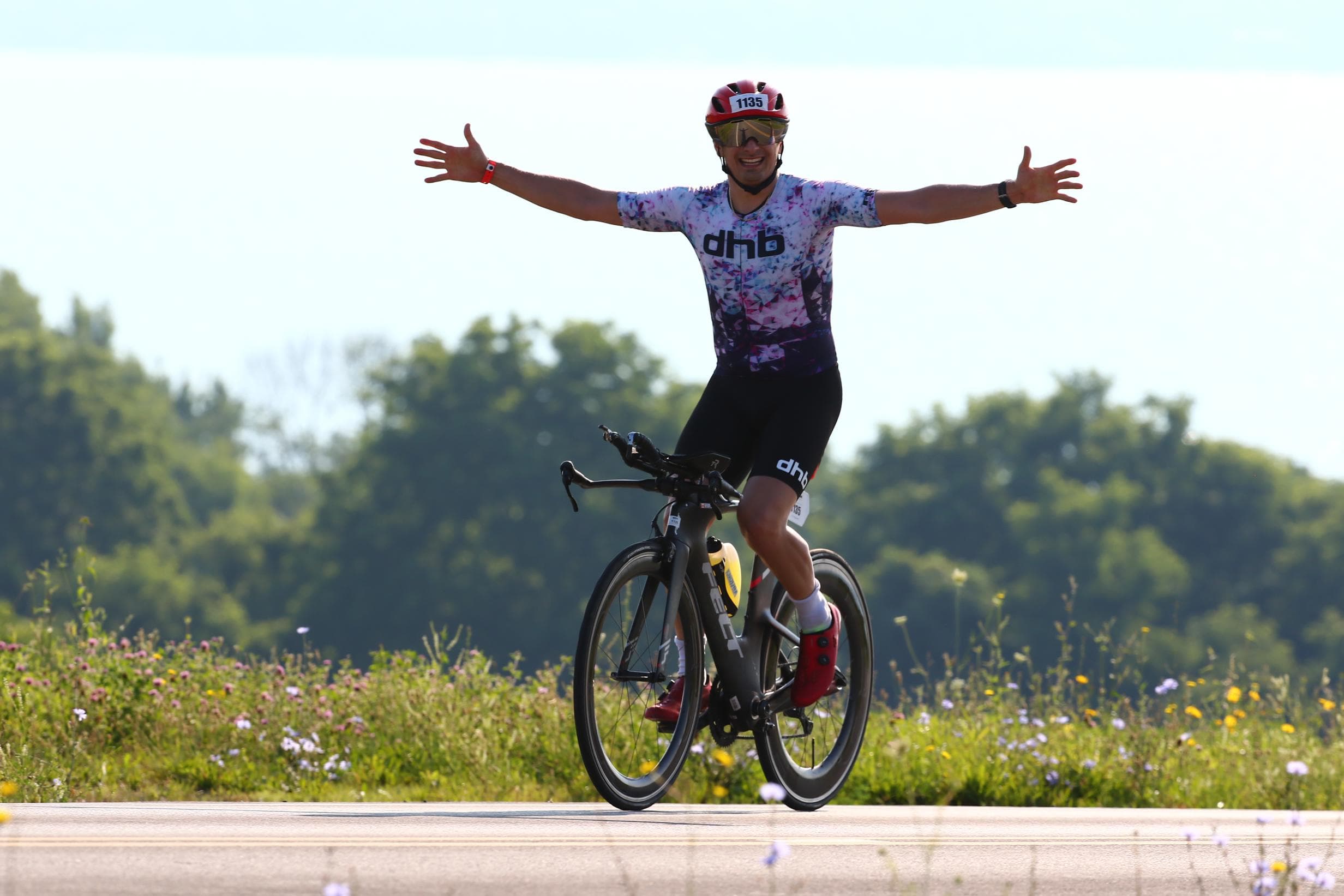
A scenic single-loop course traversing the Finger Lakes wine country on smooth country roads. You will tackle a one-mile climb at Vineyard Road followed by a highly exposed, gradual 15-kilometer drag on CR 129 where headwinds are a major factor, concluding with a fast descent and a flat finish along the lake.
03
Run
The Split-Personality Run
Seneca Lake Park & Downtown Geneva
DISTANCE
21.1 km
LOOPS
2 loops
ELEVATION
95-113 m
SHADE
Partial
PEAK TEMP
29°C
A two-loop run split between a flat, completely exposed out-and-back trail along the Seneca Lake shoreline and a challenging, punchy urban climb through downtown Geneva and the shaded Hobart and William Smith Colleges campus.
03·AVG beginners' Training Timeline
From zero to the finish line
16 weeks
This 16-week progressive program is designed to build the specific muscular endurance needed to conquer the long wind-exposed drag on the bike, while preparing your legs for the rapid shift from flat lakeside running to steep, punchy town climbs in humid conditions.
Today · WK 0Race Day
WK 1–4
Aerobic Foundation
Build a consistent aerobic base with low-intensity volume across all three disciplines.
WK 5–8
Strength & Rolling Power
Develop muscular endurance on the bike to prepare for the exposed rolling hills of the Finger Lakes.
WK 9–13
Race-Specific Build
Simulate back-to-back rolling efforts and transition runs under warm conditions to match the run's steep climbs.
WK 14–16
Taper & Sharpen
Reduce volume to shed fatigue while maintaining intensity to peak for race day.
Adapts to your fitness, schedule & recovery every week.
Midday temperatures peak around 29°C with high humidity. Proactively use every run aid station to walk, douse yourself with water, and stuff ice into your tri-suit and hat to keep your core temperature down.
Fuel & hydration
Expect bike aid stations every 22 to 25 km and run aid stations every mile. Prioritize high-sodium hydration mixes to combat the humid July climate, aiming for at least 700 to 1000 mg of sodium per hour alongside your target carbohydrate intake.
Pacing
Do not burn your matches on the exposed, 15-kilometer gradual drag up CR 129 on the bike. Save energy for the run, where you must pace yourself conservatively on the baking, shade-free lakeside path before attacking the steep, punchy climbs through downtown.
Gear & logistics
This is a dirty transition where your gear stays by your bike. Since official parking is at Seneca Lake State Park and requires a 1.5-mile walk to transition, arrive by 4:30 AM to allow plenty of time on race morning.
Frequently Asked Questions
What is the water temperature and wetsuit policy for the IRONMAN 70.3 Musselman swim?
The average water temperature in Seneca Lake typically ranges from 72°F to 77°F (22°C to 25°C) on race day, making it borderline wetsuit-legal. Wetsuits are fully legal up to 76.1°F (24.5°C). If the water exceeds this threshold, the swim becomes wetsuit-optional, meaning athletes wearing them must start in the final wave and will not be eligible for age-group awards or World Championship qualifying slots.
How hard is the IRONMAN 70.3 Musselman bike course?
The 56-mile single-loop bike course has a moderate difficulty rating and features about 1,656 to 1,800 feet of total elevation gain on smooth country roads. The primary challenges are a 9.5-mile gradual climb averaging 1.2% grade on County Route 129, where you are highly exposed to demanding headwinds, and a technical downhill on Kennedy Road leading to a sharp 90-degree turn. Proper pacing on these rolling sections is key to saving your legs for the run.
What is the run course like at IRONMAN 70.3 Musselman?
The run is a two-loop, 13.1-mile course that splits its terrain between a flat, unshaded out-and-back section along the Seneca Lake shoreline and a hilly, shaded section. You will face a challenging climb up Main Street and undulating paths through the historic Hobart and William Smith Colleges campus before descending back to the lake. Expect a total elevation gain of 313 to 371 feet, with the lakeside portion highly exposed to the afternoon sun and heat.
What are the parking and logistics on race morning for IRONMAN 70.3 Musselman?
Official race morning parking is located at Seneca Lake State Park, which opens at 4:30 AM and requires a 1 to 1.5-mile walk to the transition area. Transition opens at 5:00 AM, and you should budget an extra 30 minutes for the walk from your car since parking is strictly prohibited on city streets, Route 5 & 20, and at the Finger Lakes Welcome Center. This race utilizes a 'dirty' transition where you will keep all your gear directly at your designated bike rack spot.
What on-course nutrition is provided at IRONMAN 70.3 Musselman?
You will find three aid stations spaced 14 to 16 miles apart on the bike course and aid stations approximately every mile on the run. On-course hydration features water and Mortal Hydration, while the fueling options include Maurten gels (both caffeinated and non-caffeinated), bars, and bananas. Due to the high heat and humidity typical of mid-July in Upstate New York, it is highly recommended to walk the run aid stations to consume electrolytes and stuff ice into your tri-suit.
Your Personalized Plan
Stop guessing your intervals. Train for this course.
FE26 builds your plan around your Strava data, your real schedule, and the exact demands of IRONMAN 70.3 Musselman— then adapts every week to how you actually perform.