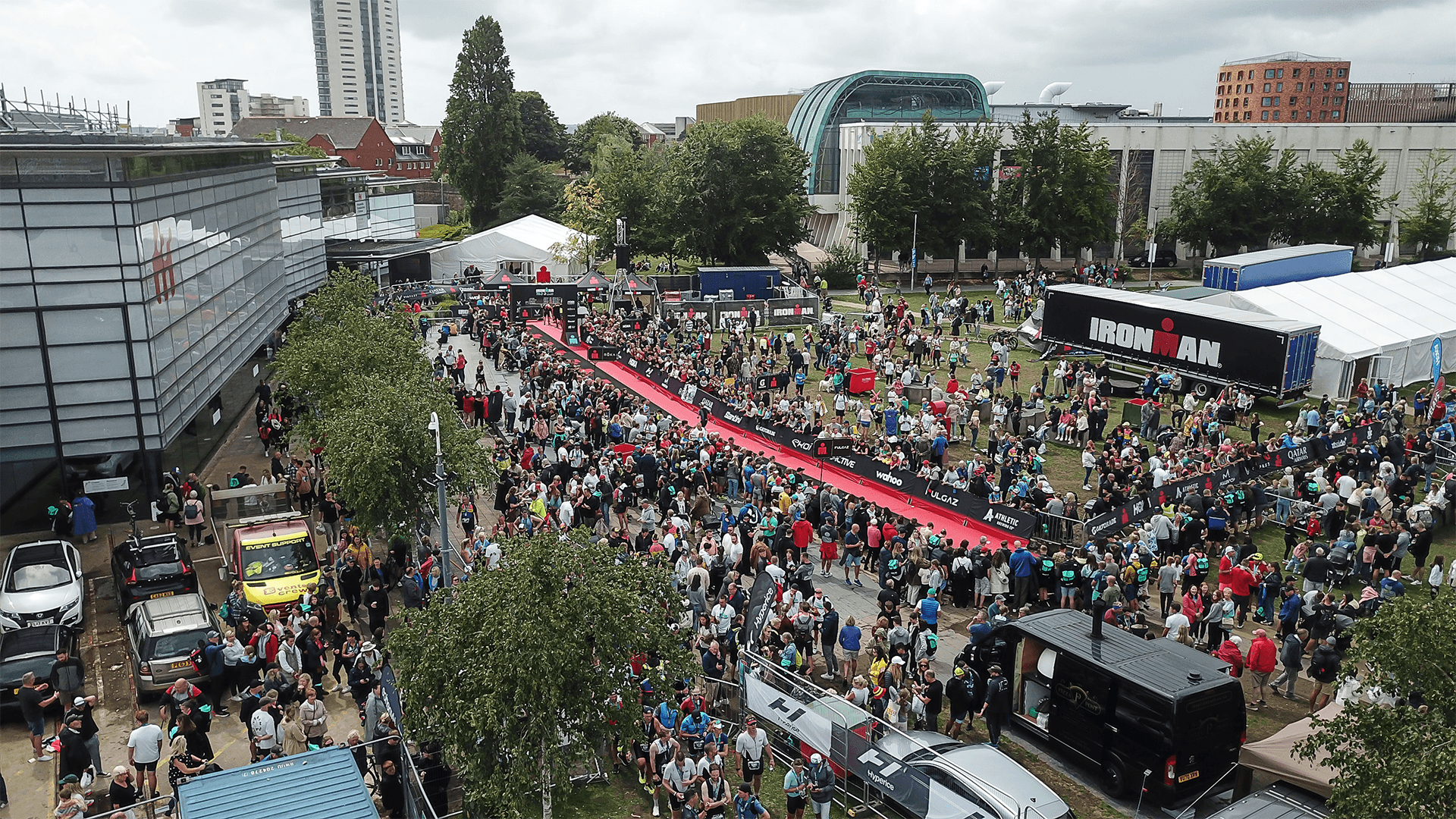
IRONMAN 70.3 SwanseaTraining Plan & Race Guide 2026
Swansea Bay, United KingdomJuly 12, 202670.3 mi — Half Distance2 min readPublished June 20, 2026Updated July 23, 2026
Share
01·Course Characteristics
The measure of Swansea 70.3
A sheltered harbor swim transitions into a rolling, wind-swept bike leg across the Gower Peninsula, culminating in a flat but highly exposed coastal run along Swansea Bay.
Climate
20°C
Peak air · water 16-18°C · mid-July Welsh summer
Conditions
Windy
Coastal head winds · zero run shade · variable rain risk
Elevation
980 m
Bike gain · rolling Gower hills · flat run
Difficulty
6.5 / 10
A fast, flat run is offset by a technical, punchy bike course prone to strong Atlantic winds.
This edition has passed
Training for a future IRONMAN 70.3 Swansea?
Registration for the next edition opens on a rolling basis. Start building your base now and we'll size a full plan the moment a new date is set.
An enclosed dock swim provides calm, flat water protected from open-ocean swells. Navigating the rectangular course is straightforward, but expect dense athlete traffic in the canal-like sections.
02
Bike
The Gower Peninsula
One-loop rolling coastal route
DISTANCE
90 km
LOOPS
1
ELEVATION
980 m
TERRAIN
Rolling and technical
WIND
Highly exposed
A scenic but demanding loop featuring punchy climbs, technical descents, and sweeping coastal views. The defining challenge is the unpredictable wind off the Bristol Channel, which can create block headwinds on the return.
03
Run
The Promenade
Two-loop out-and-back course
DISTANCE
21.1 km
LOOPS
2
ELEVATION
50 m
SURFACE
Tarmac
SHADE
None
A completely flat, paved route running parallel to the coastline of Swansea Bay. While the profile is lightning fast, the entire course is completely exposed to sun, wind, and rain with zero shelter.
03·AVG beginners' Training Timeline
From zero to the finish line
16 weeks
This 16-week progression is tailored to build the specific muscular resilience needed for Swansea's rolling bike leg, while preparing your joints for the high-impact, flat pavement run. It systematically transitions you from building general endurance to mastering coastal wind management and race-day pacing.
Today · WK 0Race Day
WK 1–4
Aerobic Base & Adaptation
Build baseline aerobic fitness and joint resilience for flat-surface running.
WK 5–8
Gower Strength & Power
Develop climbing strength on the bike and tolerance to repetitive tarmac impact.
WK 9–13
Race-Specific Simulation
Train sustained efforts in coastal wind conditions and master open-water dock pacing.
WK 14–16
Taper & Sharpen
Reduce training volume to shed fatigue while executing short, high-intensity intervals.
Adapts to your fitness, schedule & recovery every week.
Welsh summer weather is highly unpredictable, ranging from cool drizzle to humid sun. Wear a highly breathable kit, use sports sunscreen even if overcast, and be ready to adapt your cooling strategy if a warm day emerges.
Fuel & hydration
Aim for 60 to 90 grams of carbohydrates per hour on the bike, utilizing the flatter sections to eat comfortably. Target 600 to 800 milliliters of fluid hourly, adjusting upward if coastal winds dry you out deceptively fast.
Pacing
Keep your effort controlled on the punchy Gower climbs to avoid burning matches early. Save your legs for the run, where a flat profile allows you to hold a steady, aggressive tempo if you managed your bike power correctly.
Gear & logistics
Choose a mid-depth front wheel of 40mm to 50mm to maintain stability in gusty Gower winds. Arrive in Swansea by Friday to complete transition walk-throughs and acclimatize to the cool dock water temperatures.
Frequently Asked Questions
What is the water temperature for the IRONMAN 70.3 Swansea swim?
The swim takes place in the Prince of Wales Dock, where water temperatures typically hover between 15°C and 18°C (59°F to 64°F) in July. Because of these cool temperatures, the swim is highly likely to be wetsuit-legal under British Triathlon rules. You should practice open-water swimming in similar temperatures to ensure you are comfortable on race day.
How hilly is the IRONMAN 70.3 Swansea bike course?
The bike course is challenging and scenic, featuring approximately 1,000 meters of total elevation gain across its 90-kilometer loop. You will ride through the Gower Peninsula, which presents a mix of rolling terrain, sweeping coastal views, and some short, steep climbs. Preparing with hill repeats and strength-endurance training will help you manage these climbs efficiently.
What is the run course like for IRONMAN 70.3 Swansea?
The run is a flat, fast, and multi-lap course that takes you along the scenic Swansea Bay paved promenade. Because there is virtually no elevation change on this section, it is highly spectator-friendly and ideal for locking in a consistent half-marathon pace. You can expect high-energy crowds cheering you on across the entire 21.1-kilometer run.
When does the 2026 IRONMAN 70.3 Swansea take place?
The 2026 edition of IRONMAN 70.3 Swansea is scheduled for Sunday, July 12, 2026, in Swansea Bay, United Kingdom. You should plan your training block to peak for this mid-summer date, taking into account potentially variable Welsh weather conditions on the coast.
Where are the transition areas located for IRONMAN 70.3 Swansea?
The race utilizes a convenient, centralized transition area setup located near the Prince of Wales Dock and the SA1 Waterfront district. This close proximity between the swim exit, transition bags, and bike mount line helps streamline your race-day logistics. Be sure to walk the flow of transition during registration weekend so you know exactly where your gear is located.
Your Personalized Plan
Stop guessing your intervals. Train for this course.
FE26 builds your plan around your Strava data, your real schedule, and the exact demands of IRONMAN 70.3 Swansea— then adapts every week to how you actually perform.