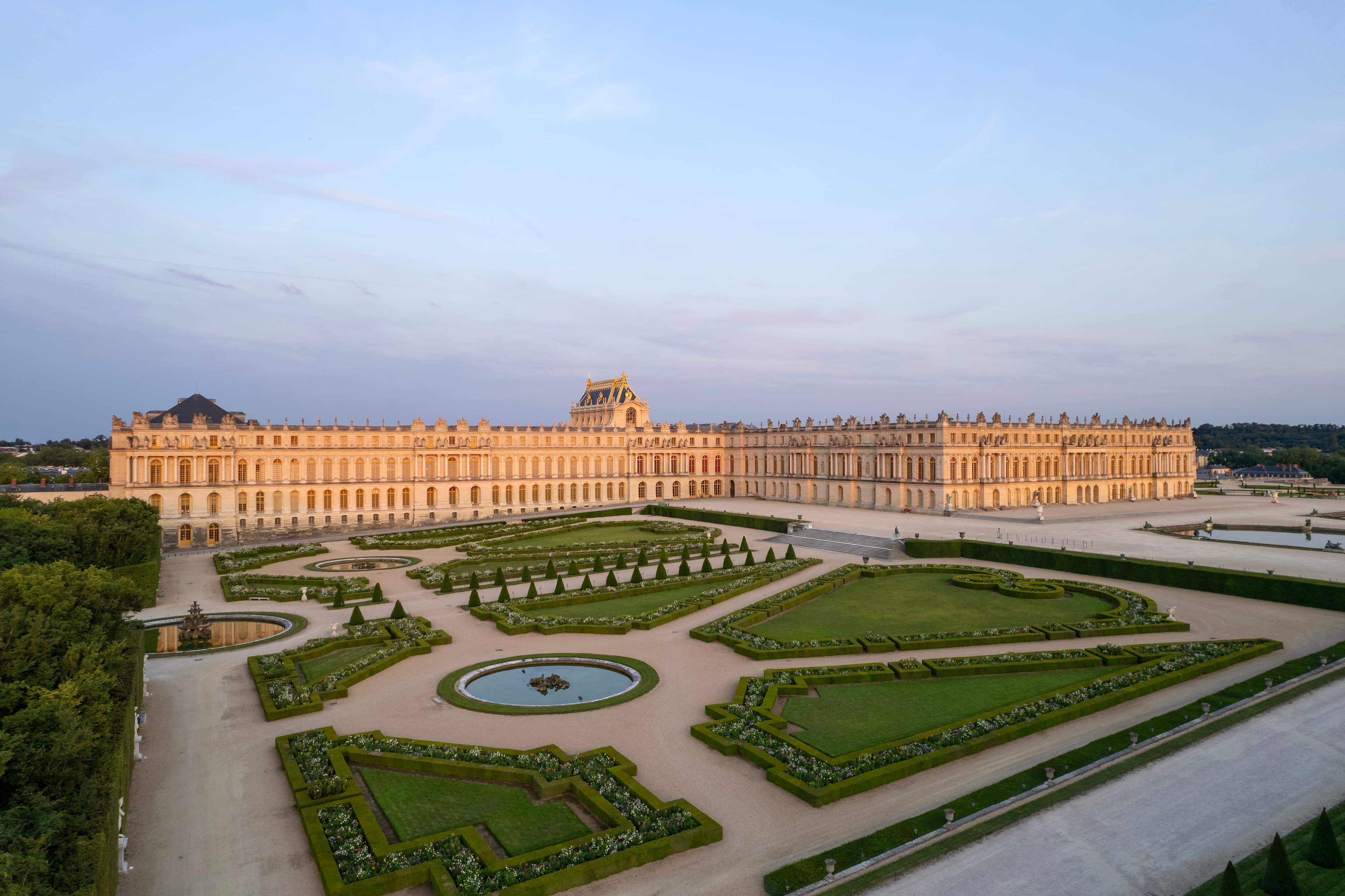
IRONMAN 70.3 VersaillesTraining Plan & Race Guide 2026
Versailles, FranceJuly 12, 202670.3 mi — Half Distance2 min readPublished June 20, 2026Updated July 4, 2026
Share
01·Course Characteristics
The Royal Test of Versailles
Race through historic grounds where a flat, sheltered swim leads into a deceptively rolling bike leg and a mixed-terrain run fully exposed to intense summer heat.
Climate
26°C
Peak air · water ~21°C · mid-July
Conditions
Exposed
No shade on run · historic cobblestones · calm water
Elevation
710 m
Rolling bike gain · 2 key climbs · flat run
Difficulty
6 / 10
A highly beginner-friendly, calm swim is contrasted by a rolling bike course and a hot, mixed-terrain run that demands strict pacing and heat management.
This edition has passed
Training for a future IRONMAN 70.3 Versailles?
Registration for the next edition opens on a rolling basis. Start building your base now and we'll size a full plan the moment a new date is set.
A single-loop swim in the highly sheltered, historic basin adjacent to the Chateau de Versailles. Enjoy completely flat, chop-free water and zero current, making this one of the most beginner-friendly swims on the circuit.
02
Bike
Chevreuse Valley Loop
Versailles to Vallee de Chevreuse
DISTANCE
90 km
LOOPS
1
ELEVATION
710 m
TERRAIN
Rolling
SURFACE
Asphalt
A single 90 km loop that journeys into the rolling, forested hills of the Chevreuse Valley, featuring high-quality asphalt roads interspersed with urban roundabouts and speed bumps. Prepare for two main climbs, including the 1.5 km Cote de la Vacheresse, balanced by fast, flat plateaus.
03
Run
The Palace Gardens
Piece d'Eau des Suisses & Avenue de Paris
DISTANCE
21.1 km
LOOPS
3.5
ELEVATION
100 m
SURFACE
Mixed
SHADE
Very little
PEAK TEMP
26°C
A 21.1 km half marathon split across 3.5 loops on a flat but physically punishing mixed terrain of paved paths, hard-packed dirt, concrete, and historic cobblestones. The course offers almost no shade, fully exposing you to the mid-summer sun and afternoon heat.
03·AVG beginners' Training Timeline
From zero to the finish line
16 weeks
This 16-week progressive training program is custom-tailored to the specific demands of Versailles. It prioritizes early aerobic capacity, transitions into targeted climbing strength for the rolling bike course, and finishes with heat tolerance and mixed-surface run preparation to ensure you cross the finish line strong.
Today · WK 0Race Day
WK 1–6
Aerobic Foundation
Build a strong aerobic engine and swim endurance in flat conditions.
WK 7–11
Strength & Rolling Power
Develop climbing strength for the Chevreuse Valley hills and ankle stability for mixed-terrain running.
WK 12–14
Race-Specific Build & Heat
Execute race-pace simulation workouts on uneven surfaces while simulating hot-weather conditions.
WK 15–16
Taper & Sharpen
Reduce training volume to shed fatigue while maintaining intensity to arrive fresh and fast.
Adapts to your fitness, schedule & recovery every week.
With peak temperatures averaging 24 to 26°C and potential heatwaves exceeding 30°C, cooling is critical. Utilize every aid station to douse your head and body with cold water to manage your core temperature. SPF protection and a light, white running cap are non-negotiable for the fully exposed run.
Fuel & hydration
Leverage the flat sections of the bike leg to strictly consume 60-90g of carbs per hour using Maurten gels and drink mixes. Increase your sodium and fluid intake to offset heavy sweating in the July heat. Do not skip any aid stations on the run, even if you feel fine early on.
Pacing
Swim smoothly to save energy, then ride conservatively on the early climbs like the Cote de la Vacheresse to keep your heart rate in check. Save your legs for the run, where the uneven cobblestones and high heat will rapidly accelerate fatigue if you overpace the bike.
Gear & logistics
Bring a TT bike or road bike with clip-on bars to exploit the fast flat plateaus. Prepare for the European 'clean transition' system by organizing your gear into the designated Blue and Red bags. Plan to stay locally in Versailles to simplify your race morning logistics.
Frequently Asked Questions
How difficult is the IRONMAN 70.3 Versailles course?
The course is rated as a moderate 3 out of 5 in difficulty, combining a very beginner-friendly swim with a rolling bike and a mixed-terrain run. While the swim in the calm Piece d'Eau des Suisses is highly sheltered, the run is physically demanding due to high summer heat, cobblestone sections, and a multi-loop format. Proper pacing on the bike's climbs and a disciplined hydration strategy are essential to conquering this race.
What is the elevation gain on the IRONMAN 70.3 Versailles bike course?
The single-loop 90 km bike course features a total elevation gain of approximately 620 to 800 meters (2,034 to 2,624 feet) as it winds through the Chevreuse Valley. While you will encounter fast plateaus, you must also navigate forested rolling hills and two key climbs, including the 1.5 km Côte de la Vacheresse which averages a 4.6% gradient. Either a TT bike or a road bike with clip-on aerobars is highly recommended to handle this varied terrain.
What should I expect for the water temperature and swim conditions at Versailles?
The 1.9 km swim takes place in the historic Piece d'Eau des Suisses, where the freshwater reservoir is highly sheltered, offering calm, chop-free water with zero currents. Water temperatures typically hover around 21°C (70°F), meaning wetsuits are usually legal, though they could become optional if the water exceeds 24.5°C. The race uses a self-seeded rolling start format to ensure a smooth flow of athletes into the water.
What is the run course terrain like for IRONMAN 70.3 Versailles?
The 21.1 km half marathon consists of 3.5 flat loops with about 100 meters of total elevation, but the terrain itself is highly mixed and technically challenging. You will run on a combination of paved paths, concrete, hard-packed dirt and gravel trails, and historic cobblestones near the palace. The route along the Piece d'Eau des Suisses and Avenue de Paris offers very little shade, exposing you directly to the peak mid-summer heat.
How do logistics and transition work for the Versailles race?
Versailles is located 20 km southwest of central Paris and is easily accessible via a 35 to 40-minute ride on the RER C train, though staying locally in Versailles is highly recommended for stress-free race morning logistics. Please note that this European event utilizes a 'clean transition' system, meaning you will store your gear in designated Blue and Red transition bags rather than placing it next to your bike. Additionally, be prepared for hot July temperatures averaging 24°C to 26°C (75°F to 79°F), which demands a strict nutrition strategy featuring high sodium and fluid intake.
Your Personalized Plan
Stop guessing your intervals. Train for this course.
FE26 builds your plan around your Strava data, your real schedule, and the exact demands of IRONMAN 70.3 Versailles— then adapts every week to how you actually perform.