Panama City, United StatesNovember 7, 2026140.6 mi — Full Distance2 min readPublished July 13, 2026
Share
01·Course Characteristics
The deceptive flat of Panama City
While flat profiles invite high speeds, constant pedaling on the bike and heavy exposure on the run demand relentless effort under shifting coastal winds.
Climate
23°C
Peak air · water 19-22°C · early November
Conditions
Exposed
Gulf swell · coastal headwinds · high humidity
Elevation
555 m
Bike gain · flat · continuous pedaling required
Difficulty
5.5 / 10
A deceptively challenging course where flat terrain eliminates coasting rest, paired with ocean chop and coastal wind.
There's still hope!
Only 2 weeks to go — but it's not too late.
The ideal build for this course is 24 weeks, and you have 2. We'll compress the essentials into your remaining time, prioritizing the demands that matter most on this course to get you to the finish line.
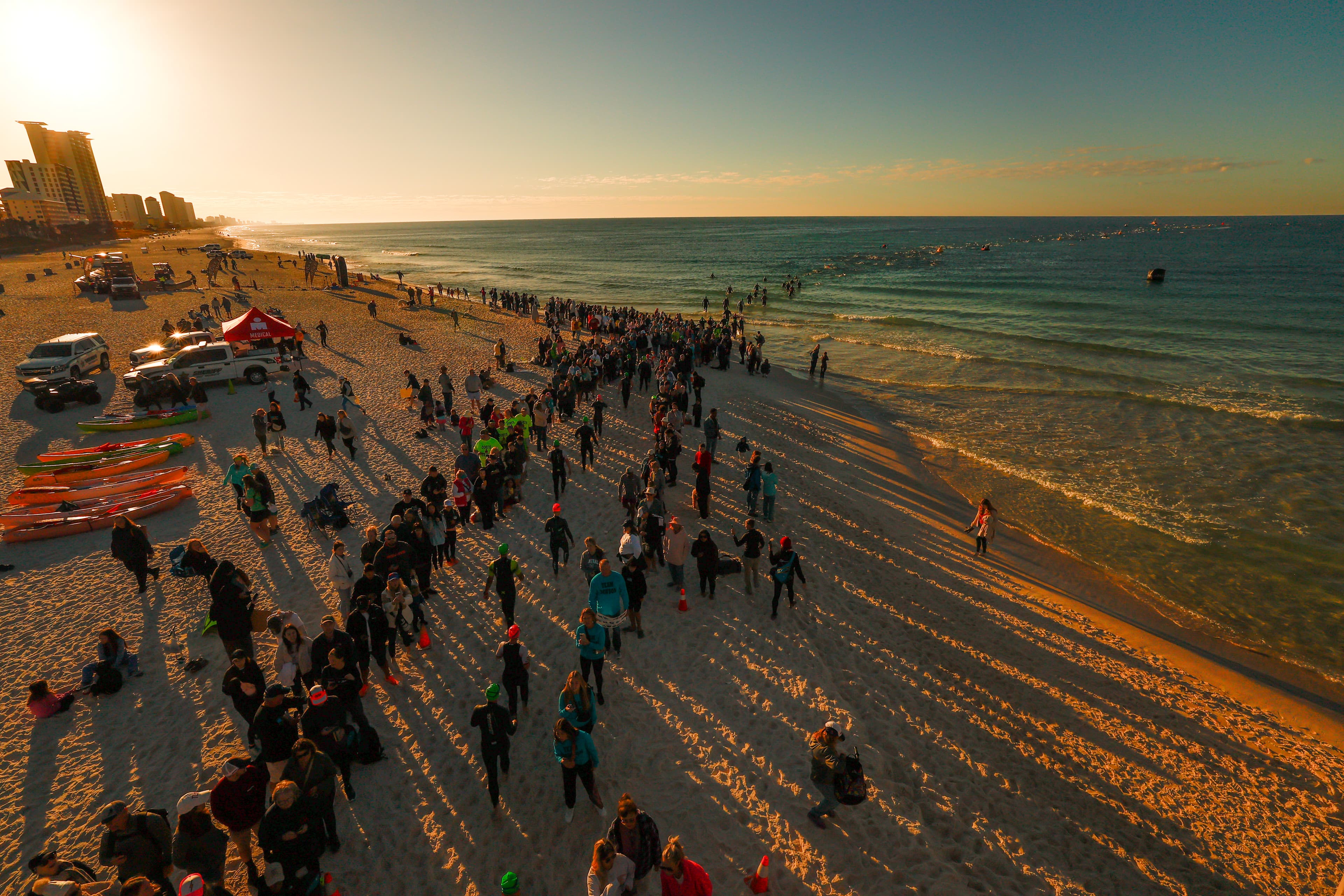
A two-loop ocean swim starting and finishing at the beach next to the iconic Russell-Fields Pier. Swimmers face a brief beach run between loops and must prepare for potential ocean swells, chop, and jellyfish.
02
Bike
The Relentless Aero Loop
Pine Log State Forest & Highway 79
DISTANCE
180 km
LOOPS
1
ELEVATION
555 m
SURFACE
Smooth asphalt
WIND
Strong coastal gusts
A fast, single-loop route moving northeast into scenic waterways and Pine Log State Forest before a long out-and-back on Highway 79. The lack of climbs means you must pedal constantly with no opportunity to coast, fighting headwinds along the coast.
03
Run
Front Beach Road Double
Panama City Beach Shoreline
DISTANCE
42.2 km
LOOPS
2
ELEVATION
77 m
SHADE
Very minimal
LIGHT
Early sunset around 16:45
A flat, two-loop marathon running parallel to the shoreline on Front Beach Road. The course is highly spectator-friendly but heavily exposed to the sun, with an early evening sunset leaving late-finishers in the dark.
03·AVG beginners' Training Timeline
From zero to the finish line
24 weeks
This 24-week plan adapts directly to the flat but punishing nature of the Florida course. We prioritize building deep neck and core postural strength to handle hours in the aero bars, combined with progressive open-water ocean confidence, ensuring you can manage both the relentless pedaling and the coastal chop.
Today · WK 0Race Day
WK 1–6
Aerobic Foundation
Build basic endurance and swim technique to handle ocean swimming.
WK 7–12
Aero Position Durability
Develop lower back endurance and core strength for prolonged aerodynamic riding.
WK 13–18
Specific Endurance & Wind Resistance
Simulate steady-state pedaling against resistance and hot, humid running.
WK 19–22
Peak & Race-Simulation
Execute full-distance mock brick workouts matching your race day pacing and nutrition.
WK 23–24
Taper & Sharpen
Reduce volume while maintaining intensity to arrive fresh and fully loaded.
Adapts to your fitness, schedule & recovery every week.
With peak temperatures near 23°C and high humidity, use every aid station to grab ice and water to keep your core temperature down. The Florida sun is highly intense on the exposed run, so wear a cap, sunglasses, and apply water-resistant sunscreen.
Fuel & hydration
Rinse your mouth with fresh water in Transition 1 to clear the salty Gulf taste before eating. Establish a strict, time-based fueling protocol on the flat bike, targeting 60 to 90 grams of carbohydrates and 500 to 750 ml of fluids per hour to offset continuous pedaling energy.
Pacing
Avoid the temptation to over-torque on the flat bike course; stick rigidly to your target power even when battling headwinds on Highway 79. On the run, lock into a sustainable pace early and conserve energy for the second loop when natural light fades quickly after 16:45.
Gear & logistics
Choose deep-section wheels carefully as coastal crosswinds can buffet your steering. Pack a light windbreaker or long-sleeve top in your Run Special Needs bag, as temperatures drop rapidly to 13°C once the sun sets over Panama City Beach.
Frequently Asked Questions
How hard is the IRONMAN Florida course?
While the course is flat and popular for personal records, it is deceptively challenging. The pancake-flat bike course requires constant pedaling with zero opportunity to coast, which leads to early muscle fatigue and lower back tightness from staying aerodynamic. Additionally, athletes must prepare for potential ocean chops, jellyfish during the swim, and strong coastal winds on the bike.
What is the water temperature for the IRONMAN Florida swim?
Water temperatures in the Gulf of Mexico typically hover in the high 60s to low 70s°F (19-22°C) on race day, which historically makes the swim wetsuit-legal for age groupers. The 2.4-mile swim is a two-loop ocean course around the Russell-Fields Pier with a beach exit in between. Swimmers should prepare for potential ocean swells, choppy water, minor currents, and the occasional presence of jellyfish.
What is the elevation gain of the IRONMAN Florida bike course?
The bike course has a total elevation gain of approximately 1,450 to 1,822 feet (440 to 555 meters) over the 112-mile route. It is a fast, single-loop course featuring mostly flat roads, minor rollers on Highway 79, and a bridge crossing. Because it is so flat, you will need to pedal continuously without downhills to rest, making a strict nutrition plan essential.
What are the typical weather conditions for IRONMAN Florida?
Expected race-day temperatures typically range from a cool 55°F (13°C) in the early morning to daytime highs of around 73°F (23°C). While these temperatures are pleasant, Florida's humidity remains a factor, and the sun can feel intense on the exposed run course. Strong coastal wind gusts are also common, which can create choppy ocean waters and tough headwind sections on the bike.
Where should I stay for the IRONMAN Florida race?
You should book accommodations early near Pier Park or along Front Beach Road, such as beachfront condos, to stay within walking distance of the start and finish lines. This central location near the Russell-Fields Pier eliminates race-day parking stress and allows your support crew to easily access transition, the beach, and the run course. The closest airport is Northwest Florida Beaches International Airport (ECP), located about 15 minutes north.
Your Personalized Plan
Stop guessing your intervals. Train for this course.
FE26 builds your plan around your Strava data, your real schedule, and the exact demands of IRONMAN Florida— then adapts every week to how you actually perform.