A single-loop counter-clockwise swim starting from the renovated Thun Lido. You will navigate the pristine, glacier-fed waters of Lake Thun, where sighting can be challenged by morning glare, light lake swells, or mist.
02
Bike
The Oberland Loops
Bernese Oberland
DISTANCE
180.2 km
LOOPS
2
ELEVATION
2,200 m
SURFACE
Smooth asphalt
A highly scenic, undulating two-loop course featuring 2,200 meters of climbing through the Gantrisch area and Gürbe Valley. Watch out for fast, technical descents with tight switchbacks where riding on aero bars is strictly prohibited.
03
Run
Lakeside and Old Town
Thun Shoreline & Historic Center
DISTANCE
42.2 km
LOOPS
3 or 4
ELEVATION
120 m
SHADE
Sparse
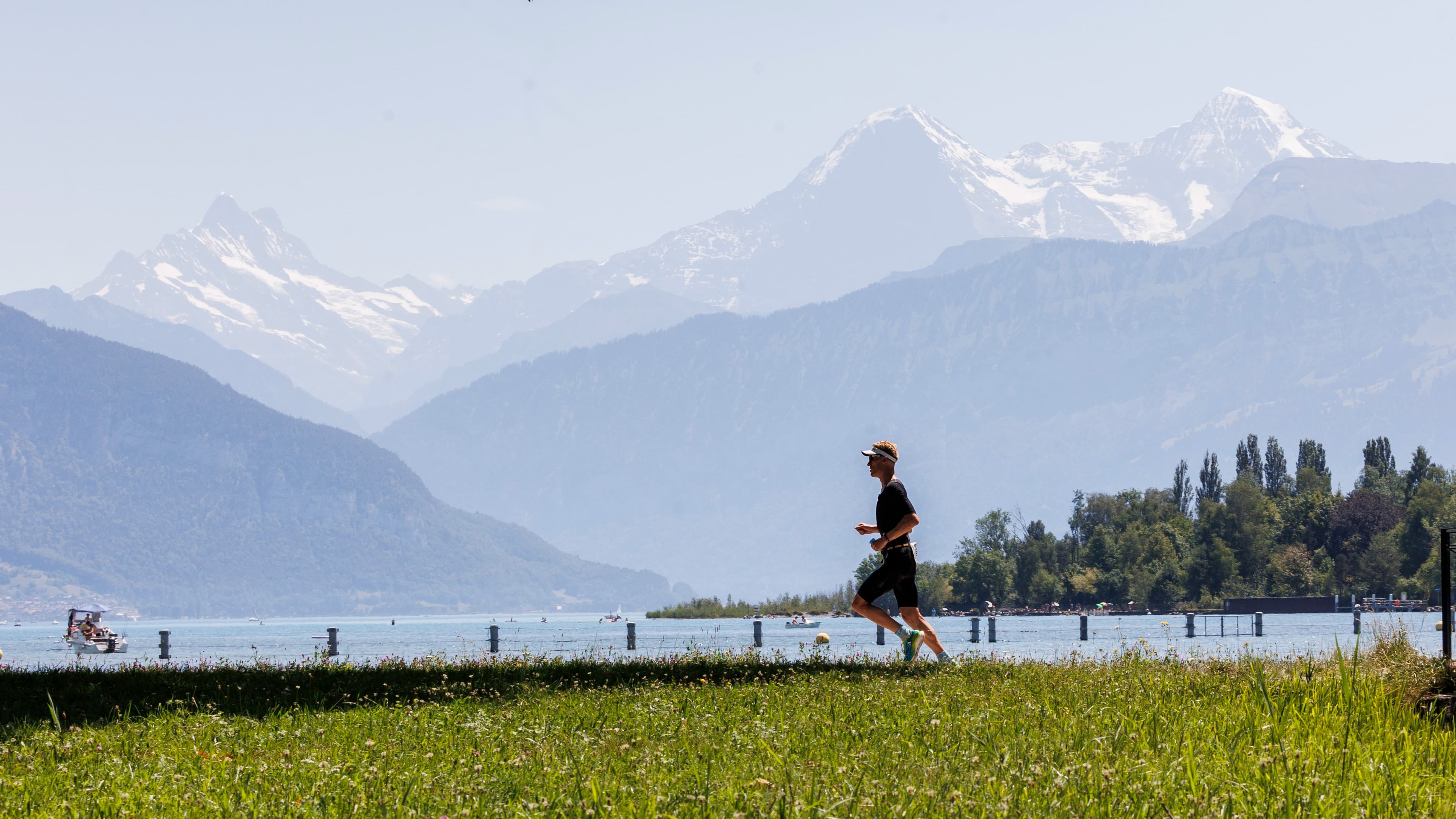
A flat, multi-loop marathon running along the scenic, exposed shoreline of Lake Thun and into the historic Old Town. You must navigate uneven cobblestone sections in the town center while facing afternoon peak temperatures of up to 28°C.
03·AVG beginners' Training Timeline
From zero to the finish line
28 weeks
This 28-week path is designed to safely take you from a modest base to finishing strong in Thun. We front-load structural durability and aerobic base before building the specific climbing power needed for the Alps, finishing with targeted heat prep and technical descending skills.
Today · WK 0Race Day
WK 1–10
Aerobic Base Building
Develop a durable aerobic foundation to prepare your body for the high volume of full-distance training.
WK 11–18
Strength & Alpine Climbing
Build muscular endurance on the bike to conquer the 2,200 meters of alpine climbing and adapt to cold water swimming.
WK 19–25
Race-Specific Build & Heat
Simulate the multi-loop run with cobblestones and adapt your pacing to the high-heat, low-shade run conditions.
WK 26–28
Taper & Strategy
Reduce training volume to shed fatigue while sharpening technical descending skills and mental focus.
Adapts to your fitness, schedule & recovery every week.
Prepare for a cool 14°C start but expect afternoon highs of 25°C to 28°C with high sun exposure. Mitigate heat on the run by utilizing every aid station for cooling, and be ready for sudden alpine rain showers.
Fuel & hydration
Keep fueling continuous and steady during the flatter bike sections to avoid shutting down your digestive system before the climbs. Target high carbohydrate and sodium replacement, and consider warm bouillon soup at aid stations to recover from the cold swim.
Pacing
Manage your power output conservatively on the climbs between kilometers 45-60 and 135-150. Avoid over-riding the rolling hills to save your legs for the flat but mentally demanding multi-loop run.
Gear & logistics
A wetsuit is virtually guaranteed for the 15°C to 19°C lake. Choose a highly versatile wheelset that can handle technical alpine descents and potential ridge crosswinds, and check brakes thoroughly before race day.
Frequently Asked Questions
What is the water temperature and wetsuit policy for the IRONMAN Switzerland Thun swim?
Water temperatures in the glacier-fed Lake Thun typically range from a cool 15°C to 19°C (59°F to 66°F). Because of these low temperatures, wetsuits are highly likely and virtually guaranteed for age-group athletes. Sighting is highly important during this single-loop, 3.8 km swim due to potential morning glare, light lake swells, or mist.
How hard is the IRONMAN Switzerland Thun bike course?
The bike course is rated as physically demanding, featuring approximately 2,200 meters (7,217 feet) of total elevation gain over two loops. While there are no exceptionally long, high-altitude alpine passes, you will face constantly undulating terrain with key climbs occurring between kilometers 45–60 and 135–150. You must also be prepared for fast, highly technical descents with switchbacks where riding on your aero bars is prohibited for safety.
What is the run course surface like for IRONMAN Switzerland Thun?
The marathon run course is flat and mostly paved, tracing the scenic shoreline of Lake Thun and crossing the River Aare. However, you will need to navigate several cobblestone sections through the historic Old Town of Thun, which can present a tripping hazard when you are fatigued. Shade is sparse along the lakeside, meaning you must prepare for peak afternoon heat of 26°C to 28°C.
What weather conditions should I expect at IRONMAN Switzerland Thun on July 5?
You should prepare for pleasant but highly variable mid-summer alpine weather. Morning temperatures usually start cool around 14°C (57°F) before rising to afternoon highs of 25°C to 28°C (77°F to 82°F) under high sun exposure. Because alpine weather is unpredictable, you should also be ready for sudden rain showers, thunderstorms, or gusty winds.
How do I get to Thun, Switzerland, for the race and what are the logistics?
Thun is easily reached by taking the highly reliable Swiss Federal Railways (SBB) train from either Zurich Airport or Geneva Airport, both of which easily accommodate bike boxes. Booking your accommodation well in advance is highly recommended because Thun is a major summer tourist hub. Staying near the city center or the Lido transition area makes logistics easy and often eliminates the need for a rental car.
Your Personalized Plan
Stop guessing your intervals. Train for this course.
FE26 builds your plan around your Strava data, your real schedule, and the exact demands of IRONMAN Switzerland Thun— then adapts every week to how you actually perform.