IRONMAN 70.3 Des MoinesTraining Plan & Race Guide 2025
Des Moines, United StatesJune 8, 202570.3 mi — Half Distance2 min readPublished July 13, 2026Updated July 23, 2026
Share
01·Course Characteristics
Midwest rolling speed in Des Moines
A race defined by a calm lake swim, a rolling and potentially windy rural bike course, and a flat, multi-loop run through the humid heart of downtown Des Moines.
Climate
26°C
Peak air temperature · water 20-22°C · early June humidity
Conditions
Humid
Exposed country roads · moderate river winds · minimal run shade
Elevation
550 m
Bike total elevation gain · rolling farmland hills · no major climbs
Difficulty
5.5 / 10
Moderate rating due to rolling terrain, potential headwinds on the exposed bike leg, and high humidity during the run.
This edition has passed
Training for a future IRONMAN 70.3 Des Moines?
Registration for the next edition opens on a rolling basis. Start building your base now and we'll size a full plan the moment a new date is set.
An easy-to-navigate single loop in the protected waters of Gray's Lake. Expect calm conditions with minimal current, making for a straightforward and fast swim.
02
Bike
Rolling Iowa Plains
Des Moines to rural Polk County
DISTANCE
90 km
LOOPS
1 loop
ELEVATION
550 m
TERRAIN
Rolling
WIND
Moderate winds
A single-loop course that takes you out of the city into open, rolling farmland. The hills are short but frequent, and the open landscape makes you vulnerable to crosswinds.
03
Run
The Riverfront Loop
Downtown and Des Moines River
DISTANCE
21.1 km
LOOPS
2 loops
ELEVATION
60 m
SURFACE
Paved paths & asphalt
SHADE
Minimal
PEAK TEMP
26°C
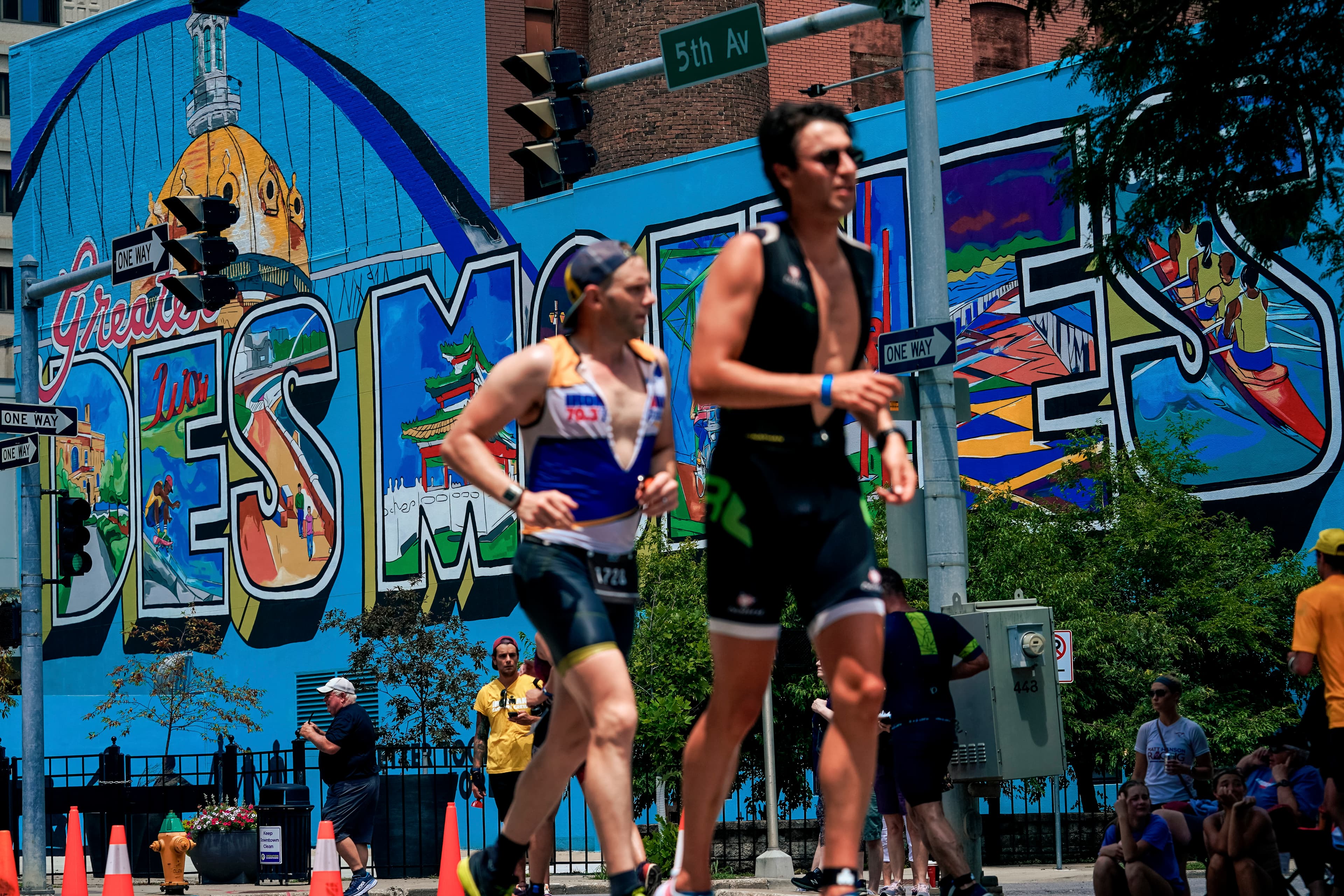
A spectator-friendly double-loop course tracing the Des Moines River and downtown streets. The route is mostly flat, but rising midday temperatures and humidity can make it feel much warmer.
03·AVG beginners' Training Timeline
From zero to the finish line
16 weeks
This 16-week progression is structured to steadily build your aerobic foundation before introducing targeted strength work for the rolling bike course. It culminates in race-intensity sessions that mimic the humid, flat run, ensuring you arrive in Des Moines confident and ready to finish.
Today · WK 0Race Day
WK 1–5
Aerobic Base Building
Develop your aerobic capacity and joint durability through low-intensity volume.
WK 6–9
Strength & Hill Power
Build leg strength on the bike to handle the rolling Iowa terrain.
WK 10–13
Race-Specific Build
Introduce sustained half-ironman intensity efforts and brick runs.
WK 14–16
Peak & Taper
Sharpen your speed, practice heat protocols, and shed cumulative fatigue.
Adapts to your fitness, schedule & recovery every week.
Expect humid conditions with temperatures rising toward 26°C by midday. Grab ice and cold water at every aid station to lower your core temperature, dousing your head and chest.
Fuel & hydration
Aim for 60-90 grams of carbohydrates and 700-1000 ml of fluids per hour on the bike to offset sweat losses in the humid air. Increase sodium intake if you are a heavy sweater.
Pacing
Keep your effort strictly managed on the rolling bike hills; over-riding the short climbs will ruin your run. Run the first half of the half marathon conservatively before pushing the pace.
Gear & logistics
Bring both a sleeveless and full-sleeved wetsuit to accommodate borderline water temperatures. A mid-depth front wheel (40-60mm) is ideal to balance aerodynamics and crosswind stability on the open prairie.
Frequently Asked Questions
What is the water temperature for the IRONMAN 70.3 Des Moines swim?
The swim takes place in Gray's Lake, where early June water temperatures typically hover around 68°F to 74°F (20°C to 23°C). This range means the swim is usually wetsuit-legal for age-group athletes, though you should prepare for the possibility of a non-wetsuit swim if there is an early summer heatwave. The single-loop course is well-sheltered, offering calm, flat water conditions perfect for setting a steady rhythm.
How hard is the IRONMAN 70.3 Des Moines bike course?
The bike course is moderately challenging, featuring rolling Midwestern terrain with approximately 1,200 to 1,500 feet of total elevation gain over the 56 miles. While there are no massive mountain climbs, you will encounter steady rollers and potential headwinds on the exposed rural roads outside the city. Solid pacing in your aero bars and smart gear selection are key to keeping your legs fresh for the run.
What is the run course like for IRONMAN 70.3 Des Moines?
The run is a highly energetic, multi-loop course that winds through downtown Des Moines, along the Principal Riverwalk, and around Gray's Lake. It is exceptionally flat and fast, but the lack of shade means you will be highly exposed to the midday sun. Spectator support is dense throughout the downtown sectors, providing a massive mental boost during the final miles.
What weather should I expect for IRONMAN 70.3 Des Moines in June?
On race day in early June, Des Moines typically experiences average morning starting temperatures in the low 60s°F, warming up to afternoon highs in the low-to-mid 80s°F (27°C to 30°C). Humidity can be quite high in Iowa at this time of year, which increases the heat index during the run. Preparing a robust hydration and electrolyte strategy is crucial to managing the late-morning heat.
Where is the best place to stay for IRONMAN 70.3 Des Moines logistics?
Booking a hotel in downtown Des Moines is highly recommended, as it places you within walking distance of the finish line, transition area, and athlete village. Staying downtown eliminates race-morning parking stress and allows your support crew easy access to the multi-loop run course. If you stay further out, ensure you plan for early morning travel and parking near Gray's Lake Park.
Your Personalized Plan
Stop guessing your intervals. Train for this course.
FE26 builds your plan around your Strava data, your real schedule, and the exact demands of IRONMAN 70.3 Des Moines— then adapts every week to how you actually perform.