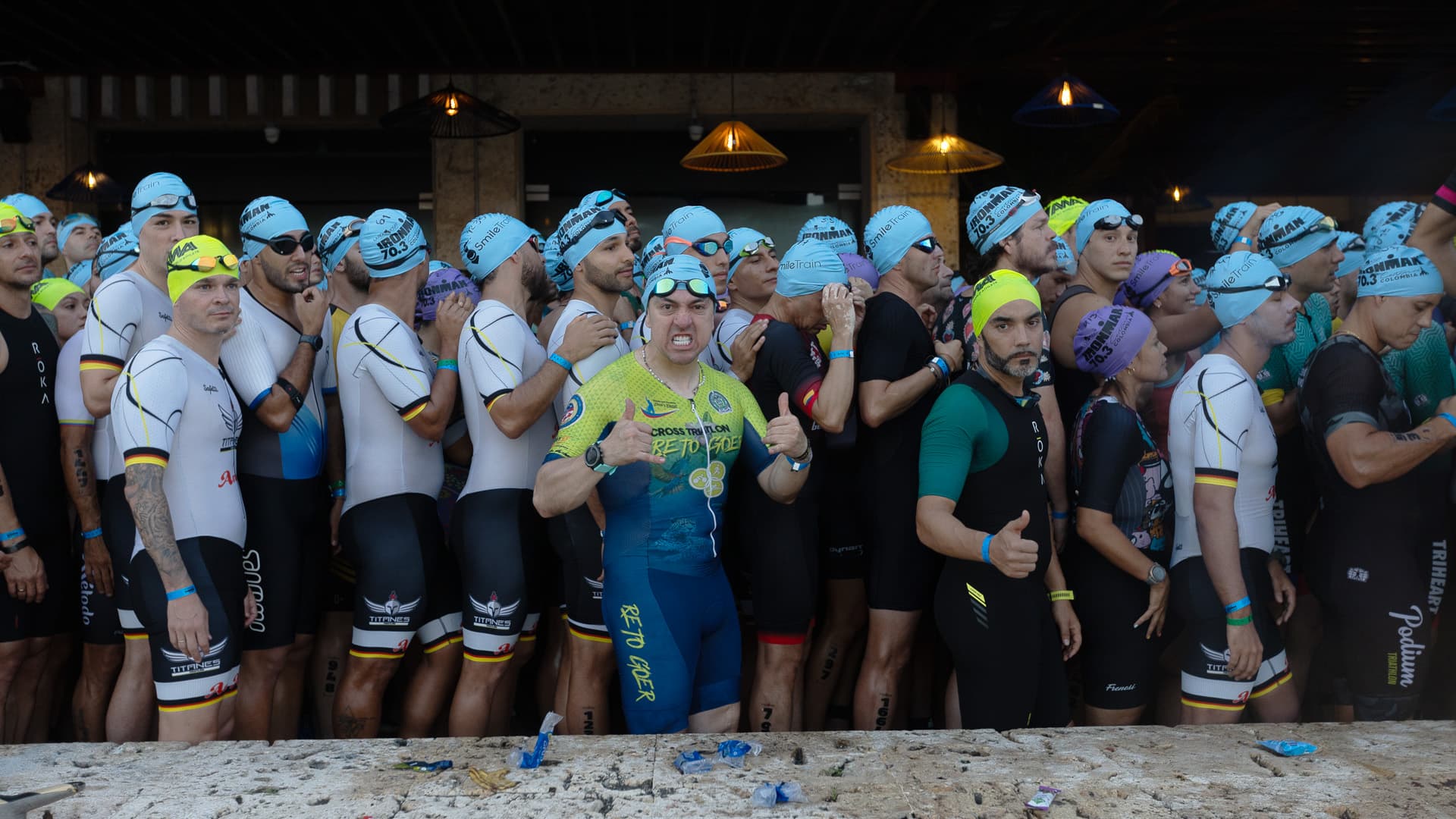
IRONMAN 70.3 CartagenaTraining Plan & Race Guide 2026
Cartagena, ColombiaNovember 29, 202670.3 mi — Half Distance2 min readPublished July 4, 2026
Share
01·Course Characteristics
The Heat of Historic Cartagena
While flat on paper, Cartagena demands extreme thermal resilience. Intense tropical humidity, strong coastal headwinds, and a technical cobblestone run through the historic old city transform this fast course into a relentless test of pacing and cooling.
Climate
31°C
Peak air · water 26.6-30°C · late November
Conditions
Humid
79-80% humidity · coastal wind · high heat index
Elevation
401 m
Bike gain · flat run with 50 m gain
Difficulty
7.5 / 10
The flat profile is offset by extreme tropical heat, a feeling of 38-43°C, relentless highway headwinds, and sharp, cobblestone run turns.
There's still hope!
Only 8 weeks to go — but it's not too late.
The ideal build for this course is 16 weeks, and you have 8. We'll compress the essentials into your remaining time, prioritizing the demands that matter most on this course to get you to the finish line.
A single-loop rectangular course in flat, calm harbor waters. Sighting is straightforward with buoys every 100 meters, but visibility is low in the murky water.
02
Bike
The Coastal Highway Out-and-Back
Via al Mar Highway
DISTANCE
90 km
LOOPS
1
ELEVATION
401 m
SURFACE
Technical city asphalt & smooth highway
WIND
18 km/h headwinds
The first and last 8 km navigate bumpy city asphalt with bridge expansion joints and speed bumps before opening onto exceptionally smooth highway. The return leg faces strong, relentless coastal headwinds or crosswinds under a fully exposed sun.
03
Run
The Walled City Two-Loop
Ciudad Amurallada
DISTANCE
21.1 km
LOOPS
2
ELEVATION
50 m
SURFACE
Cobblestones, brick pavers & asphalt
SHADE
Virtually zero
A highly spectator-friendly, two-loop course through the narrow streets of the historic old town, finishing at the clock tower. The terrain features sharp 90-degree turns and uneven cobblestones that disrupt your rhythm while the sun radiates heat off the historic stone walls.
03·AVG beginners' Training Timeline
From zero to the finish line
16 weeks
This 16-week progression is specifically built around Cartagena's harsh climate. We front-load aerobic volume and wind-specific bike strength, transition into heat-adaptation protocols and foot-stability training for the cobblestones, and conclude with a sharp taper to ensure you arrive fully hydrated and metabolically ready.
Today · WK 0Race Day
WK 1–4
Aerobic Foundation & Heat Prep
Build a strong aerobic base and initiate early sweat rate assessments.
WK 5–8
Aerobic Strength & Wind Tolerance
Develop steady-state power to handle the sustained coastal headwinds.
WK 9–12
Specific Heat & Footing Build
Incorporate heat-adaptation runs and lower-body stability drills for cobblestones.
WK 13–14
Peak Simulation
Execute race-intensity bricks simulating the highway headwinds and warm run conditions.
WK 15–16
Taper & Hydration Load
Reduce volume to shed fatigue while executing a strict hydration and electrolyte protocol.
Adapts to your fitness, schedule & recovery every week.
With relative humidity averaging 79% to 80%, the heat index will feel like 38°C to 43°C. Take advantage of every run aid station to dump ice and cold water on your head, neck, and shoulders to lower your core body temperature.
Fuel & hydration
Expect exceptionally high sweat rates in the tropical climate. Target 750 to 1000 mL of fluid and 700 to 1000 mg of sodium per hour on the bike, and continue to sip sports drinks and take gels regularly during the run.
Pacing
Respect the intense return headwind on the bike and avoid burning matchsticks trying to fight it. Save energy for the run, where the combination of cobblestones and stifling heat radiating off the stone walls will rapidly degrade your pace if you over-biked.
Gear & logistics
Bring a deep-section front wheel only if you are confident handling 18 km/h coastal crosswinds. Ensure you carry Colombian Pesos for local cash transactions, and purchase your one-day federation license during athlete check-in at the convention center.
Frequently Asked Questions
What is the water temperature and wetsuit policy for the Allianz IRONMAN 70.3 Cartagena swim?
Water temperatures in the Bahia de las Animas typically average a very warm 80°F to 86°F (26.6°C to 30°C). Because of these high temperatures, wetsuits are strictly illegal for this race. You will swim a protected, flat single-loop course with low visibility where sighting is made easier by large landmark structures and buoys placed every 100 meters.
How hard is the Allianz IRONMAN 70.3 Cartagena bike course?
While the 56-mile bike course is remarkably flat with only 1,294 to 1,315 feet of elevation gain, it is deceptively brutal due to extreme environmental factors. You will face intense tropical heat, high humidity, and strong coastal headwinds or crosswinds on the southbound return leg along the Via al Mar highway. Additionally, the first and last 5 miles of the ride are highly technical, featuring bumpy city asphalt, speed bumps, and bridge expansion joints.
What is the run course surface like for IRONMAN 70.3 Cartagena?
The flat 13.1-mile run consists of a 2-loop course that winds through the historic walled Old Town. You will navigate a challenging mix of flat asphalt, historic brick pavers, and uneven cobblestones, punctuated by frequent 90-degree turns that can disrupt your running rhythm. Because there is virtually zero shade and temperatures frequently feel like over 100°F (38°C) due to the humidity, managing your core temperature is your top priority.
How should I manage my nutrition and hydration for IRONMAN 70.3 Cartagena?
Because of the extreme tropical humidity and a heat index that frequently exceeds 100°F (38°C), your sweat rates will be exceptionally high. You should aim to consume 750 to 1000 mL of fluid and 700 to 1000 mg of sodium per hour on the bike to prevent dehydration, which is the primary cause of DNFs here. On the run, use every single aid station to dump ice and cold water over your head, neck, and shoulders while regularly taking in gels and sports drinks.
What are the best travel and accommodation options for IRONMAN 70.3 Cartagena?
You should fly into Rafael Núñez International Airport (CTG), which is located just 10 to 15 minutes from the walled city. For accommodations, you can choose modern high-rise hotels in the Bocagrande district, which require a short taxi ride to transition, or boutique hotels directly inside the walled city that are within walking distance of the venue. Make sure to carry cash in Colombian Pesos, as card acceptance varies, and remember to purchase your mandatory one-day Colombian Triathlon Federation license during athlete check-in.
Your Personalized Plan
Stop guessing your intervals. Train for this course.
FE26 builds your plan around your Strava data, your real schedule, and the exact demands of IRONMAN 70.3 Cartagena— then adapts every week to how you actually perform.