A two-loop rectangular course in the warm Arabian Sea starting from Miramar Beach, featuring an beach run across the sand between loops. While the sea is often calm, coastal swells and currents can develop, requiring sharp sighting to stay on course.
02
Bike
Zuari Bridge Highway
Panaji Highway Route
DISTANCE
90 km
ELEVATION
525 m
TERRAIN
Rolling highway
SURFACE
Smooth asphalt
WIND
Coastal crosswinds
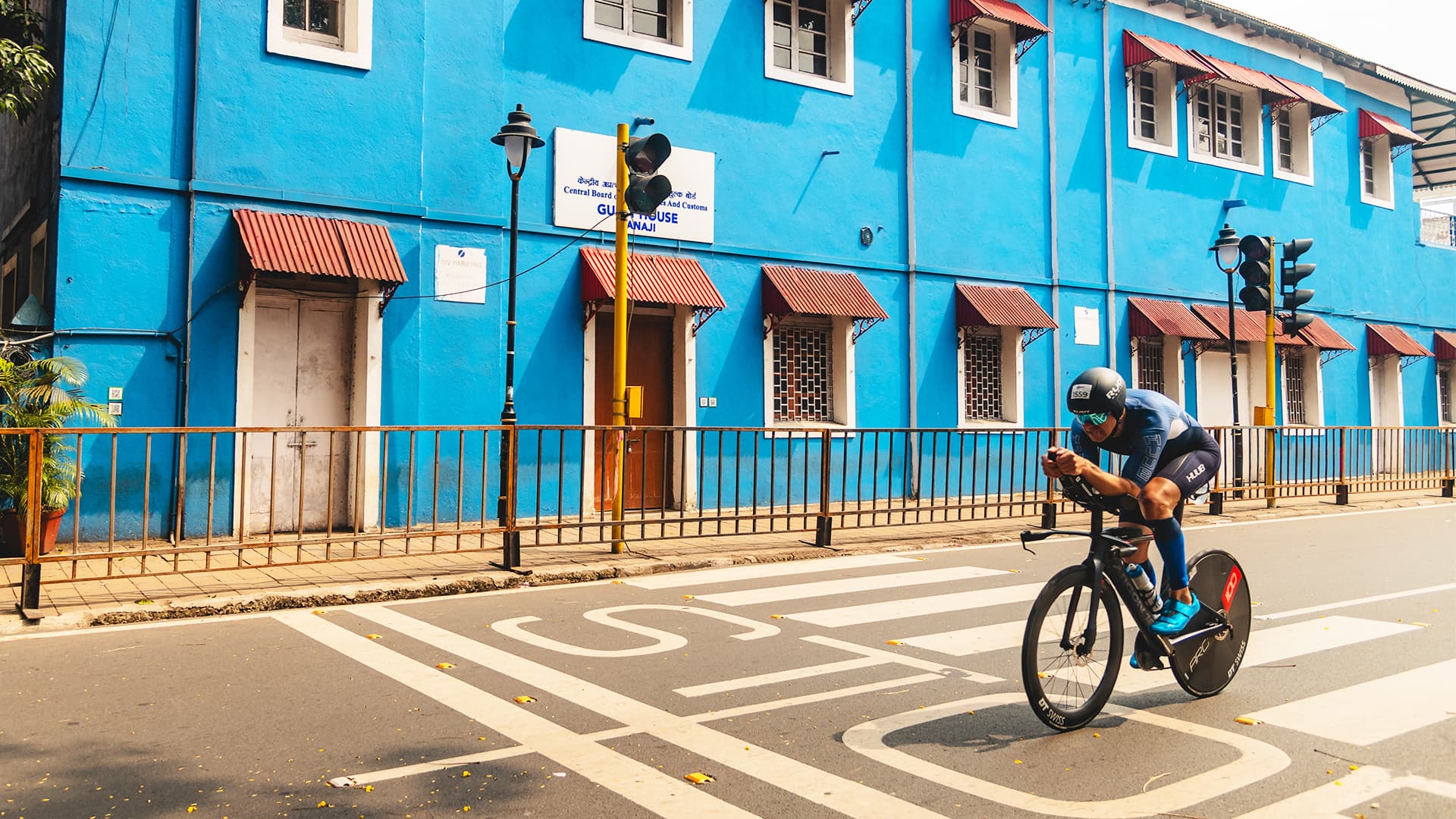
A fast highway layout that crosses the iconic New Zuari Cable Bridge. While the asphalt is wide and smooth, you must navigate bridge expansion joints, technical city turns, and significant coastal crosswinds and headwinds.
03
Run
Dona Paula Loops
Miramar to Dona Paula
DISTANCE
21.1 km
LOOPS
3 loops
ELEVATION
101 m
PEAK TEMP
30-32°C
SHADE
Partially tree-shaded
A grueling three-loop coastal run from Miramar towards Dona Paula that features a steep, testing climb up to the Governor's Palace on every loop. Large portions of the course are highly exposed to the intense midday sun and peak tropical heat.
03·AVG beginners' Training Timeline
From zero to the finish line
16 weeks
This 16-week progression systematically prepares you for Goa's unique double threat: intense tropical heat and repeating run climbs. By starting with base aerobic and heat prep, building bike strength for the bridge, and finishing with hill-fatigue run brick simulations, you will arrive on Miramar Beach fully prepared to finish strong.
Today · WK 0Race Day
WK 1–4
Aerobic Base & Heat Prep
Build basic aerobic fitness while beginning early heat adaptation to handle Goa's tropical climate.
WK 5–8
Strength & Bridge Power
Develop cycling strength to manage the steady climbs of the New Zuari Bridge under windy conditions.
WK 9–13
Simulations & Hill Durability
Execute race-pace brick workouts incorporating steep run climbs to prep for the Dona Paula loops.
WK 14–16
Taper & Thermal Sharpening
Reduce volume to peak freshness while maintaining short, high-intensity heat sessions to lock in pacing.
Adapts to your fitness, schedule & recovery every week.
Prepare for extreme tropical humidity exceeding 80 percent and peak run temperatures of 32°C. Douse your head, neck, and core with ice and cold water at every single run aid station to keep your core temperature down.
Fuel & hydration
Target high sodium intake of 700 to 1,000 mg per hour paired with 750 to 1,000 ml of fluids to counter high sweat rates. Keep nutrition primarily liquid or gel-based, aiming for 60 to 90 grams of carbs per hour to avoid GI distress.
Pacing
Manage the gradual New Zuari Bridge climbs conservatively during the bike leg to preserve your legs. Keep your heart rate under control during the long 500 to 900-meter jog from the beach swim exit to T1.
Gear & logistics
Use a highly ventilated helmet, wear a white or light-colored trisuit, and apply high-SPF sunscreen before the start. Pack essential bike spares like tubes and CO2 cartridges in your luggage, and book accommodations in Panaji well in advance.
Frequently Asked Questions
What is the water temperature and wetsuit policy for the IRONMAN 70.3 Goa swim?
The water temperature in the Arabian Sea off Miramar Beach typically ranges from 27°C to 29°C (80°F to 84°F) on race day. Because of these warm conditions, the 1.9 km swim is strictly non-wetsuit legal for all age-group athletes. You will tackle a two-loop rectangular course that features an Australian exit, where you briefly run across the sand before starting your second loop.
How hard is the IRONMAN 70.3 Goa bike course?
The 90 km bike course is physically fast but moderately challenging, featuring a rolling, highway-based layout with approximately 525 meters (1,722 ft) of elevation gain. The primary obstacle is the steady climb up the New Zuari Cable Bridge, where you will face strong coastal crosswinds and headwinds. Be sure to ride conservatively on this bridge to save your legs, and stay alert for expansion joints and technical turns near the city limits.
What is the run course like at IRONMAN 70.3 Goa?
The 21.1 km run is a three-loop coastal course starting at Miramar Beach that is mostly flat but features a steep, testing climb up to the Dona Paula and Governor's Palace area on each loop. With about 101 meters (331 ft) of total climbing and temperatures hitting up to 32°C (90°F) in highly exposed areas, this run is incredibly demanding. Your best strategy is to pace yourself strictly and use every aid station to douse your head and core with ice and cold water.
How should I plan my nutrition and hydration for the extreme humidity in Goa?
With relative humidity regularly exceeding 80%, you will experience exceptionally high sweat rates, making a aggressive hydration plan essential. You should target consuming 750 ml to 1,000 ml of fluids and 700 mg to over 1,000 mg of sodium every hour on the course. Aim for 60g to 90g of carbohydrates per hour, prioritizing liquid or gel sources as solid foods are highly difficult to digest in this level of tropical heat.
Which airport should I fly into for IRONMAN 70.3 Goa and how do I get around?
You can fly into Dabolim Airport (GOI), which is located about an hour's drive (26 km) from the race venue, or Manohar International Airport in Mopa (GOX) in North Goa. For seamless local travel, download the local ride-hailing app 'GoaMiles' before you arrive. Be sure to book your accommodation in Panaji or Miramar Beach several months in advance, as November is peak tourist season in Goa.
Your Personalized Plan
Stop guessing your intervals. Train for this course.
FE26 builds your plan around your Strava data, your real schedule, and the exact demands of IRONMAN 70.3 Goa— then adapts every week to how you actually perform.