Augusta, United StatesJuly 26, 202670.3 mi — Half Distance2 min readPublished July 8, 2026
Share
01·Course Characteristics
The measure of IRONMAN 70.3 Maine
A lightning-fast downstream river swim gives way to a deceptively grueling, rolling bike leg and a mostly flat, shaded run punctuated by a punishing late-stage kicker hill.
Climate
29°C
Peak air · cool morning 15.5°C · high humidity
Conditions
Undulating
Outbound headwinds · rough starting roads · shaded run trail
Elevation
941 m
Official bike gain · GPS reads up to 1194 m · rolling hills
Difficulty
6.5 / 10
Fast current-assisted swim offset by relentless rolling climbs on the bike and a steep 61 m climb late in the run.
This edition has passed
Training for a future IRONMAN 70.3 Maine?
Registration for the next edition opens on a rolling basis. Start building your base now and we'll size a full plan the moment a new date is set.
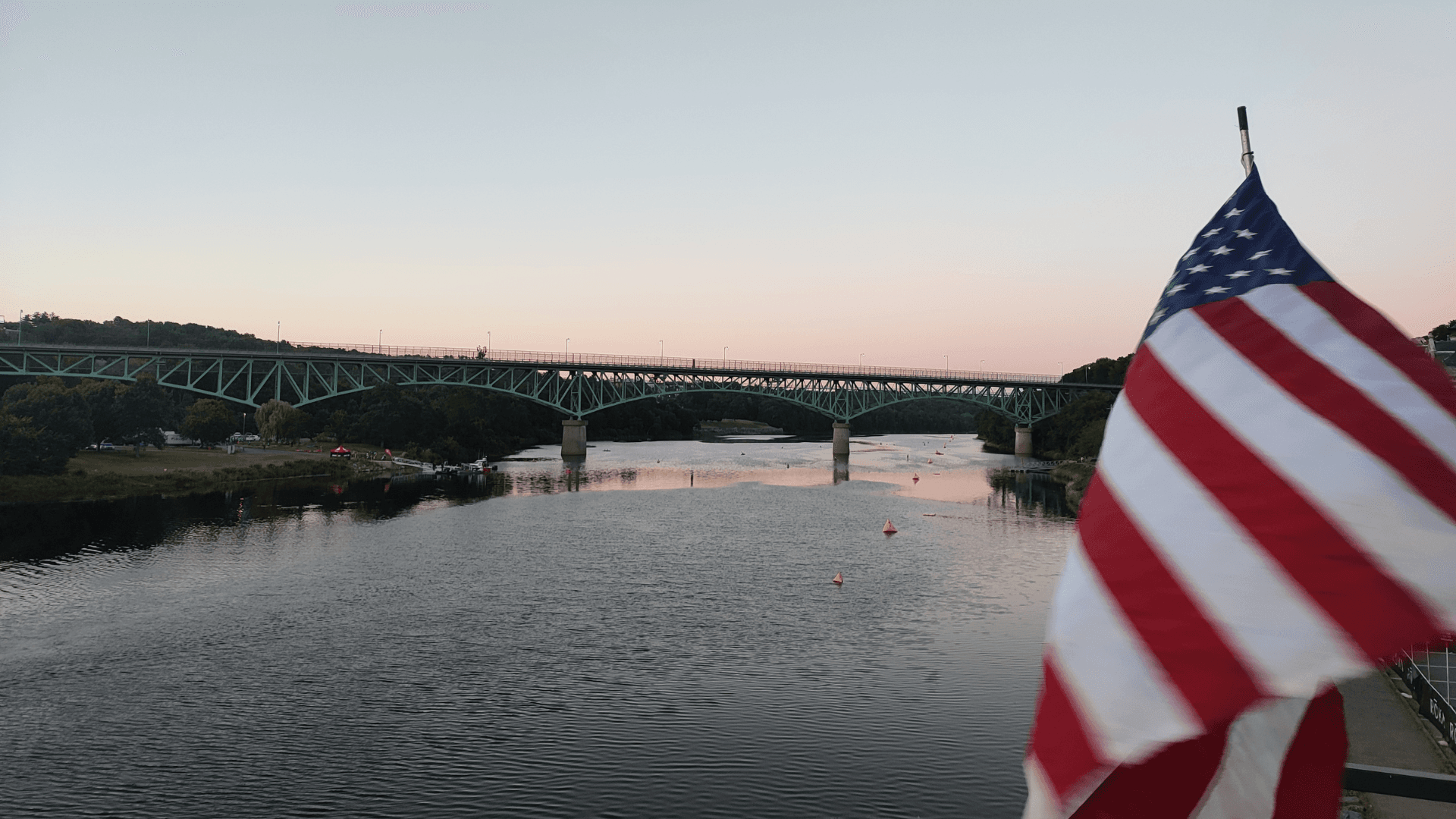
This point-to-point freshwater swim features an incredibly fast downstream current that frequently delivers personal-best swim times. Water temperatures typically range from 20°C to 22°C, making wetsuits highly likely and recommended. Keep in mind there is a 1.9 km walk to the start and a long, uphill 640-meter run to transition.
02
Bike
Rolling Kennebec Valley
Kennebec River Valley Loop
DISTANCE
90 km
LOOPS
1-loop
ELEVATION
941 m
TERRAIN
Heavily rolling
WIND
15 km/h outbound headwind
A single-loop route characterized by relentless short, steep climbs with gradients up to 5.9% and rolling descents. The first few miles feature rougher roads with sharp dips that can launch loose water bottles, while the front 32 km often present a steady headwind. Pacing is critical here as there is almost no flat ground to establish a steady rhythm.
03
Run
Kennebec Rail Trail
Kennebec River Rail Trail
DISTANCE
21.1 km
LOOPS
1-loop out-and-back
ELEVATION
129-151 m
SURFACE
100% paved
SHADE
Dense canopy
An out-and-back route along a paved, highly shaded riverfront rail trail that is mostly flat and fast. However, a major 61-meter steep climb between kilometers 16 and 17.8 can severely test fatigued legs. The run finishes with a high-energy chute near the historic Maine State Capitol.
03·AVG beginners' Training Timeline
From zero to the finish line
16 weeks
This 16-week arc is tailored specifically to Augusta's unique demands. It prioritizes building early muscular endurance to handle the 941-meter rolling bike course, followed by run-strength sessions that prepare you for the late-stage steep hill after kilometers of flat running.
Today · WK 0Race Day
WK 1–4
Base & Aerobic Capacity
Establish solid cardiovascular base and run durability on flat surfaces.
WK 5–8
Strength & Hill Progression
Introduce low-cadence climbing intervals on the bike and short hill repeats on the run.
WK 9–12
Race-Specific Simulation
Simulate rolling bike efforts followed by transition runs containing late-stage climbs.
WK 13–16
Peak & Taper
Refine carbohydrate pacing, practice wetsuit swims, and taper volume to arrive fresh.
Adapts to your fitness, schedule & recovery every week.
Expect cool morning temperatures of 15.5°C rising to a humid 29°C by midday. Utilize the dense shade on the run course to stay cool, and dump water over your head at aid stations to manage the late-summer humidity.
Fuel & hydration
Plan for 60-90g of carbohydrates per hour using Maurten Gels and Mortal Hydration. Use the rolling downhills on the bike to safely eat and drink, and ensure all water bottles are tightly secured to prevent ejection on early rough roads.
Pacing
Avoid over-exerting on the rolling bike climbs by riding conservatively and conserving energy for the run. On the run, save a match for the steep 61-meter kicker at kilometer 16, where power-hiking is a highly viable strategic option.
Gear & logistics
Bring throwaway sandals for the 1.9 km walk to the swim start, and prep for an exceptionally long 640-meter run in T1. Use a standard wetsuit and secure cage bottle holders to handle the rough pavement in the initial kilometers of the bike.
Frequently Asked Questions
What is the water temperature and is the swim wetsuit legal at IRONMAN 70.3 Maine?
Water temperatures in the Kennebec River typically average between 68°F and 72°F (20°C to 22°C), meaning there is a very high likelihood of the swim being wetsuit legal. Because of this, wearing a wetsuit is highly recommended to take full advantage of the incredibly fast, downstream current. Keep in mind that you will need to walk 1.2 miles from the transition area to the swim start on race morning, so packing throwaway sandals is highly recommended.
How hard is the IRONMAN 70.3 Maine bike course?
The bike course is deceptively difficult and rated as moderately challenging due to its highly undulating, rolling terrain. While the official elevation gain is listed as 3,087 feet, GPS and Strava data regularly record between 3,827 and 3,919 feet of climbing with gradients reaching up to 5.9%. The relentless short, steep climbs make it difficult to establish a steady rhythm, so you must carefully pace yourself and carry speed through the downhills to roll over the next crest.
What is the run course profile like for IRONMAN 70.3 Maine?
The run is a single-loop, out-and-back course along the Kennebec River Rail Trail that is mostly flat, 100% paved, and well-shaded by a dense tree canopy. However, you must save some energy for a steep, 1.1-mile kicker hill between miles 10 and 11.1 that climbs approximately 200 feet. Power-hiking or walking this late-stage climb is a smart, energy-saving strategy before you head into the high-energy finish chute near the Maine State Capitol.
What should I expect for logistics at the T1 transition in Augusta?
The run from the swim exit at the Kennebec River to the T1 transition area at the Kennebec Valley YMCA is exceptionally long, measuring over 0.4 miles, and includes a steep uphill climb. To save valuable time and stay comfortable, it is highly recommended to unzip your wetsuit while running this section. Additionally, make sure to secure your water bottles tightly on your bike, as the first 3 to 4 miles of the bike course feature rough road surfaces with sharp dips that can easily eject gear.
What is the typical weather for IRONMAN 70.3 Maine in late July?
You can expect cool, crisp morning temperatures around 60°F (15.5°C) at the swim start, which will warm up significantly to an afternoon high of around 84°F (29°C) by the end of the race. Humidity levels can be moderately high, and you will likely encounter average wind speeds of 9-10 mph (15 km/h) that typically create a headwind on the front 20 miles of the bike leg. Because the heat and humidity can accelerate your sweat rate, having a personalized hydration and nutrition plan is vital.
Your Personalized Plan
Stop guessing your intervals. Train for this course.
FE26 builds your plan around your Strava data, your real schedule, and the exact demands of IRONMAN 70.3 Maine— then adapts every week to how you actually perform.