IRONMAN 70.3 MarbellaTraining Plan & Race Guide 2024
Marbella, SpainOctober 27, 202470.3 mi — Half Distance2 min readPublished July 5, 2026Updated July 23, 2026
Share
01·Course Characteristics
A mountain test by the Mediterranean
Marbella pairs a flat, scenic Mediterranean swim and run with an incredibly demanding mountain bike leg. Surviving the Puerto de Ojén climb while saving your legs for the coastal run is the key to conquering this course.
Climate
22°C
Peak air temperature · water 18-19°C · late October coastal climate
Conditions
Challenging
Mountain climbs on bike · exposed sea-front run · potential coastal breeze
Elevation
1400 m
Significant climbing on bike · flat run course along the promenade
Difficulty
7.5 / 10
A brutal 1,400 m climbing profile on the bike makes this one of the tougher 70.3 courses, despite a flat and fast run.
This edition has passed
Training for a future IRONMAN 70.3 Marbella?
Registration for the next edition opens on a rolling basis. Start building your base now and we'll size a full plan the moment a new date is set.
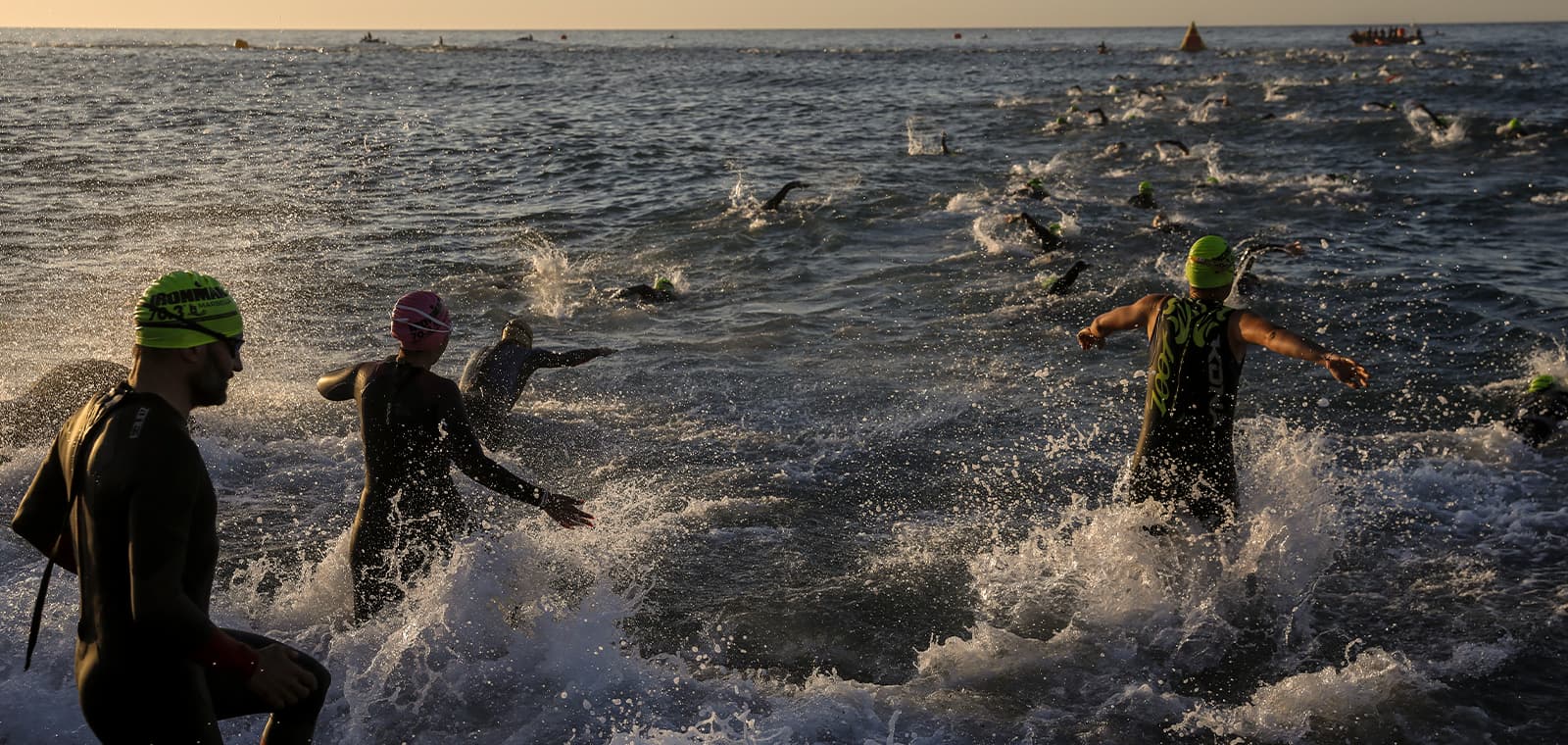
Starting from the sand of Levante Beach, you will swim a single counter-clockwise loop in the sheltered bay of Puerto Banús. The water is generally calm, but early morning glare can make sighting the turn buoys challenging.
02
Bike
The Ojén Pass
Marbella to inland loops
DISTANCE
90 km
LOOPS
1-loop
ELEVATION
1400 m
TERRAIN
Mountainous
SURFACE
Smooth asphalt
A highly demanding course that climbs immediately up the Puerto de Ojén. You will navigate fast technical descents and winding mountain roads through Monda and Coín before returning to the coast.
03
Run
Paseo Marítimo Promenade
Marbella seafront
DISTANCE
21.1 km
LOOPS
2-loop
ELEVATION
Flat
SURFACE
Paved promenade
SHADE
Very limited
A flat, fast two-loop course along the bustling Marbella promenade. While the profile is easy, the route is entirely exposed to the sun and coastal winds, lined with passionate spectators cheering you home.
03·AVG beginners' Training Timeline
From zero to the finish line
16 weeks
This 16-week progression is specifically engineered to prepare you for Marbella's heavy climbing. We front-load aerobic volume and progressively build the muscular torque required for the mountain bike leg, leaving you fresh and fully prepared to run strong on the promenade.
Today · WK 0Race Day
WK 1–4
Aerobic Foundation
Build a resilient cardiovascular base and comfortable swim volume.
WK 5–9
Strength & Climbing
Develop leg strength and low-cadence torque to handle the mountain grades.
WK 10–13
Specific Endurance & Speed
Combine climbing resilience with flat-ground run-off-the-bike brick workouts.
WK 14–16
Taper & Strategy
Reduce training volume to shed fatigue while practicing race-pace pacing and nutrition.
Adapts to your fitness, schedule & recovery every week.
Expect mild temperatures around 20-22°C, but high humidity and direct sun on the run can increase core temp quickly. Grab water at every aid station to pour over your head, and apply high-SPF sunscreen before the race and in T2.
Fuel & hydration
Aim for 80-90g of carbohydrates per hour on the bike, utilizing the flatter sections to eat since climb-induced high heart rates make digestion harder. Aim for 750ml of fluid per hour, especially during the long, warm climbs.
Pacing
Keep your effort strictly capped below threshold on the initial Puerto de Ojén climb; blowing up here will ruin your race. Use the descent to recover, and transition into a metronomic, steady tempo on the flat, two-loop run.
Gear & logistics
Choose a cassette with a climbing gear to keep your cadence above 70 RPM on steep sections. Opt for mid-depth wheels to balance aerodynamic efficiency on flats with stability during fast mountain descents.
Frequently Asked Questions
What is the water temperature and swim format for IRONMAN 70.3 Marbella?
The swim takes place in the Mediterranean Sea at Levante Beach with expected water temperatures ranging between 18°C and 21°C (64°F to 70°F), making it typically wetsuit-legal for age-groupers. You will complete a single-loop, counter-clockwise 1.9 km (1.2-mile) course starting with a rolling beach start. Because you swim directly out into the open sea, be prepared for potential swells and practice sighting buoy markers against the morning sun.
How hard is the IRONMAN 70.3 Marbella bike course?
The 90 km bike course is highly challenging and technical, featuring approximately 1,400 meters (4,593 feet) of elevation gain as you head inland into the Sierra Blanca mountains. You will tackle the major ascent of Puerto de Ojén early in the ride, followed by fast, winding descents that require excellent bike handling skills and cautious braking. A gearing setup such as a 34T or 36T inner chainring paired with an 11-30T or 11-32T cassette is highly recommended to manage the steep gradients.
What is the running route like for IRONMAN 70.3 Marbella?
The run is a flat, fast 21.1 km (13.1-mile) course consisting of two laps along the paved Paseo Marítimo promenade. It offers flat terrain and roaring spectator support, but the coastal path is entirely exposed to the elements. You should prepare for direct sun exposure and potential coastal headwinds by practicing your pacing and staying disciplined with hydration at the aid stations.
What weather should I expect in Marbella in late October?
Marbella in late October offers highly pleasant racing conditions, with average daytime high temperatures around 22°C (72°F) and morning lows near 15°C (59°F). While the air is generally comfortable, the autumn transition can occasionally bring strong coastal winds or sudden Mediterranean showers. Pack versatile gear, including a light wind jacket for pre-race morning prep and transition setup.
Where are transition and the finish line located for IRONMAN 70.3 Marbella?
The race features a single, centralized transition area (T1/T2) located directly at the Puerto Banús marina, which simplifies your race-day logistics. The final run finish line is also situated in the heart of Puerto Banús, right along the vibrant waterfront. This compact layout means your support crew can easily cheer you on during the swim exit, transition phases, and the final red carpet run.
Your Personalized Plan
Stop guessing your intervals. Train for this course.
FE26 builds your plan around your Strava data, your real schedule, and the exact demands of IRONMAN 70.3 Marbella— then adapts every week to how you actually perform.