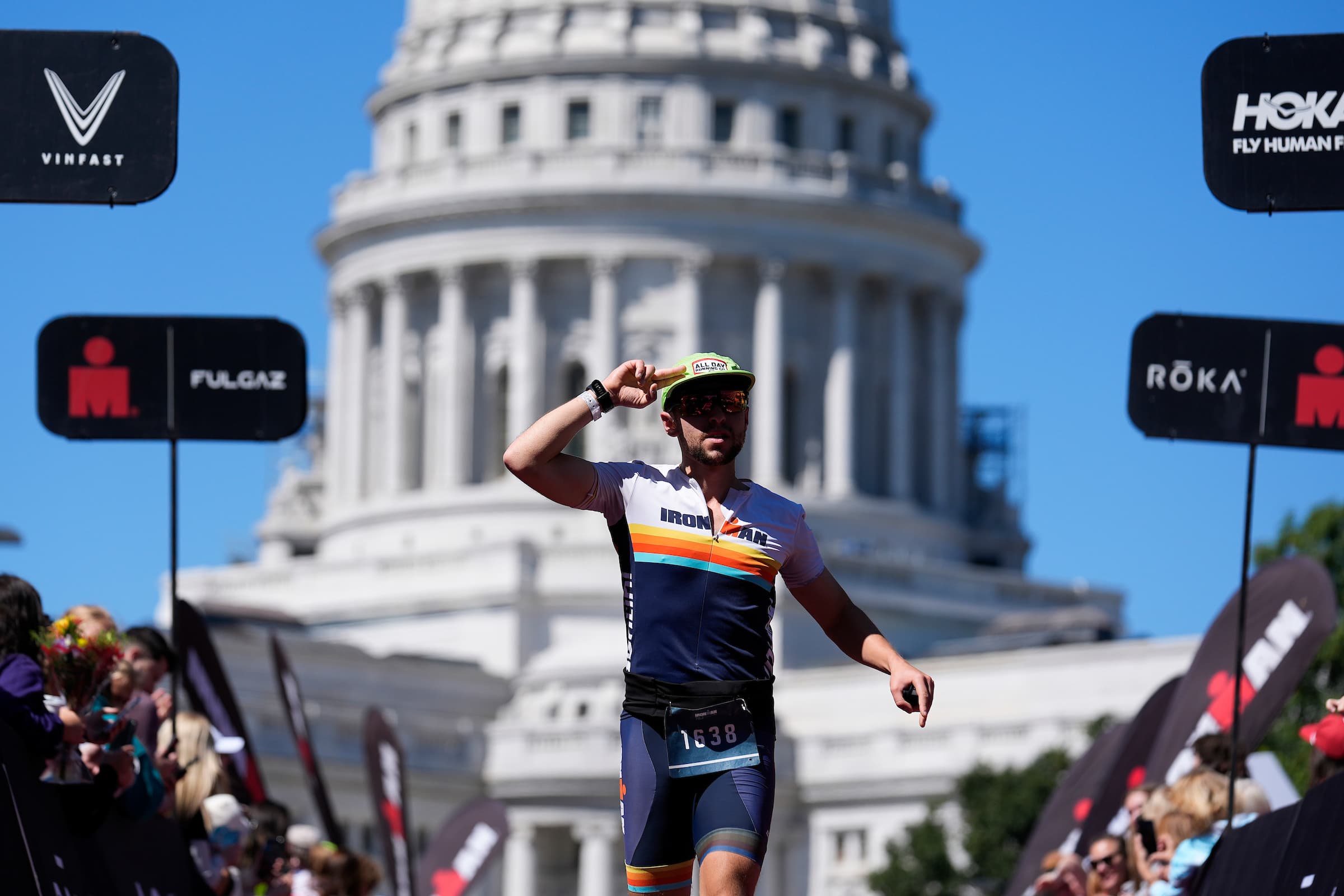
IRONMAN 70.3 WisconsinTraining Plan & Race Guide 2026
Madison, United StatesSeptember 12, 202670.3 mi — Half Distance2 min readPublished July 13, 2026
Share
01·Course Characteristics
The measure of Wisconsin's rolling test
A technical test of patience, Madison challenges you with a highly rolling, 48-turn bike course and a punchy run along the shores of Lake Monona, capped by a unique multi-story helix transition.
Climate
27°C
Peak air · morning 10-15°C · water 18-22°C
Conditions
Challenging
48+ bike turns · wind chop on water · mixed sun exposure
Elevation
750 m
Bike gain · constant rolling hills · 137 m run gain
Difficulty
7 / 10
A rolling 750 m bike elevation with 48 turns demands high-level bike handling and gear shifting, while the run adds 137 m of rolling climbs.
This edition has passed
Training for a future IRONMAN 70.3 Wisconsin?
Registration for the next edition opens on a rolling basis. Start building your base now and we'll size a full plan the moment a new date is set.
A single-loop swim parallel to the shoreline, making navigation straightforward and highly beginner-friendly. While generally clean and protected, wind can generate moderate chop across the open lake water.
02
Bike
Dane County Rollers
Rural Dane County
DISTANCE
90 km
LOOPS
Single-loop
ELEVATION
750 m
TERRAIN
Continuous rollers
TURNS
48+
A highly technical, rolling course through rural Dane County containing over 48 turns. It features continuous short climbs, including 15.3 km of uphill false flats and 8.2 km of steeper climbing, ending with a climb up the Monona Terrace parking garage helix.
03
Run
The Lakeside Double
Lake Monona & Downtown Madison
DISTANCE
21.1 km
LOOPS
Two loops
ELEVATION
137 m
PEAK TEMP
22-27°C
A scenic two-loop, out-and-back course passing through the University of Wisconsin campus and downtown Madison. The route is mostly paved with short, punchy climbs and mixed shade, offering high-energy spectator support.
03·AVG beginners' Training Timeline
From zero to the finish line
16 weeks
This 16-week progression is structured around Madison's technical demands. We start with base fitness, transition to building rolling power to conquer the 750 m bike climb, and finish with race-pace brick workouts that prepare you to tackle the punchy 137 m run.
Today · WK 0Race Day
WK 1–5
Aerobic Base Building
Develop early aerobic capacity and joint durability for the rolling course.
WK 6–10
Strength & Rolling Power
Build climbing capacity to handle continuous rollers and false flats.
WK 11–14
Technical Specificity & Build
Refine technical bike handling, descending, and running off a rolling bike.
WK 15–16
Taper & Race Execution
Reduce training volume while keeping neuromuscular intensity high to peak on race day.
Adapts to your fitness, schedule & recovery every week.
Prepare for a crisp 10-15°C morning start, followed by midday peak temperatures of 22-27°C with high sun exposure on the run. Use the lakeside shade sections of the run to stay cool, and consider keeping a sponge or ice in your kit to manage the midday heat.
Fuel & hydration
On the technical bike course, consume your calories and fluids on the straight, flat sections rather than the 48+ turns. Use the aid stations at kilometers 26, 51, and 74 to stay hydrated, and aim for a consistent fluid and electrolyte intake to counter late-day humidity.
Pacing
Avoid over-surging on the continuous rolling hills of Dane County, maintaining a steady power output on the false flats. Save matches for the run, which contains 137 m of punchy climbs where conservative early pacing pays major dividends.
Gear & logistics
Utilize the unique indoor parking garage transition to keep your gear safe from overnight rain. Arrive early to navigate the multi-story helix ramp safely, and utilize the Alliant Energy Center shuttle to bypass limited downtown parking.
Frequently Asked Questions
What is the water temperature and wetsuit policy for the IRONMAN 70.3 Wisconsin swim?
The single-loop swim in Lake Monona features freshwater temperatures typically ranging from 65°F to 72°F, meaning it is usually wetsuit-legal. The 1.2-mile course is highly beginner-friendly as it runs parallel to the shoreline, though you should prepare for some moderate wind-induced chop.
How hard is the IRONMAN 70.3 Wisconsin bike course?
With a difficulty rating of 7 out of 10, the 56-mile bike course is highly technical and contains over 48 turns requiring excellent bike handling and constant gear shifting. You will climb approximately 2,461 feet over continuous rolling hills, which includes 9.5 miles of shallow uphill false flats and 5.1 miles of steeper climbs over a 3% grade.
Where are the aid stations located and how should I fuel on the Wisconsin 70.3 bike course?
Bike aid stations are positioned approximately at miles 16, 32, and 46. Because the technical terrain features 48 turns and constant rolling hills, you must plan your drinking and fueling strategically during the flatter, straight sections of Dane County's roads to maintain safe bike control.
What is the elevation profile and layout of the IRONMAN 70.3 Wisconsin run course?
The run is a scenic, rolling two-loop course featuring 448 feet of total elevation gain with short, punchy climbs. You will run 13.1 miles on mostly paved asphalt along the shores of Lake Monona, through the University of Wisconsin campus, and across downtown Madison, experiencing a mix of shade and full sun exposure.
What weather conditions and temperatures should I expect on race day in Madison?
You should prepare for a wide temperature swing, starting with crisp, chilly morning temperatures between 50°F and 60°F that rise to a warm midday peak of 72°F to 80°F. The rural bike leg often presents a headwind on the way out and a tailwind returning, while the run course can feel quite warm under the direct afternoon sun.
Your Personalized Plan
Stop guessing your intervals. Train for this course.
FE26 builds your plan around your Strava data, your real schedule, and the exact demands of IRONMAN 70.3 Wisconsin— then adapts every week to how you actually perform.