IRONMAN 70.3 GoseongTraining Plan & Race Guide 2026
Goseong, South KoreaJune 14, 202670.3 mi — Half Distance2 min readPublished May 4, 2026Updated July 4, 2026
Share
01·Course Characteristics
The Measure of Goseong 70.3
A fast, tranquil swim leads into a highly technical bike ride and a punishing, humid run. Goseong demands tactical pacing and meticulous cooling to conquer its 7% run gradients in the mid-June heat.
A very calm swim is offset by a technical bike course with tight U-turns and a physically punishing run featuring repeated 7% climbs under humid conditions.
This edition has passed
Training for a future IRONMAN 70.3 Goseong?
Registration for the next edition opens on a rolling basis. Start building your base now and we'll size a full plan the moment a new date is set.
A beginner-friendly single-loop swim in the calm saltwater of the Danghangpo inlet. Sheltered geography ensures flat water and minimal currents, while the surrounding mountains offer clear sighting landmarks.
02
Bike
Technical Coastal Rollers
Danghangpo to Hallyeohaesang National Park
DISTANCE
90.1 km
LOOPS
1
ELEVATION
650 m
TERRAIN
Rolling hills
SURFACE
Asphalt with rough patches
WIND
Moderate coastal
A scenic single-loop course tracing the Hallyeohaesang National Park. The profile features rolling hills rather than long climbs, but is highly technical with six tight U-turns and narrow single-lane sections.
03
Run
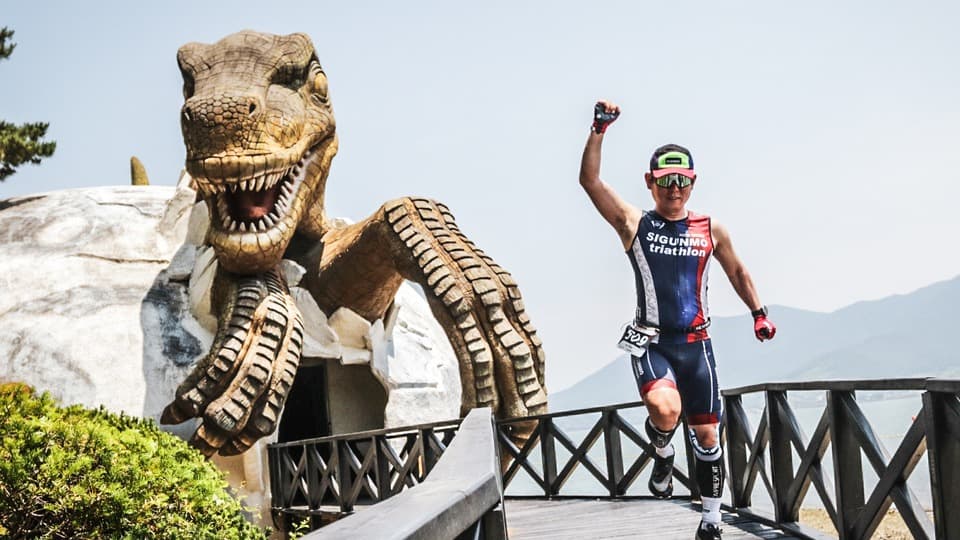
Dinosaur Expo Loops
Goseong Dinosaur Expo Park
DISTANCE
21.1 km
LOOPS
3
ELEVATION
255-275 m
SURFACE
Paved park paths
SHADE
Partial tree canopy
PEAK TEMP
27-30°C
A demanding three-loop run under the Cypress trees of the Expo Park that is highly exposed to the midday sun. Each loop forces you to tackle a steep 1km hill climb and descent at a punishing 7% gradient.
03·AVG beginners' Training Timeline
From zero to the finish line
16 weeks
This 16-week progression is specifically tailored to Goseong's unique challenges. We front-load core strength and aerobic capacity to combat road vibrations, transition to high-torque hill prep to conquer the 7% grade run loops, and finish with heat-adaptation strategies to withstand the humid Korean summer.
Today · WK 0Race Day
WK 1–5
Aerobic Base & Core Strength
Build low-intensity aerobic capacity and core stability to handle road vibrations.
WK 6–10
Hill Stamina & Technical Skills
Introduce rolling bike efforts and steep run repeats to prepare for 7% gradients.
WK 11–14
Race-Specific Simulation & Heat Build
Execute long brick sessions in peak afternoon heat to adapt to high humidity.
WK 15–16
Taper & Sharpen
Reduce volume while keeping intensity high to peak for race day.
Adapts to your fitness, schedule & recovery every week.
With midday temperatures hitting 30°C and 70% humidity, active cooling is non-negotiable. Grab cold water at every aid station to pour over your head and body to lower your core temperature.
Fuel & hydration
Aim for 60 to 90 grams of carbohydrates per hour. Due to the high sweat rate in the humid Korean summer, prioritize high sodium and electrolyte intake on the bike to prevent cramping on the run.
Pacing
Preserve your legs on the rolling bike course by avoiding spikes in power during the six U-turns. Save your matches for the run, where you must manage your effort up the three steep 7% hill climbs.
Gear & logistics
A standard wetsuit is highly recommended for the 18-21°C waters. Ensure your bike setup accounts for rougher road vibrations, and rent a car from Busan or Jinju to easily transport your gear to the rural venue.
Frequently Asked Questions
What is the water temperature and wetsuit policy for the IRONMAN 70.3 Goseong swim?
Water temperatures in the Danghangpo inlet typically range from 18°C to 21°C (64°F to 70°F), making wetsuits legal and highly recommended. Because the swim takes place in a sheltered saltwater inlet, you can expect exceptionally calm conditions with virtually no current. For sighting, you can use both the buoy markers and the distinct surrounding mountain silhouettes.
How hard is the IRONMAN 70.3 Goseong bike course?
The 90.1km single-loop bike course is moderately difficult and highly technical, featuring about 650 meters (2,132 feet) of elevation gain. Instead of sustained mountain passes, you will face rolling hills, six sharp U-turns, and tight single-lane sections that will pull you out of your aero position. You should prepare for moderate coastal winds and focus on vibration management, as some rough asphalt patches can cause lower back fatigue.
What is the run course profile and elevation for IRONMAN 70.3 Goseong?
The 21.1km run is a challenging three-loop course through the Goseong Dinosaur Expo Park with a total elevation gain of 255 to 275 meters (836 to 903 feet). Each of the three loops features a steep, steady 1km hill consisting of a 500-meter climb and a 500-meter descent at a punishing 7% gradient. Because much of the course is highly exposed to the midday sun, this is considered the hardest segment of the race.
How should I manage my nutrition and the weather at IRONMAN 70.3 Goseong?
With June temperatures reaching up to 30°C (86°F) and humidity sitting between 60% and 70%, you must prioritize a high-sodium hydration strategy to prevent cramping on the hilly run. On the technical bike course, set a strict timer to consistently consume 60 to 90 grams of carbohydrates per hour. During the run, utilize every aid station to drink and pour cold water over your head to keep your core temperature down.
What is the closest airport and best way to travel to IRONMAN 70.3 Goseong?
The closest international airport is Gimhae International Airport (PUS) in Busan, which is about a 1.5-hour drive from Goseong. Alternatively, you can fly into Incheon International Airport (ICN) in Seoul, take the KTX high-speed train to Jinju or Masan, and rent a car. Renting a car is highly recommended to easily transport your bike box and navigate the rural Goseong area.
Your Personalized Plan
Stop guessing your intervals. Train for this course.
FE26 builds your plan around your Strava data, your real schedule, and the exact demands of IRONMAN 70.3 Goseong— then adapts every week to how you actually perform.