Da Nang, VietnamMay 10, 2026140.6 mi — Full Distance2 min readPublished April 2, 2026Updated July 23, 2026
Share
01·Course Characteristics
The Crucible of Da Nang
An intense test of thermal management and mental grit, where flat coastal roads offer no shelter from Vietnam's extreme heat and oppressive tropical humidity.
Climate
34°C
Peak air · water 28-29°C · early May
Conditions
Humid
High humidity · fully exposed · intense UV
Elevation
400 m
Bike gain · flat coastal loops · minimal windbreak
Difficulty
9 / 10
Flat profile is deceptive; extreme heat and humidity make pacing and hydration exceptionally difficult.
This edition has passed
Training for a future IRONMAN Vietnam?
Registration for the next edition opens on a rolling basis. Start building your base now and we'll size a full plan the moment a new date is set.
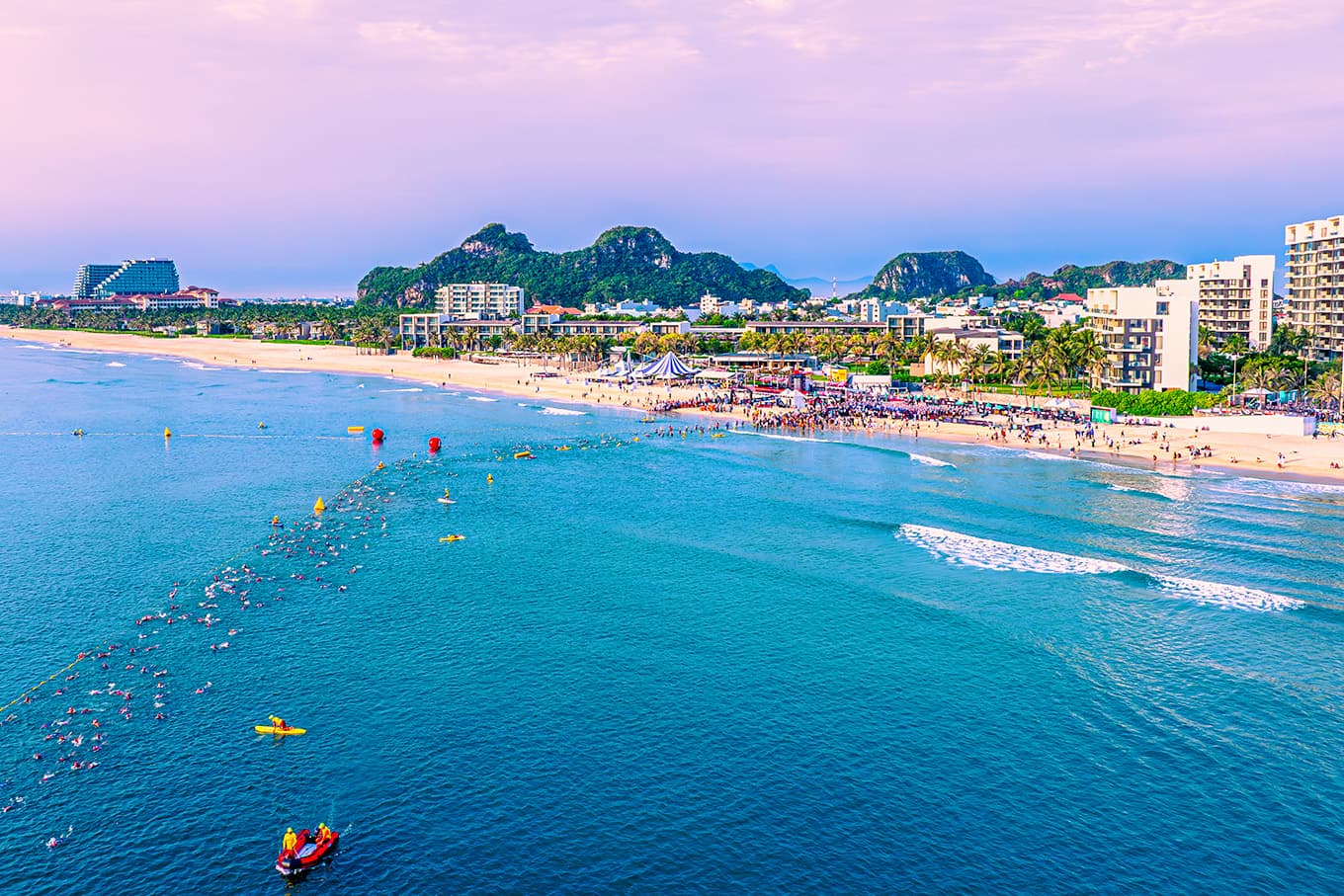
A warm, non-wetsuit swim in the calm but salty waters of My Khe Beach. Sighting is straightforward with generally mild swells, but the high water temperature demands a controlled effort to avoid early overheating.
02
Bike
Coastal Highway Speed
Da Nang Coastline
DISTANCE
180 km
LOOPS
3-loop
ELEVATION
400 m
TERRAIN
Flat
SURFACE
Smooth asphalt
WIND
Moderate coastal
A fast, flat multi-loop course along the scenic coastline of Da Nang. The flat terrain requires continuous pedaling with no opportunities to coast, while the rising morning heat and lack of shade increase physical stress.
03
Run
The Thermal Battle
Son Tra Peninsula Road
DISTANCE
42.2 km
LOOPS
4-loop
ELEVATION
80 m
SURFACE
Concrete & Asphalt
SHADE
None
PEAK TEMP
34°C
A grueling multi-loop run on completely exposed coastal roads under the blazing afternoon sun. High humidity prevents effective sweat evaporation, turning this final leg into a strategic test of core temperature management.
03·AVG beginners' Training Timeline
From zero to the finish line
24 weeks
This 24-week plan focuses on building a resilient aerobic engine to handle the full distance, followed by critical heat preparation. Given the brutal tropical conditions in Da Nang, the latter half prioritizes thermal acclimation and hydration execution so your body can survive and perform in the extreme heat.
Today · WK 0Race Day
WK 1–8
Aerobic Foundation & Durability
Build baseline aerobic volume and structural tolerance for high-volume training.
WK 9–16
Sustained Power & Aerobic Strength
Develop long-course bike endurance and sustained flat-running pacing strategy.
WK 17–21
Heat Acclimation & Specific Build
Simulate race-pace efforts in hot conditions and execute specific nutrition rehearsals.
WK 22–24
Taper & Thermal Prep
Reduce training volume to shed fatigue while maintaining active heat protocols.
Adapts to your fitness, schedule & recovery every week.
Expect air temperatures of 34°C and relative humidity over 80%. Use every aid station to dump ice down your tri-suit, drape cold sponges on your neck, and wear a white, breathable running cap to lower your core temperature.
Fuel & hydration
Target 800-1000ml of fluid and 700-1000mg of sodium per hour to replace massive sweat losses. Keep carbohydrate intake around 80-90g/hr, utilizing highly soluble drink mixes as solid foods may be difficult to digest in extreme heat.
Pacing
Reduce your target power by 10-15% on the bike and adjust your run pace conservatively from the start. Chasing a normal power target in this heat will lead to early cardiovascular drift and inevitable walking on the run.
Gear & logistics
Choose a well-ventilated helmet over a full aero helmet to maximize airflow. Use tinted goggles for the bright morning swim, apply sweat-resistant reef-safe SPF 50 sunscreen, and arrive at least 5-7 days early to adapt to the tropical climate.
Frequently Asked Questions
What is the expected water temperature for the IRONMAN Vietnam swim?
The water temperature in Da Nang during May typically ranges from 26°C to 28°C (79°F to 82°F), making it highly likely to be a non-wetsuit swim. You will swim in the warm, tropical waters of the East Vietnam Sea off Non Nuoc Beach, so you should focus your training on salt-water buoyancy and ocean sighting without a wetsuit. Be prepared to wear a skin-suit or standard tri-suit for optimal hydrodynamics in these warm conditions.
How flat is the IRONMAN Vietnam bike course?
The bike course in Da Nang is exceptionally flat and fast, featuring a multi-loop layout along the scenic coastal roads. While there are no significant hills or mountain climbs to worry about, the primary challenges will be the coastal crosswinds and the intensifying tropical heat as the morning progresses. You should practice staying in your aerodynamic tuck for extended periods to maximize your speed on this uninterrupted, flat terrain.
What are the typical weather conditions for IRONMAN Vietnam in May?
May in Da Nang is hot and highly humid, with average daytime temperatures reaching between 30°C and 35°C (86°F to 95°F) and humidity levels often exceeding 80%. Because the run course offers very little shade, managing your core temperature through proactive hydration and salt supplementation is critical. We highly recommend undergoing a structured 2-to-3-week heat acclimation protocol prior to arriving in Vietnam.
How should I prepare for the IRONMAN Vietnam run course?
The run course is entirely flat, stretching along the beachfront corridors of Da Nang, but it is highly exposed to the midday tropical sun. To combat the extreme heat, you must utilize every aid station to douse yourself with cold water, wear ice under your kit, and keep your heart rate capped to prevent blowing up. Focusing on your mental pacing and maintaining a high cadence will help you navigate the hot, windless stretches of the run.
When should I arrive in Da Nang for IRONMAN Vietnam?
You should aim to arrive in Da Nang at least 4 to 5 days before the race on May 10, 2026. This buffer allows your body to adjust to the high humidity, adapt to the local timezone, and complete crucial pre-race shakeout swims in the ocean. Getting there early also ensures you have ample time to navigate athlete check-in and familiarize yourself with the transition areas at the host venue.
Your Personalized Plan
Stop guessing your intervals. Train for this course.
FE26 builds your plan around your Strava data, your real schedule, and the exact demands of IRONMAN Vietnam— then adapts every week to how you actually perform.