Nice, FranceJune 28, 202670.3 mi — Half Distance2 min readPublished May 6, 2026Updated July 4, 2026
Share
01·Course Characteristics
The Crucible of the French Riviera
Prepare for a race defined by intense contrast: a highly buoyant Mediterranean swim, a daunting alpine bike climb with a technical descent, and an unforgivingly exposed run along the concrete Promenade des Anglais.
Climate
32°C
Peak air · average water 23°C · late June heatwaves
Conditions
Exposed
Unshaded run · salty sea swim · alpine descent wind
Elevation
1250 m
Bike gain · Col de Vence peak at 962 m · flat run
Difficulty
8.5 / 10
A demanding rating driven by the relentless 9.7 km Col de Vence climb, a highly technical mountain descent with sharp hairpins, and an utterly unshaded run in midday temperatures exceeding 31°C.
This edition has passed
Training for a future IRONMAN 70.3 Nice?
Registration for the next edition opens on a rolling basis. Start building your base now and we'll size a full plan the moment a new date is set.
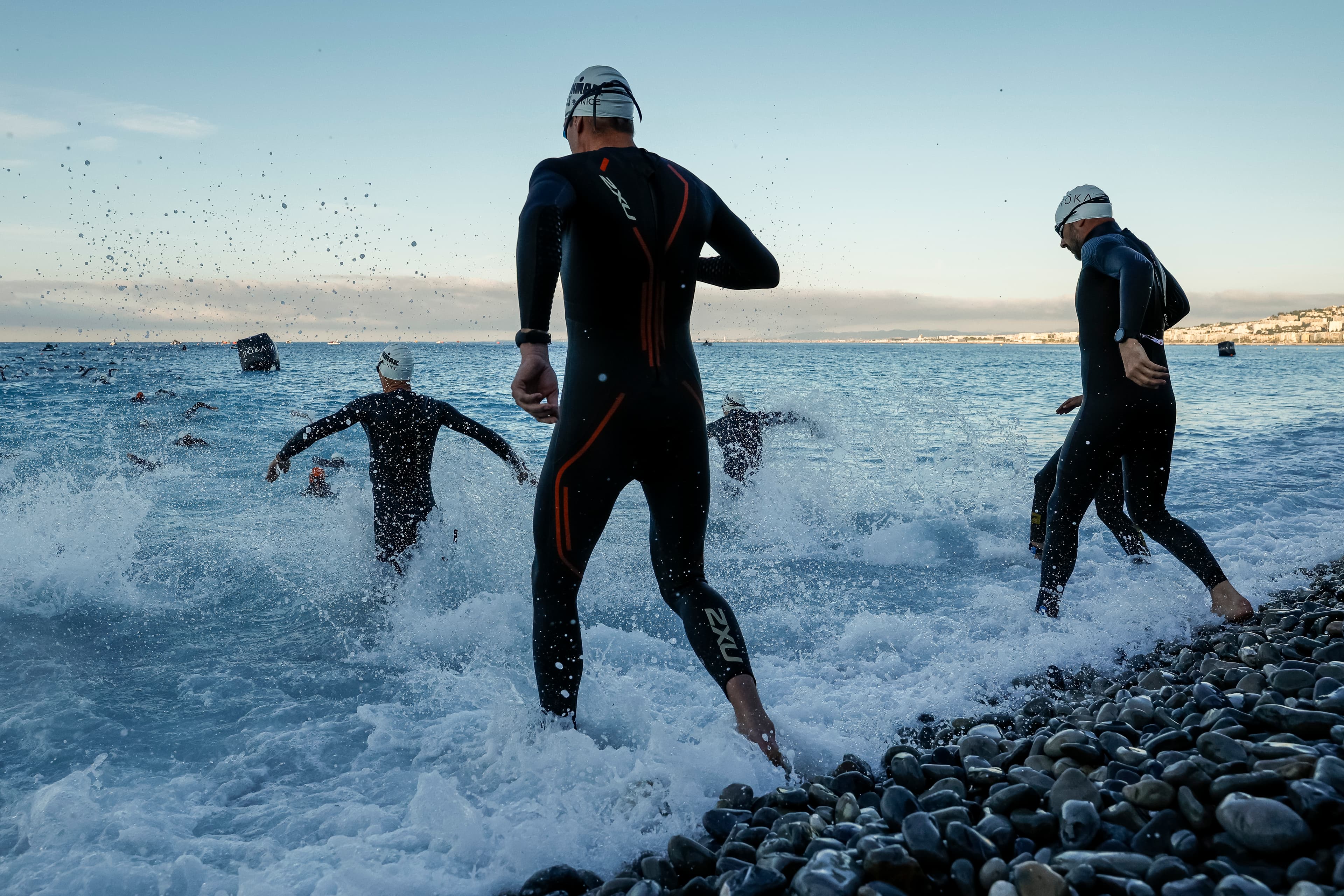
A single-loop course starting from the pebble beach of Plage des Ponchettes in clear, highly buoyant Mediterranean waters. While usually glassy, the water can become choppy depending on morning winds.
02
Bike
Col de Vence Loop
Alpes-Maritimes Hinterland
DISTANCE
90 km
LOOPS
1
ELEVATION
1250 m
TERRAIN
Mountainous
SURFACE
Excellent tarmac
PEAK ALTITUDE
962 m
After a flat 10 km start, you will tackle the legendary 9.7 km Col de Vence climb, averaging 6.6% with pitches up to 12%. The descent back to Nice is highly technical, featuring tight hairpins, speed humps, and narrow alpine roads requiring constant concentration.
03
Run
Promenade des Anglais Run
Beachfront Boardwalk
DISTANCE
21.1 km
LOOPS
2
ELEVATION
14 m
SURFACE
Tarmac and concrete
SHADE
None
PEAK TEMP
>31°C
A two-loop, pancake-flat out-and-back course along the historic Promenade des Anglais on concrete and tarmac. The path offers beautiful coastal views but is 100% exposed to the intense midday Mediterranean sun.
03·AVG beginners' Training Timeline
From zero to the finish line
20 weeks
This 20-week progression is specifically engineered to handle the demands of Nice. We start by building climbing strength for the Alps, transition into technical descending and heat preparation, and finish with specific pacing simulations on simulated flat, hot runs, ensuring you arrive both powerful and heat-resilient.
Today · WK 0Race Day
WK 1–5
Aerobic & Strength Base
Build basic aerobic capacity and core strength to prepare for the mountainous bike climbs.
WK 6–10
Climbing & Alpine Strength
Develop specific muscular endurance and climbing capacity for the sustained 9.7 km Col de Vence.
WK 11–15
Descending Skills & Heat Prep
Incorporate bike-handling drills on descents while starting heat acclimation protocols.
WK 16–18
Race-Specific Build
Simulate the multi-loop flat run under fatigue and fine-tune your nutrition and pacing strategies.
WK 19–20
Taper & Sharpen
Reduce volume to shed cumulative fatigue while maintaining high intensity to stay sharp for race day.
Adapts to your fitness, schedule & recovery every week.
With afternoon temperatures regularly exceeding 31°C and potentially reaching 40°C during heatwaves, utilize every aid station spaced every 1.8 km to dump water, ice, and sponges over your head. Keep your core temperature down from the start of the run to combat intense solar radiation on the unshaded promenade.
Fuel & hydration
Front-load your fluids, sodium, and carbohydrates during the first flat 10 km and the early climb of the bike leg, where wind cooling is reduced. Aim for high sodium replacement via salt tablets to offset heavy sweat losses caused by the scorching coastal climate.
Pacing
Keep a highly disciplined cap on your power during the Col de Vence climb to prevent early muscle fatigue. Save mental and physical energy for the highly technical alpine descent, which demands intense concentration, and prepare for a grueling, hot run where pacing will be dictated by thermal load.
Gear & logistics
Pack both a wetsuit and a swimskin to accommodate the borderline 23°C water temperature. Wear disposable footwear to the pebble beach swim start to protect your feet, and choose a well-ventilated helmet over an aero one to stay cool on the steep climb.
Frequently Asked Questions
How hard is the IRONMAN 70.3 Nice bike course?
The bike course is highly demanding and features a challenging climb up the legendary Col de Vence, which climbs to 962 meters with gradients peaking at 12%. Over the 90 km loop, you will tackle approximately 1,250 to 1,367 meters of total elevation gain. The second half of the ride is a highly technical, winding alpine descent with sharp hairpin turns that requires advanced bike-handling skills and absolute focus.
What is the water temperature for the IRONMAN 70.3 Nice swim?
The average water temperature in the Mediterranean's Baie des Anges is around 23°C (74°F), which sits right on the borderline of the age-group wetsuit-legal cutoff of 24.5°C (76.1°F). Because summer conditions can easily push the water temperature above this limit, you should pack both a wetsuit and a swimskin. Additionally, the rolling start takes place on a pebble beach, so wearing disposable footwear to the water's edge is highly recommended.
Is the IRONMAN 70.3 Nice run course flat?
Yes, the 21.1 km HOKA run course is pancake-flat with only 14 meters of total elevation gain as you complete two out-and-back loops along the Promenade des Anglais. However, the flat terrain is highly grueling because it is 100% exposed to the midday sun with absolutely zero shade. With afternoon temperatures regularly exceeding 31°C (88°F), managing solar radiation and utilizing every aid station for ice and water is critical to your success.
What are the typical weather conditions for IRONMAN 70.3 Nice in June?
You should prepare for hot, dry, and highly exposed Mediterranean conditions, with morning lows of 21°C–24°C (70°F–75°F) and afternoon highs reaching 28°C–32°C (82°F–90°F). Extreme European heatwaves can even push temperatures past 36°C–40°C (97°F–104°F), which historically led to the cancellation of the June 28, 2026 race by local authorities. Proper heat management, heavy electrolyte replacement, and aggressive cooling strategies on the run are absolute necessities.
Where is the best place to stay when traveling to IRONMAN 70.3 Nice?
It is highly recommended to book a hotel within walking distance of the transition area on the Promenade des Anglais. Parking in downtown Nice is extremely difficult and expensive, and major road closures will be in place for the race. Because the Nice Côte d'Azur Airport (NCE) is directly adjacent to the city and connected by a clean, efficient tram system, you can easily navigate the entire event weekend without renting a car.
Your Personalized Plan
Stop guessing your intervals. Train for this course.
FE26 builds your plan around your Strava data, your real schedule, and the exact demands of IRONMAN 70.3 Nice— then adapts every week to how you actually perform.