IRONMAN 70.3 Rockford - IllinoisTraining Plan & Race Guide 2026
Rockford, United StatesJune 14, 202670.3 mi — Half Distance2 min readPublished May 4, 2026Updated July 4, 2026
Share
01·Course Characteristics
The measure of Rockford 70.3
A blisteringly fast, current-assisted river swim gives way to an open, rolling bike course and a highly humid, bridge-crossing run. Surviving the early-summer Midwestern heat and wind is the key to conquering this tactical race.
Climate
29-32°C
Peak air · water 22.4-26.2°C · high humidity
Conditions
Humid
Open farm roads · wind-exposed · high humidity
Elevation
567 m
Rolling bike course · 106 m run gain · four bridge crossings
Difficulty
6 / 10
The current-assisted swim is extremely fast, but the open, windy bike leg and potential for oppressive mid-summer humidity on the run make pacing a major challenge.
This edition has passed
Training for a future IRONMAN 70.3 Rockford - Illinois?
Registration for the next edition opens on a rolling basis. Start building your base now and we'll size a full plan the moment a new date is set.
A point-to-point, current-assisted downstream swim starting near the Rock Guardians sculpture. The murky but clean freshwater current provides a massive speed boost, especially if the upstream dam is opened. Wetsuit-legality depends heavily on the year's early-summer water temperatures.
02
Bike
Countryside Rollers
Winnebago County single-loop
DISTANCE
90 km
LOOPS
1
ELEVATION
567 m
TERRAIN
Rolling hills
SURFACE
Paved with Midwestern wear
WIND
Exposed crosswinds
Departing north out of Rockford, this loop features rolling hills through rural farmland and the village of Rockton. You will face a quick climb right out of transition and a challenging climb near the halfway point. The open country roads are highly exposed to crosswinds that demand careful power management.
03
Run
The Four Bridges Run
Two-loop riverfront path
DISTANCE
21.1 km
LOOPS
2
ELEVATION
106 m
SURFACE
Paved trails and blacktop
SHADE
Partially shaded by parks
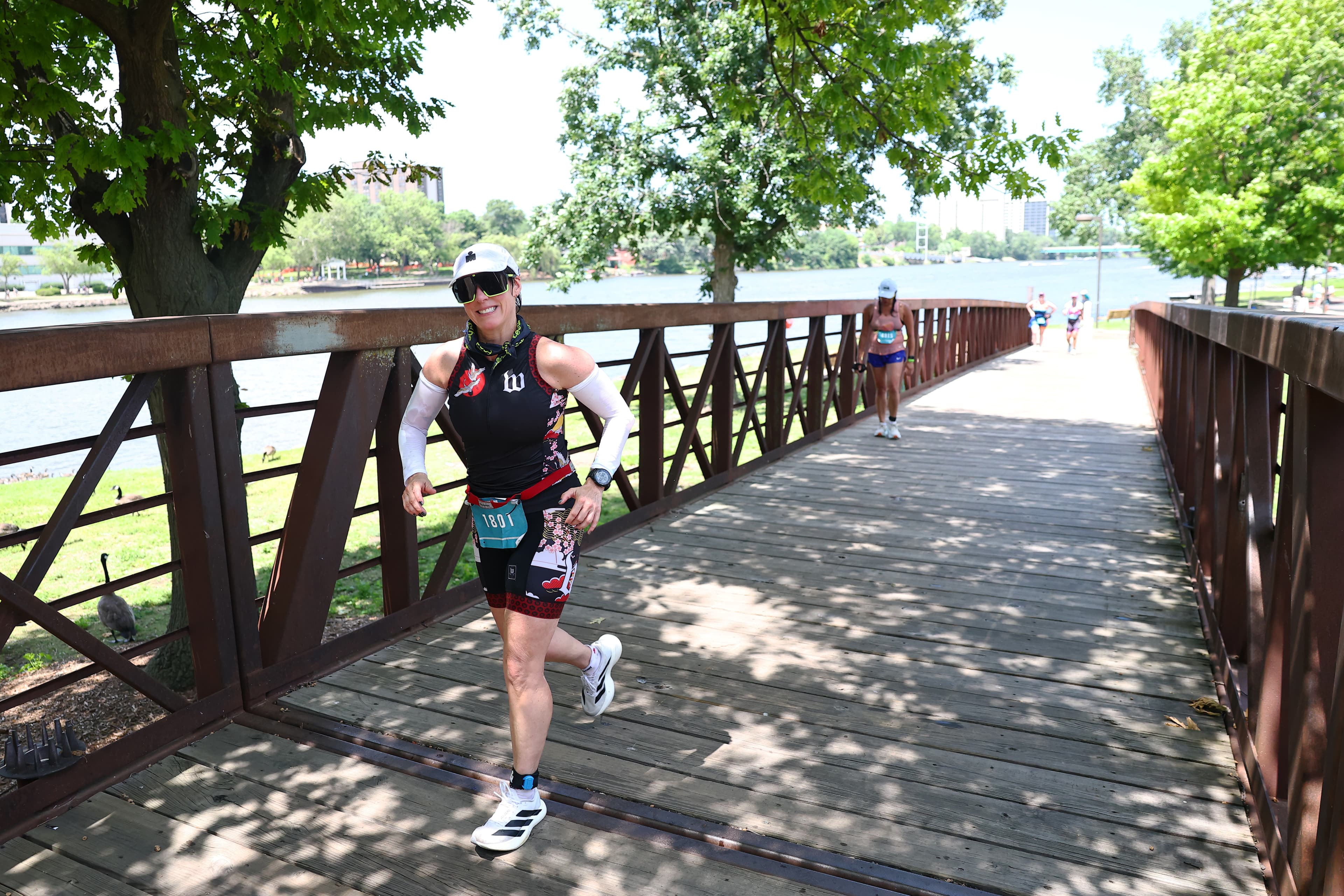
A two-loop run along both banks of the Rock River utilizing the paved Rock River Recreation Path. The route is mostly flat, with the main elevation changes coming from crossing four different bridges under the heat. While parks offer some shade, open blacktop sections are fully exposed to the midday sun.
03·AVG beginners' Training Timeline
From zero to the finish line
16 weeks
This 16-week progression is custom-built to safely build your endurance. It prioritizes early aerobic volume to handle the distance, transitions to rolling-terrain strength for the bike course, and finishes with heat prep to survive the humid run.
Today · WK 0Race Day
WK 1–5
Aerobic Base & Sighting
Build your aerobic foundation and master downstream open-water sighting skills.
WK 6–9
Strength & Rolling Hills
Develop power to handle the bike course rolling hills and bridge climbs.
WK 10–13
Race-Specific Build
Simulate race-pace efforts in high humidity and adapt to windy cycling conditions.
WK 14–16
Taper & Strategy
Reduce training volume while sharpening your high-intensity efforts and finalizing your hydration strategy.
Adapts to your fitness, schedule & recovery every week.
Prepare for extreme humidity and temps up to 32°C. Utilize 'Sprinkler Alley' and douse yourself with cold water and ice at run aid stations to keep your core temperature down.
Fuel & hydration
Double up on fluid and sodium intake on the bike to counter high sweat rates from the Midwestern humidity. Target 70-90g of carbs per hour utilizing the on-course Mortal Hydration and Maurten gels.
Pacing
Avoid spiking your power on the early bike climb out of transition. Save your energy on the rolling hills to tackle the headwind sections and the bridge climbs on the run.
Gear & logistics
Arrive very early on race morning or use the host hotel shuttle, as parking near Davis Festival Park is limited. Bring both a wetsuit and a swimskin to adapt to highly variable June water temperatures.
Frequently Asked Questions
What is the water temperature and wetsuit policy for the IRONMAN 70.3 Rockford-Illinois swim?
Water temperatures in the Rock River are highly variable, ranging from a wetsuit-legal 72.4°F (22.4°C) in 2026 to a warmer 79.2°F (26.2°C) in 2025. Wetsuits are permitted for age-group athletes up to 76.1°F (24.5°C), while swimskins are legal regardless of the temperature. If the water exceeds 76.1°F, you can choose to wear a wetsuit, but you will not be eligible for age-group awards or World Championship slots.
How hard is the IRONMAN 70.3 Rockford-Illinois bike course?
The bike course has a moderate difficulty rating of 6/10, featuring a single-loop 56-mile route with 1,862 feet of total elevation gain. While the course lacks severe climbs, you will face rolling hills, a brief climb out of transition, and a challenging climb near the halfway point. The rural roads are fully paved but open to crosswinds, which requires careful pacing and focus.
What is the run course profile for IRONMAN 70.3 Rockford-Illinois?
The run is a flat-to-rolling, two-loop 13.1-mile course that gains approximately 350 feet of elevation. You will run along both banks of the Rock River, with the only notable inclines occurring when you cross the river's four bridges. The terrain consists of paved recreation paths and downtown streets, with some sections shaded by trees and others fully exposed to the sun.
Where is the transition area located for IRONMAN 70.3 Rockford-Illinois?
Both Transition 1 and Transition 2, along with the Athlete Village, are located at Davis Festival Park at 320 S. Wyman Street in downtown Rockford. The point-to-point swim finishes right at this park, and the run course also starts from the Wyman and Chestnut transition area. Because downtown parking is limited on race morning, staying at the adjacent Embassy Suites by Hilton Rockford Riverfront is highly recommended.
How should I manage nutrition and hydration for the Rockford 70.3?
With early-summer Midwestern humidity reaching up to 91% and temperatures potentially climbing into the 90s, aggressive hydration is crucial. You should double up on your fluid and sodium intake during the bike leg to prevent cramping on the run. On-course aid stations will provide water, Mortal Hydration, and Maurten gels, and you can utilize local 'Sprinkler Alley' setups and ice at run stations to keep your core temperature down.
Your Personalized Plan
Stop guessing your intervals. Train for this course.
FE26 builds your plan around your Strava data, your real schedule, and the exact demands of IRONMAN 70.3 Rockford - Illinois— then adapts every week to how you actually perform.