IRONMAN 70.3 WestfrieslandTraining Plan & Race Guide 2026
Hoorn, NetherlandsJune 21, 202670.3 mi — Half Distance2 min readPublished May 6, 2026Updated July 23, 2026
Share
01·Course Characteristics
Tactical Speed in Historic Westfriesland
This flat but highly exposed course demands meticulous pacing against brutal dike crosswinds and relentless cobblestones. Success hinges on aerodynamic discipline, smart fueling, and preparing your joints for the historic town center's brick run loops.
Climate
22°C
Peak air · water 17-18°C · late June
Conditions
Exposed
Dike crosswinds · brick paving · no bike covers
Elevation
Flat
Minimal elevation · single-loop countryside · no major climbs
Difficulty
4.5 / 10
A very flat course offset by highly exposed, windy dikes on the bike and technical brick streets on the run.
This edition has passed
Training for a future IRONMAN 70.3 Westfriesland?
Registration for the next edition opens on a rolling basis. Start building your base now and we'll size a full plan the moment a new date is set.
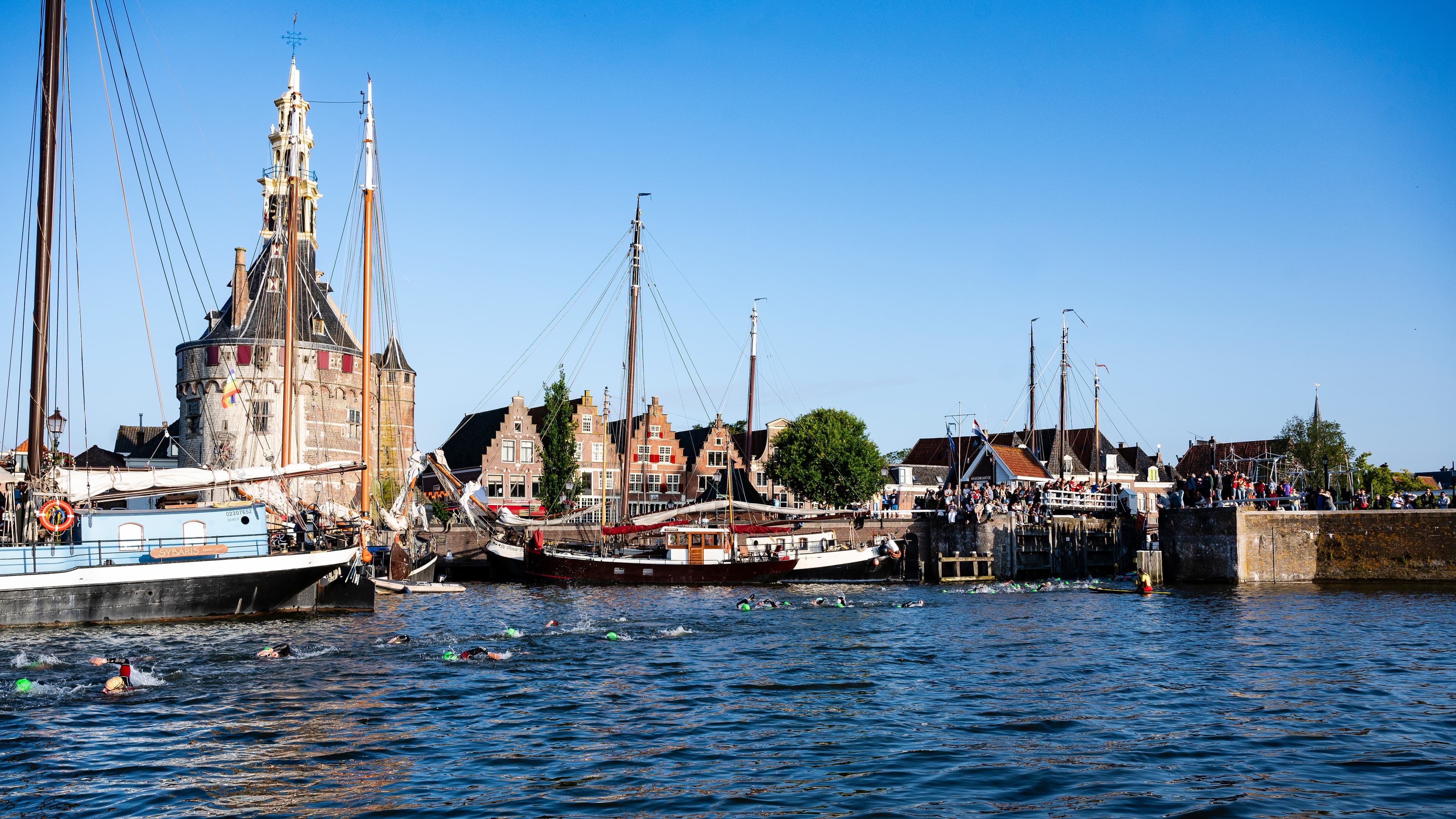
A single-loop swim within the historic sheltered waters of the old harbour of Hoorn. Sighting and staying clear of the harbour walls are essential for maintaining a straight line.
02
Bike
Countryside Loop
Westfriesland Dikes
DISTANCE
90 km
LOOPS
1
TERRAIN
Flat
WIND
Highly exposed
A fast, single-loop journey through the scenic Dutch countryside and along exposed dikes. Crosswinds can be severe, making bike handling and aerodynamic discipline vital.
03
Run
Historic Town Loops
Hoorn Historic Center
DISTANCE
21.1 km
LOOPS
3
SURFACE
Cobbles & brick
PEAK TEMP
23°C
A three-loop course winding through the historic core of Hoorn, ending near the Stadsstrand city beach. The route features repeated transitions over brick paving and cobblestone sectors.
03·AVG beginners' Training Timeline
From zero to the finish line
16 weeks
This 16-week plan is tailored to the flat but wind-swept and technical nature of Westfriesland. The first eight weeks establish your Zone 2 base, followed by specific brick work starting in week nine, and a critical taper to ensure fresh legs for the historic cobblestone run.
Today · WK 0Race Day
WK 1–8
Aerobic Foundation
Build a strong cardiovascular base with low-intensity Zone 2 training.
WK 9–12
Specific Strength & Bricks
Introduce intensity, open water practice, and initial brick workouts.
WK 13–14
Race-Specific Build
Execute long race-pace efforts and multiple brick sessions simulating course demands.
WK 15–16
Taper & Sharpen
Reduce volume, rest your legs, and finalize logistics to arrive fresh.
Adapts to your fitness, schedule & recovery every week.
Prepare for air temperatures rising up to 23°C during the run. Stay hydrated early and wear a visor or cap, as the historic town center offers limited natural shade on the bricks.
Fuel & hydration
Clip your nutrition to your bike on Sunday morning in transition. Aim for a structured carbohydrate and fluid plan to offset energy depletion on the windy bike leg.
Pacing
Maintain a disciplined Zone 2 pace on the bike, especially when fighting headwinds on the dikes, to save your legs for the three-loop run. Avoid drafting to prevent penalties.
Gear & logistics
Transition closes at 06:45; arrive at least 90 minutes early. Remember that no bike covers are allowed, your helmet must be in your bike bag on Saturday, and use lock tite laces on your run shoes.
Frequently Asked Questions
What is the water temperature for the IRONMAN 70.3 Westfriesland swim?
The swim takes place in the old harbour of Hoorn, where water temperatures typically average between 17°C and 18°C (62.6°F to 64.4°F). It is highly recommended to wear a wetsuit, and you should bring a wetsuit neck protector and body glide to prevent chafing during the 1.9 km swim. Be sure to practice your sighting and spend time training in open water at least 4 to 5 times before race day.
What is the bike course like at IRONMAN 70.3 Westfriesland?
The bike course is a single-loop 90 km ride through the scenic Westfriesland countryside. While flat, the dikes are highly exposed, making it crucial to obsessively check the wind forecast during race week. Disc wheels offer a major aerodynamic advantage in calm conditions, but they can become difficult to handle if you encounter strong crosswinds along the dikes.
Where should I stay for IRONMAN 70.3 Westfriesland?
Because accommodation in Hoorn is highly limited and sells out quickly, you should book your lodging as early as possible. Excellent alternative options include staying in nearby towns like Enkhuizen or Alkmaar, or booking local vacation parks. If you are flying in, Amsterdam Schiphol Airport (AMS) is located just 40 to 45 minutes south of Hoorn and offers direct train connections.
What are the transition rules and closing times for IRONMAN 70.3 Westfriesland?
You must rack your bike and both your blue (bike) and red (run) transition bags on Saturday at the Julianapark transition area. On race morning, transition closes strictly at 6:45 AM, so you should aim to arrive at least 90 minutes early. Remember that bike covers are not allowed, and your helmet must be placed inside your bike bag rather than left on your bike.
What should I expect on the IRONMAN 70.3 Westfriesland run course?
The run consists of 3 loops through the historic center of Hoorn, finishing near the Stadsstrand city beach. You will encounter brick paving and cobblestone sections, so make sure your running shoes are highly comfortable on uneven surfaces and fitted with lock-tight laces. Air temperatures during the run typically range from 18°C to 22°C (64°F to 72°F) but can rise up to 23°C (73°F).
Your Personalized Plan
Stop guessing your intervals. Train for this course.
FE26 builds your plan around your Strava data, your real schedule, and the exact demands of IRONMAN 70.3 Westfriesland— then adapts every week to how you actually perform.