Cairns, AustraliaJune 14, 2026140.6 mi — Full Distance2 min readPublished May 4, 2026Updated July 4, 2026
Share
01·Course Characteristics
The beauty and bite of Cairns
While spectacular, Cairns tests athletes with choppy, potentially warm ocean water, a punishing coastal bike leg featuring rolling poppers and grueling headwinds, and an exposed, flat run where humidity and sun exposure dominate.
Climate
26°C
Peak air · water 23-25°C · mid-June
Conditions
Humid
Coastal headwinds · high exposure · 65-75% humidity
Elevation
1252 m
Bike gain · rolling poppers · Rex Lookout climbs
Difficulty
7.5 / 10
Punishing coastal headwinds on the late bike and high tropical humidity balance the dead-flat marathon.
This edition has passed
Training for a future IRONMAN Cairns?
Registration for the next edition opens on a rolling basis. Start building your base now and we'll size a full plan the moment a new date is set.
A rolling-start rectangular ocean course in the Coral Sea. Swimmers must contend with potential ocean swell, chop, and currents, alongside warm water that can make wetsuit wear highly insulating.
02
Bike
Captain Cook Highway
Palm Cove to Port Douglas and Cairns
DISTANCE
180 km
LOOPS
Point-to-point & 2 loops
ELEVATION
1252 m
TERRAIN
Rolling poppers
SURFACE
Paved asphalt
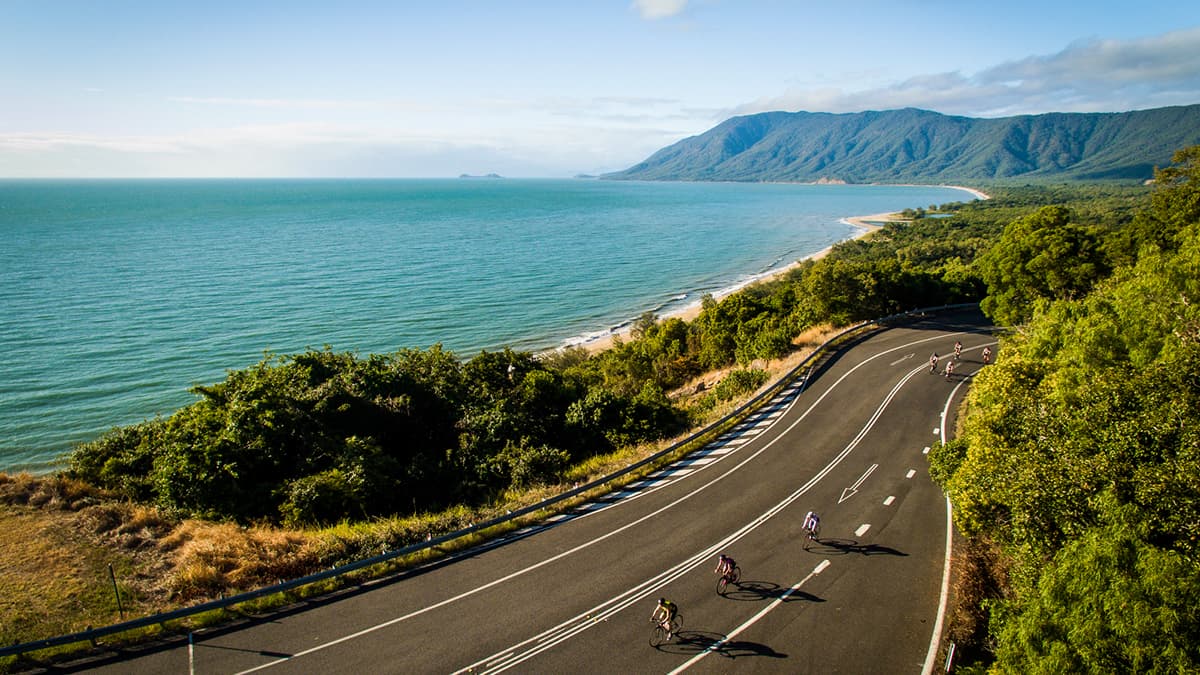
A scenic route along the closed highway featuring rolling coastal climbs, notably Rex Lookout. The primary tactical obstacle is the final 60 to 70 km, which frequently presents a brutal headwind back into Cairns.
03
Run
The Esplanade Promenade
Cairns Esplanade
DISTANCE
42.2 km
LOOPS
4 loops
ELEVATION
110 m
SURFACE
Pavement & boardwalks
SHADE
Highly exposed
A dead-flat, four-loop marathon along the vibrant Cairns Esplanade. Although the crowds are highly motivating, the course is almost entirely exposed to the tropical afternoon sun and high humidity.
03·AVG beginners' Training Timeline
From zero to the finish line
24 weeks
This 24-week journey safely builds your endurance from a modest base to a confident finish. The progression prioritizes early joint and muscle durability, transitions to the strength required for the rolling bike course, and finishes with headwind and heat-tolerance prep.
Today · WK 0Race Day
WK 1–8
Aerobic Foundation
Build a robust aerobic base in all three disciplines to handle the full distance.
WK 9–14
Strength & Rolling Power
Build muscular endurance for the bike's rolling poppers and high-force ocean swimming.
WK 15–20
Race-Specific Build
Focus on aerodynamic pacing, headwind simulations, and heat acclimatization runs.
WK 21–24
Peak & Taper
Sharpen peak output, finalize nutrition strategies, and shed fatigue before race day.
Adapts to your fitness, schedule & recovery every week.
Prepare for morning temperatures of 18°C rising to a humid 26°C by afternoon. Douse your head and body with ice and cold water at every run aid station to suppress core body temperature.
Fuel & hydration
Heavy sweating in the warm 23-25°C water requires immediate hydration and sodium replacement in T1. Target 80 to 100 grams of carbohydrates per hour on the bike to fuel the fight against late-stage headwinds.
Pacing
Save your legs on the rolling climbs of the first half of the bike. You will need exceptional core and leg strength to drive through the brutal 60 to 70 km headwind on the return leg to Cairns.
Gear & logistics
This race uses a split-transition layout, so carefully pack separate T1 and T2 bags. Choose a mid-depth front wheel to handle coastal crosswinds, and carry extra tubes and CO2 in case tropical rains wash debris onto the highway.
Frequently Asked Questions
What is the water temperature and wetsuit policy for the IRONMAN Cairns swim?
The water temperature in the Coral Sea at Palm Cove typically averages between 23°C and 25°C (73°F to 77°F), making wetsuits optional but legal. However, wearing a wetsuit or a stinger suit is highly recommended for protection against marine stingers like jellyfish and sea lice. Because of the warm water, you should expect to sweat heavily during the swim, so prioritizing early hydration and sodium intake in T1 is crucial.
How hard is the IRONMAN Cairns bike course and what is the elevation?
The 180 km bike course is rated as moderate-to-hard, featuring a total elevation gain of 1,252 meters (4,107 feet) along the coastal Captain Cook Highway. While the road surface is high-quality paved asphalt, you will face physical challenges from constant rolling coastal 'poppers' and the repeated climb up to Rex Lookout. Additionally, the course is highly exposed, often presenting a grueling 60 to 70 km headwind on the return leg back to Cairns.
What is the run course like for the IRONMAN Cairns marathon?
The marathon is an exceptionally flat, four-loop run along the scenic Cairns Esplanade, accumulating only 84 to 110 meters (275 to 360 feet) of total elevation gain. The entire 42.2 km course is held on 100% paved surfaces, including asphalt paths, concrete promenades, and wooden boardwalks. Because the route is almost entirely exposed to the tropical sun with afternoon temperatures reaching 26°C (79°F), you must use every aid station to pour cold water and ice over your body to manage your core temperature.
How do logistics work for the split transition at IRONMAN Cairns?
Because the race features a split-transition layout with T1 located at Palm Cove and T2 in Cairns City, you will need to pack separate transition bags for each location. Since these two points are separated by 30 kilometers, you should book lodging near the finish line in Cairns City and utilize the free athlete shuttle buses to get to the swim start at Palm Cove on race morning. Spectators should plan to remain in Cairns City, as road closures make travel between the two locations highly restricted during the bike leg.
What weather conditions should I expect for the IRONMAN Cairns in June?
June falls during the dry winter season in Tropical North Queensland, offering very favorable racing conditions with historically low rainfall averaging fewer than two rain days. You can expect morning air temperatures of around 18°C (64°F) at the swim start, peaking at 26°C (79°F) in the afternoon, alongside a high average humidity of 65% to 75%. Be prepared for coastal winds blowing at 10 to 15 mph (16 to 24 km/h), which create a challenging headwind during the final portion of the bike ride.
Your Personalized Plan
Stop guessing your intervals. Train for this course.
FE26 builds your plan around your Strava data, your real schedule, and the exact demands of IRONMAN Cairns— then adapts every week to how you actually perform.