Nice, FranceJune 28, 2026140.6 mi — Full Distance2 min readPublished May 6, 2026Updated July 4, 2026
Share
01·Course Characteristics
The measure of IRONMAN France
IRONMAN France pairs a high-salinity Mediterranean swim with a brutal, mountain-climbing bike leg and an exposed, blistering marathon on the flat Promenade des Anglais.
Climate
30°C
Peak air · water 20-22°C · late June
Conditions
Exposed
Blistering sun · Mediterranean humidity · high plateaus wind
Elevation
2400 m
Bike gain · mountainous · technical descents
Difficulty
9.5 / 10
Massive alpine climbing, technical high-speed descending, and a completely unshaded marathon in intense heat.
This edition has passed
Training for a future IRONMAN France?
Registration for the next edition opens on a rolling basis. Start building your base now and we'll size a full plan the moment a new date is set.
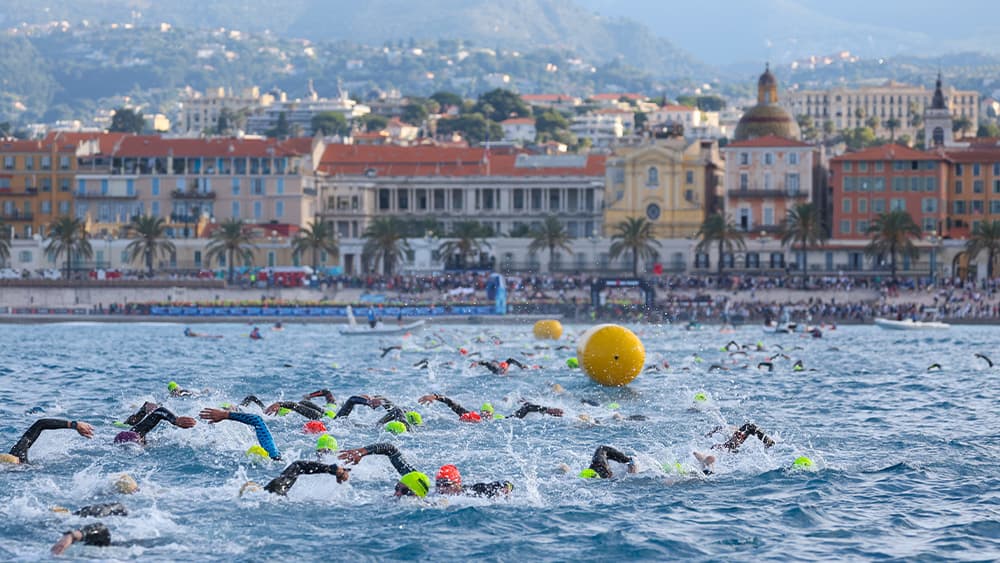
A two-loop saltwater swim in the clear Mediterranean Sea featuring an Australian exit across a painful pebble beach. High salinity makes you buoyant but demands early hydration management.
02
Bike
Alpes-Maritimes Loop
Parc Naturel Régional des Préalpes d'Azur
DISTANCE
180 km
LOOPS
1 loop
ELEVATION
2400 m
TERRAIN
Mountainous
SURFACE
Good tarmac
A highly demanding mountainous course featuring the Col de Vence and the Col de l'Ecre climbs in the inland hinterlands. The final section requires negotiating technical high-speed switchback descents on narrow roads.
03
Run
Promenade des Anglais
Nice Waterfront
DISTANCE
42.2 km
LOOPS
4 loops
ELEVATION
30 m
SURFACE
Asphalt
SHADE
None
A flat, four-loop marathon along the coastal road between the transition and the Nice airport. With zero shade, the heat off the asphalt and the blistering sun turn this flat profile into a severe challenge.
03·AVG beginners' Training Timeline
From zero to the finish line
28 weeks
This 28-week training arc is custom-built to prepare you for the brutal alpine climbs and technical descents of Nice. By prioritizing high-altitude endurance and heat-tolerance strategies early, you will confidently face the challenging Mediterranean conditions and flat, blistering marathon.
Today · WK 0Race Day
WK 1–8
Aerobic Foundation
Build a resilient aerobic base and core swim endurance.
WK 9–16
Mountain Strength & Climbing
Develop low-cadence climbing power and eccentric leg durability.
WK 17–24
Specific Race Simulation
Practice high-heat run bricks and technical bike handling.
WK 25–28
Taper & Peak Readiness
Rest and sharpen systems while maintaining heat adaptation.
Adapts to your fitness, schedule & recovery every week.
With afternoon temperatures exceeding 30°C and zero shade on the run, cooling is paramount. Grab ice and wet sponges at every 1.7 km aid station, and use high-SPF sunscreen to combat the intense Mediterranean sun.
Fuel & hydration
Consume the majority of your targeted carbs and fluids during the long uphill climbs on the bike, as the fast, technical descents make eating difficult. Rinse your mouth with fresh water immediately after the high-salinity swim.
Pacing
Protect your legs during the front-loaded bike climbs like Col de l'Ecre, aiming for a steady effort. Do not over-pace the technical descents, and prepare for a patient, metered effort on the flat, blistering hot marathon.
Gear & logistics
Consider a road bike with clip-on bars for optimal climbing and technical descending control. Bring old socks or flip-flops to wear on the painful beach pebbles at the swim start, which you can discard before entering.
Frequently Asked Questions
How hard is the IRONMAN France bike course?
The bike course is extremely difficult, featuring a single 180 km loop with a massive 2,200m to 2,400m of elevation gain through the Alpes-Maritimes hinterland. The climbing is heavily front-loaded, highlighted by the Col de l'Ecre, a challenging 13 km climb averaging 4.9% grade to the course's highest point. The final 50+ km are highly technical, containing high-speed descents with narrow roads and switchbacks that require excellent bike-handling skills.
What is the water temperature for the IRONMAN France swim?
The water temperature in the Mediterranean's Baie des Anges typically ranges between 20°C and 22°C (68°F to 72°F). While this range is usually wetsuit-legal for age group athletes, it can occasionally flirt with the 24.5°C non-wetsuit cutoff in warmer years. Be prepared for a saltwater, two-loop swim with a rolling beach start on the painful pebble shore of Plage du Centenaire.
How should I plan my nutrition strategy for IRONMAN France?
You should front-load your heavy caloric intake and hydration on the long uphill climbs of the bike course's first 90 to 112 km, as the subsequent technical descents are too fast and twisty to safely eat or drink. On the run, you must focus on taking in sodium, electrolytes, and water at every aid station spaced 1.7 km apart to combat the intense Mediterranean heat. Additionally, drink fresh water pre-swim to wash out the high-salinity seawater.
What is the run course like for IRONMAN France Nice?
The run is a completely flat, 42.2 km marathon consisting of four identical out-and-back loops along the paved Promenade des Anglais. While the flat asphalt offers a fast profile with under 30 meters of total elevation gain, there is absolutely zero shade. Because peak afternoon temperatures can easily exceed 30°C (86°F), it becomes a physical war of attrition where you must use ice and wet sponges to manage your core temperature.
What are the best travel and accommodation tips for IRONMAN France?
You should fly into Nice Côte d'Azur Airport (NCE), which is highly convenient as it sits only 7 km from the transition area. We highly recommend booking a hotel within walking distance of the Promenade des Anglais because major race-day road closures make driving and parking extremely difficult. Additionally, pack an old pair of socks or flip-flops to wear on the painful beach pebbles at the swim start, which you can discard right before entering the water.
Your Personalized Plan
Stop guessing your intervals. Train for this course.
FE26 builds your plan around your Strava data, your real schedule, and the exact demands of IRONMAN France— then adapts every week to how you actually perform.