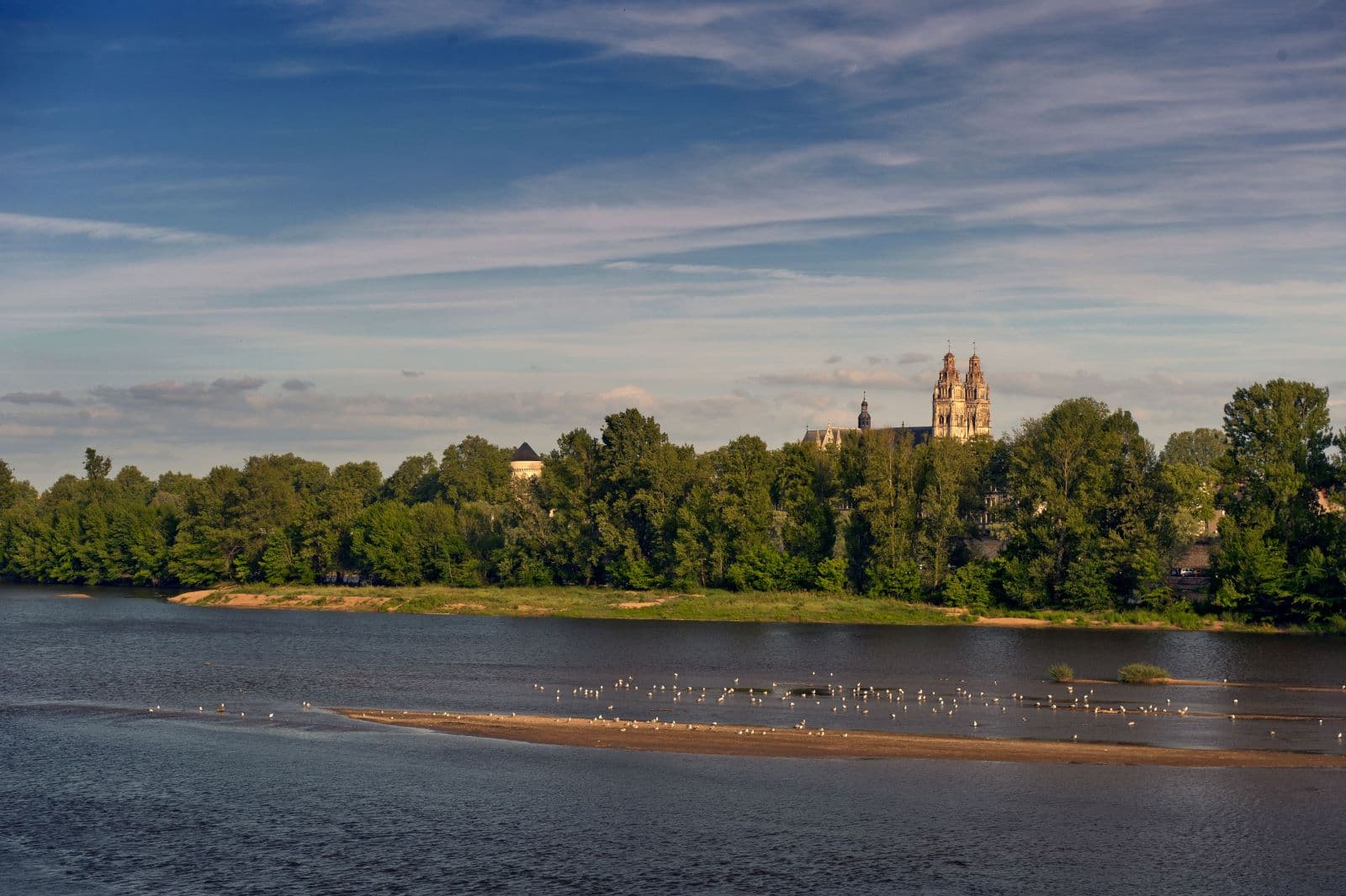
Tours, FranceJune 14, 2026140.6 mi — Full Distance2 min readPublished May 6, 2026Updated July 4, 2026
Share
01·Course Characteristics
The Trap of the Flat Loire
A deceptively flat profile hides a relentless physical toll. You will face a continuous aerodynamic hold on the bike, afternoon heat up to 31°C, and minimal run shade, culminating in a historic indoor finish.
Climate
31°C
Peak air temperature · water 18-20°C · mid-June
Conditions
Exposed
High sun exposure · 15 km/h ENE wind · little shade on run
Elevation
844 m
Bike total gain · rolling · mostly flat profile
Difficulty
5.5 / 10
Deceptively fast but punishing due to the relentless aerodynamic positioning on the bike, afternoon heat up to 31°C, and zero shade on the riverbanks.
This edition has passed
Training for a future IRONMAN Tours Metropole - Loire Valley?
Registration for the next edition opens on a rolling basis. Start building your base now and we'll size a full plan the moment a new date is set.
A calm, single-loop rectangular swim in the fresh waters of the Cher River. The current is mild to negligible, but sighting can be highly challenging on the return leg as you swim directly into the rising morning sun.
02
Bike
The Castle Route
Loire Valley and Vineyards
DISTANCE
180 km
LOOPS
1-loop
ELEVATION
844 m
TERRAIN
Flat to undulating
SURFACE
Asphalt with 500m cobbles
WIND
15 km/h ENE
A fast, single-loop course passing medieval and Renaissance castles on high-quality asphalt. The low elevation gain tempts athletes to over-torque, while the flat terrain forces a prolonged, exhausting aerodynamic position. You must also navigate a short 500-meter cobblestone passage and potential ENE head- and crosswinds.
03
Run
The Riverbank Marathon
Cher River and Ile Balzac
DISTANCE
42.2 km
LOOPS
3 loops
ELEVATION
80 m
SURFACE
Flat paths
SHADE
Minimal
PEAK TEMP
31°C
A flat, fast three-loop course running along the banks of the Cher River and through Ile Balzac park. The lack of shade makes athletes highly vulnerable to solar exposure and peak afternoon heat of up to 31°C. Each lap brings you through the Parc des Expositions, finishing in a world-unique indoor arena.
03·AVG beginners' Training Timeline
From zero to the finish line
24 weeks
This 24-week plan systematically prepares you for the physical realities of the Loire Valley. It starts by establishing a robust aerobic base before focusing heavily on the isometric neck and back strength required for the relentless 180 km aerodynamic ride. The final blocks integrate specific heat-adaptation protocols and continuous brick runs to prepare you for the exposed, hot marathon.
Today · WK 0Race Day
WK 1–6
Aerobic Foundation
Build a strong cardiovascular base with low-intensity volume and initial neck/back durability.
WK 7–12
Aero & Torque Development
Introduce progressive intervals in the aerodynamic position and low-cadence strength work on the bike.
Prepare for extreme temperature variation, starting from 17°C in the morning and rising to 31°C. Use every aid station on the run to grab ice and wet sponges to lower your core temperature, and apply high-SPF waterproof sunscreen before the swim and in T2.
Fuel & hydration
Aim for 60-90 grams of carbohydrates per hour on the bike, utilizing the flat terrain to feed consistently. Hydration is vital: drink 150-250 ml of fluid with sodium every 15-20 minutes on the bike, and carry handheld hydration or use the run aid stations spaced every 2 to 2.5 km.
Pacing
Resist the urge to push too hard on the deceptively fast, flat bike course, as over-torqueing early will ruin your marathon. Force yourself to shift positions briefly every 20-30 minutes to relieve pressure, and maintain a conservative, steady heart rate or power output despite the ENE winds.
Gear & logistics
Pack mirrored or tinted goggles for the swim to handle the low eastern sun. Opt for a highly comfortable aero cockpit setup and a medium-depth front wheel to handle the 15 km/h ENE crosswinds. Remember that transition and the finish line are 100% indoors at the Parc des Expositions de Tours, so adjust to the sudden lighting change.
Frequently Asked Questions
What is the water temperature and wetsuit policy for the IRONMAN Tours Métropole swim?
The water temperature in the Cher River typically ranges from 18°C to 20°C (64°F to 68°F) in mid-June, which generally makes the swim wetsuit-legal for age-group athletes. Sighting on the return leg of this 3.8 km rectangular course can be challenging due to the rising morning sun, so we highly recommend wearing tinted or polarized goggles.
How hard is the IRONMAN Tours Métropole - Loire Valley bike course?
The 180 km single-loop bike course is relatively flat with a low total elevation gain of approximately 844 meters (2,769 feet). While designed for speed, the lack of major climbs means there are no natural 'micro-rests' from descents, requiring you to train for prolonged periods in the aerodynamic position. Additionally, you should prepare for potential headwind or crosswind exposure from a relentless East-North-East wind.
What are the typical weather conditions for the full-distance race in Tours?
You will face highly variable temperatures on race day, starting at a cool 17°C (63°F) in the morning and rising to a hot 31°C (88°F) in the afternoon. The race is historically characterized by high solar exposure, particularly on the unshaded run course, and an East-North-East wind averaging about 15 km/h.
How flat is the run course at IRONMAN Tours Métropole?
The 42.2 km marathon is exceptionally flat, featuring a negligible cumulative elevation gain of only 80 meters (262 feet) across three 14-kilometer loops. The course runs along the flat banks of the Cher River, around Lake Tours, and through Ile Balzac park, culminating in a world-unique indoor finish line inside the Parc des Expositions.
What is the best way to travel to the race venue in Tours?
Tours is highly accessible, located just a one-hour high-speed TGV train ride from Paris to the Tours-Saint-Pierre-des-Corps station. If flying from abroad, you can land at Paris Charles de Gaulle or Orly and take a direct train, or fly into the local Tours Val de Loire Airport for regional connections.
Your Personalized Plan
Stop guessing your intervals. Train for this course.
FE26 builds your plan around your Strava data, your real schedule, and the exact demands of IRONMAN Tours Metropole - Loire Valley— then adapts every week to how you actually perform.