IRONMAN 70.3 Aix-en-ProvenceTraining Plan & Race Guide 2026
Aix en Provence, FranceMay 17, 202670.3 mi — Half Distance2 min readPublished April 1, 2026Updated July 23, 2026
Share
01·Course Characteristics
The Hills of Aix-en-Provence
A split-transition test featuring a cold open-water lake swim, a grueling hilly bike course through the Provence backcountry, and a warm multi-loop city run.
Climate
22°C
Morning starts around 8°C · peak up to 28°C · water 16-19°C
A single-loop swim in the fresh waters of Lac de Peyrolles. Early morning air temperatures can drop to 8°C, making the water feel relatively warm but requiring solid preparation for the chilly transition.
02
Bike
The Provence Ascent
Lac de Peyrolles to Aix-en-Provence
DISTANCE
90 km
ELEVATION
1,000 m
TERRAIN
Hilly
SURFACE
Asphalt
A challenging point-to-point ride climbing through the scenic and technical terrain of the Provence backcountry. Expect rolling hills, sustained climbs, and winding descents that demand careful bike handling.
03
Run
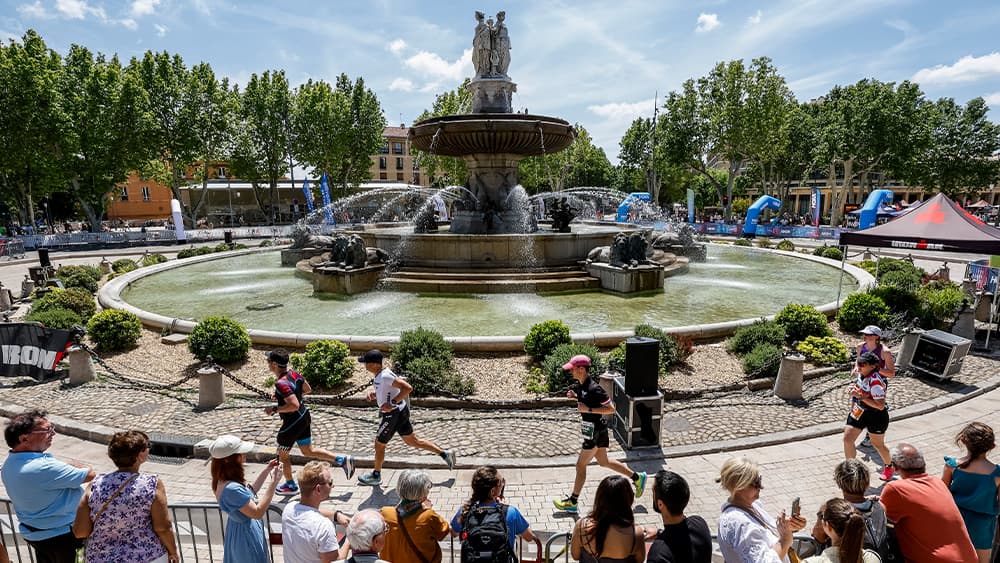
Cours Mirabeau Loops
Historic Aix-en-Provence
DISTANCE
21.1 km
LOOPS
Multi-loop
SURFACE
Paved & cobblestones
PEAK TEMP
Up to 28°C
A multi-loop run starting and finishing in the vibrant heart of historic Aix-en-Provence. The course offers outstanding spectator support but can heat up significantly by the afternoon as you run through the exposed streets.
03·AVG beginners' Training Timeline
From zero to the finish line
16 weeks
This 16-week progression is specifically designed for the demanding elevation of the Aix-en-Provence course. By focusing on muscular force early, transitioning to sustained hill strength, and preparing for the late-day run heat, you will arrive at Cours Mirabeau ready to conquer every climb.
Today · WK 0Race Day
WK 1–4
Aerobic Base & Force
Build a robust aerobic engine and baseline muscular strength to handle the upcoming climbing load.
WK 5–8
Climbing & Hill Strength
Develop sustained climbing power on the bike and prepare your legs for technical descents.
WK 9–13
Race-Specific Build
Refine race-pace efforts, simulate hilly brick sessions, and integrate run workouts in warmer temperatures.
WK 14–16
Taper & Strategy
Recover fully to ensure peak form while finalizing your pacing, hydration, and nutritional strategy.
Adapts to your fitness, schedule & recovery every week.
Be prepared for a cold 8°C morning start at the lake, transitioning into a warm afternoon reaching up to 28°C on the run. Utilize every aid station to pour water over your head and keep your core temperature down.
Fuel & hydration
The hilly bike course demands high energy output. Target 60-90g of carbohydrates per hour and increase your sodium and fluid intake early in the bike leg to stay ahead of the afternoon heat.
Pacing
Ride conservatively on the climbs of the Provence backcountry. Pushing too hard early will compromise your half-marathon on the cobblestones of Aix-en-Provence.
Gear & logistics
Rack your bike and T1 gear at Lac de Peyrolles on Saturday. Book the earliest official morning shuttle from Aix to avoid the heavy traffic jams on the single-lane lake access roads on race day.
Frequently Asked Questions
What is the date and location of IRONMAN 70.3 Aix-en-Provence 2026?
The 2026 edition of this iconic European middle-distance triathlon will take place on May 17, 2026, in Aix-en-Provence, Bouches-du-Rhône, France. This point-to-point race starts at Lac de Peyrolles and finishes at Cours Mirabeau / La Rotonde in the historic, 2,000-year-old city center.
What is the expected water temperature for the IRONMAN 70.3 Aix-en-Provence swim?
The water temperature in Lac de Peyrolles typically ranges between 16°C and 19°C (61°F to 66°F) for the 1.2-mile swim. Air temperatures on race day usually start around 8°C (46°F) in the morning and can reach 22°C (72°F) or even up to 28°C (82°F) by the afternoon.
How do logistics work for the split transition at IRONMAN 70.3 Aix-en-Provence?
Because this is a point-to-point race, you must rack your bike and T1 gear bag at Lac de Peyrolles on Saturday, while dropping your T2 bag at the finish area in Aix-en-Provence. On race morning, shuttle buses transport athletes from Aix to the swim start. You should book the earliest shuttle starting at 5:00 AM to avoid severe traffic jams on the narrow, single-lane access roads.
Where is the best place to stay when traveling to IRONMAN 70.3 Aix-en-Provence?
It is highly recommended to book your accommodation near La Rotonde or Cours Mirabeau in central Aix-en-Provence. Staying in this area keeps you within walking distance of T2, the athlete expo, and the finish line. For travel, Marseille Provence Airport (MRS) is only 25 to 30 minutes away by car, and the Aix-en-Provence TGV train station offers easy high-speed rail access.
What is the race format and distance for IRONMAN 70.3 Aix-en-Provence?
First staged in 2011, this event follows the standard middle-distance triathlon format consisting of a 1.2-mile swim, a 56-mile bike ride, and a 13.1-mile run. The swim takes place in Lac de Peyrolles, followed by a scenic bike course through the region, and finishes with a run ending at the historic Cours Mirabeau.
Your Personalized Plan
Stop guessing your intervals. Train for this course.
FE26 builds your plan around your Strava data, your real schedule, and the exact demands of IRONMAN 70.3 Aix-en-Provence— then adapts every week to how you actually perform.