IRONMAN 70.3 ChattanoogaTraining Plan & Race Guide 2026
Chattanooga, United StatesMay 17, 202670.3 mi — Half Distance2 min readPublished April 1, 2026Updated July 4, 2026
Share
01·Course Characteristics
The measure of Chattanooga
A lightning-fast downstream river swim gives way to relentless, energy-sapping rollers on the bike and a punishing, sun-exposed run over Chattanooga's historic bridges.
Climate
29°C
Peak air · water 21-23°C · mid-May Southern humidity
Conditions
Exposed
No run shade · river current assist · variable bike winds
Elevation
676 m
Bike gain · relentless rolling hills · punchy run climbs
Difficulty
6.5 / 10
A fast downstream river swim is countered by 676 m of rolling resistance on the bike and a highly exposed, hilly double-loop run peaking at 29°C.
This edition has passed
Training for a future IRONMAN 70.3 Chattanooga?
Registration for the next edition opens on a rolling basis. Start building your base now and we'll size a full plan the moment a new date is set.
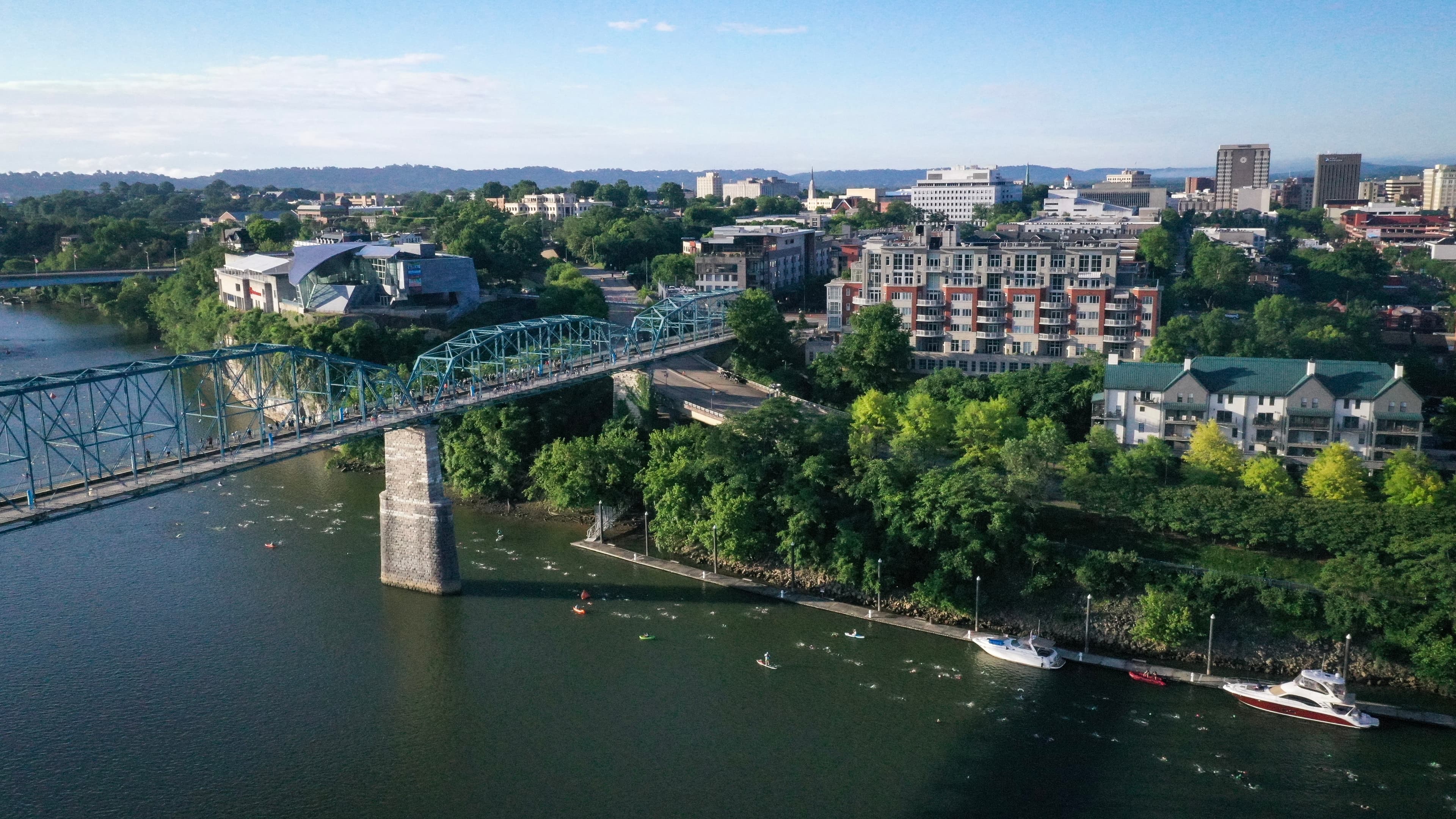
You will be bussed 1.4 miles upstream, enter with a rolling start, and swim a brief 100 meters upriver before making a 180-degree turn. From there, the downstream river current carries you rapidly back to transition at Ross's Landing.
02
Bike
Lookout Mountain Rollers
North Georgia Loop
DISTANCE
90 km
LOOPS
1
ELEVATION
676 m
TERRAIN
Relentless rollers
SURFACE
Asphalt
A single-loop route heading south into Georgia, paralleling Lookout Mountain and traversing Chickamauga. Expect a relentless series of short, punchy rollers peaking at 3.5% gradient with almost no flat sections to recover.
03
Run
Bridge Crossings and Barton
Downtown Chattanooga Riverwalk
DISTANCE
21.1 km
LOOPS
2.25
ELEVATION
200 m
SURFACE
Concrete & asphalt
PEAK TEMP
29°C
A multi-loop course traversing the Tennessee River over historic concrete bridges and through the urban Riverwalk. You will tackle the steep, leg-sapping Barton Avenue hill twice in the afternoon heat and humidity with minimal shade.
03·AVG beginners' Training Timeline
From zero to the finish line
16 weeks
This 16-week progression is specifically engineered to prepare you for Chattanooga's unique layout. It prioritizes building robust rolling-bike endurance and quad resilience early, ensuring you have the strength to tackle the steep Barton Avenue climbs under hot, humid race-day conditions.
Today · WK 0Race Day
WK 1–5
Aerobic Foundation
Establish a consistent aerobic base and comfortable river swimming volume.
WK 6–10
Strength & Rolling Power
Develop muscular endurance on the bike to handle the relentless 3.5% non-stop Georgia rollers.
WK 11–14
Race-Specific Build
Incorporate hot concrete transition runs and repeat climbs on Barton-like grades.
WK 15–16
Taper & Sharpen
Reduce training volume while keeping intensity high to peak for Chattanooga's warm, humid race day.
Adapts to your fitness, schedule & recovery every week.
With midday temperatures peaking up to 29°C and high Southern humidity, grab ice and cold water at every aid station to actively lower your core body temperature.
Fuel & hydration
Due to the intense humidity, target 60-90g of carbs per hour using Maurten products on the bike while aggressively replacing sodium and fluid to prevent cramping.
Pacing
Keep your effort strictly controlled on the relentless 3.5% bike rollers so you do not burn matches before tackling the steep, double-climb up Barton Avenue on the run.
Gear & logistics
Arrive in Chattanooga at least two days early to walk the transition area at Ross's Landing. Choose a medium-depth aero front wheel to handle the variable Georgia winds and opt for highly breathable running shoes.
Frequently Asked Questions
How hard is the IRONMAN 70.3 Chattanooga bike course?
The 56-mile bike course is moderate to hard, featuring a relentless series of rolling hills with up to 2,400 feet of total elevation gain rather than long, sustained alpine climbs. Gradients max out around 3.5%, leaving you with very few flat recovery zones between miles 10 and 45. To succeed, you must pace your efforts carefully over these constant rollers to avoid fatiguing your legs for the run.
What is the water temperature for the IRONMAN 70.3 Chattanooga swim?
Water temperatures typically range from 70°F to 74°F (21°C to 23°C), which generally makes the swim wetsuit legal or optional. You will enjoy a fast, point-to-point downstream swim in the Tennessee River with a helpful current. To maximize this free speed, make sure to practice your sighting so you can stay positioned in the main channel of the river.
How hilly is the IRONMAN 70.3 Chattanooga run course?
The run is quite challenging, featuring between 627 and 800 feet of total elevation gain over a 2.25-loop urban layout. Its signature obstacle is the steep, punchy Barton Avenue hill, which you must climb on each loop and can severely punish your quads on the descent. Additionally, the course crosses two bridges and utilizes concrete paths with very little shade, amplifying the midday Southern heat.
What will the weather be like for IRONMAN 70.3 Chattanooga?
You should prepare for warm and humid conditions typical of a Southern spring in May. Morning temperatures at the start average around 58°F to 62°F (14°C to 17°C), but daytime highs can peak in the high 70s to mid-80s°F (25°C to 29°C) by the afternoon. Because the run course is highly exposed to the sun, managing heat, humidity, and hydration will be critical to your success.
What nutrition is provided on the course at IRONMAN 70.3 Chattanooga?
With Maurten as the official performance nutrition partner, you will find Maurten Gel 100, Gel 100 Caf 100, and Maurten Solid 160 available on the course. These will be offered alongside Gatorade Endurance, water, and cola. Given Chattanooga's high humidity, you should execute a highly structured fluid and sodium replacement strategy starting early on the bike.
Your Personalized Plan
Stop guessing your intervals. Train for this course.
FE26 builds your plan around your Strava data, your real schedule, and the exact demands of IRONMAN 70.3 Chattanooga— then adapts every week to how you actually perform.