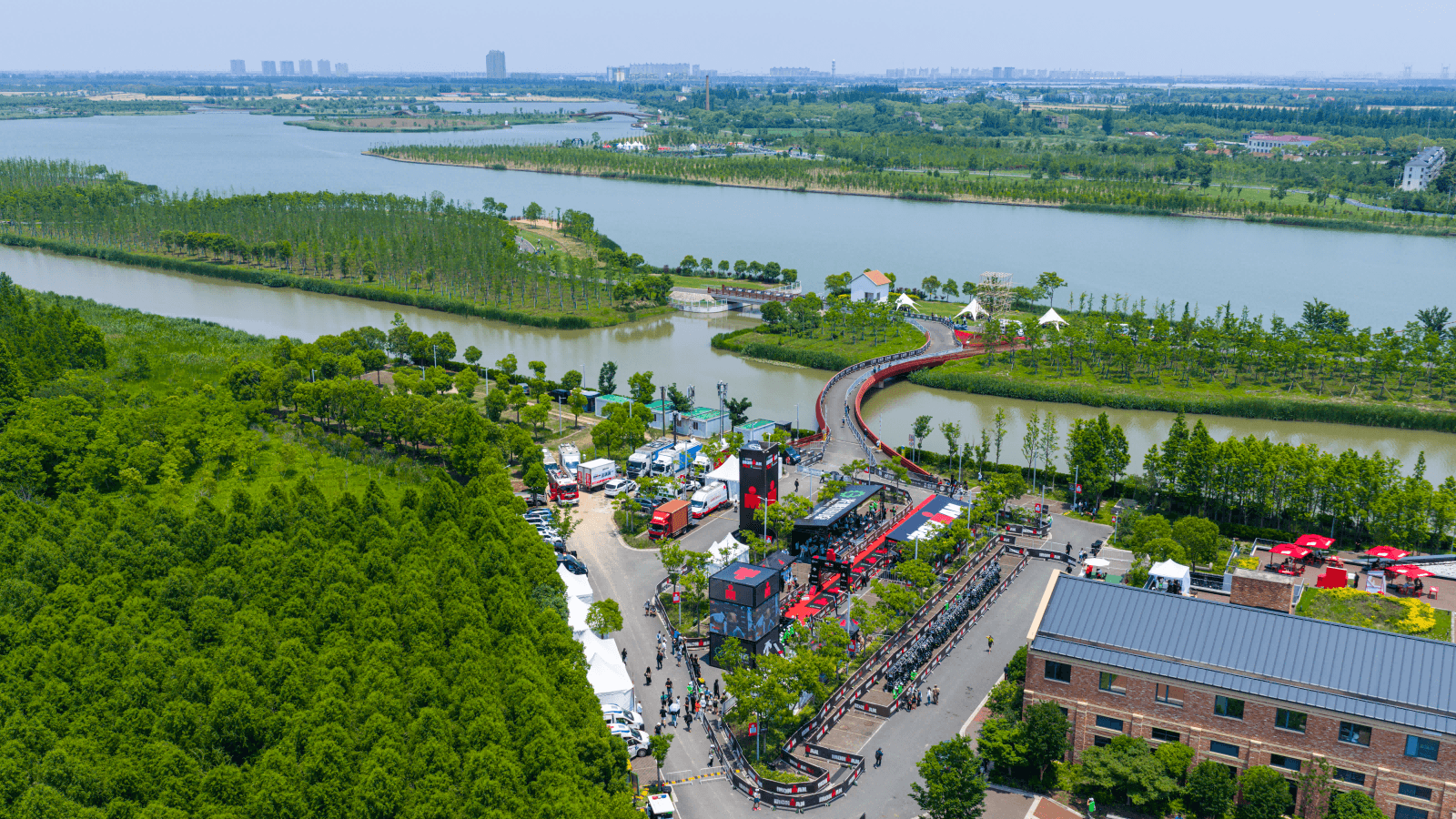
IRONMAN 70.3 Shanghai ChongmingTraining Plan & Race Guide 2026
Shanghai, ChinaMay 17, 202670.3 mi — Half Distance2 min readPublished April 1, 2026Updated July 4, 2026
Share
01·Course Characteristics
The Speed and Wind of Chongming
Do not let the pancake-flat profiles fool you. Chongming Island presents a tactical challenge defined by relentless winds, high humidity, and an exposed run with zero relief from the sun.
Climate
29°C
Peak air · water 21°C · mid-May
Conditions
Exposed
80% average humidity · open winds · no shade
Elevation
72 m
Bike gain · pancake-flat · constant pedaling
Difficulty
6 / 10
Deceptively difficult due to high humidity, open winds on the swim and bike, and an exposed run under direct sun.
This edition has passed
Training for a future IRONMAN 70.3 Shanghai Chongming?
Registration for the next edition opens on a rolling basis. Start building your base now and we'll size a full plan the moment a new date is set.
A single-loop swim in a highly-filtered, clear freshwater lake. High winds across Chongming Island can create deceptively choppy conditions, disrupting your sighting and stroke rhythm.
02
Bike
Beiyan Highway Loops
Beiyan Highway
DISTANCE
90 km
LOOPS
2 loops
ELEVATION
72 m
TERRAIN
Pancake-flat
SURFACE
Pristine asphalt
WIND
Strong crosswinds
A two-loop, lightning-fast course on immaculate pavement with a total elevation gain of just 72 meters. However, the open terrain offers zero shelter from strong headwinds and crosswinds, demanding constant pedaling without any coasting.
03
Run
The Ecological Path
Bright Tian Yuan Lake Loop
DISTANCE
21.1 km
LOOPS
2 loops
ELEVATION
Under 50 m
SURFACE
Paved pathways
SHADE
None
PEAK TEMP
29°C
A flat, scenic two-loop run circling the lake within the ecological park. It is beautiful but completely exposed to the sun, turning the run into a hot battle of attrition as midday temperatures rise.
03·AVG beginners' Training Timeline
From zero to the finish line
16 weeks
This 16-week plan is customized for Chongming's flat yet windy layout. Early weeks develop base durability, while the middle and peak phases emphasize sustained aerodynamic posture on the bike and heat-adaptation protocols for the run. This structure ensures you arrive with both the muscular endurance and thermoregulation required.
Today · WK 0Race Day
WK 1–5
Aerobic Foundation
Build a stable aerobic engine and core strength to prepare for the high volume ahead.
WK 6–10
Aero Position & Strength
Develop back and shoulder durability to sustain the continuous aerodynamic riding required on this flat course.
WK 11–14
Specific Wind & Heat Build
Incorporate race-pace brick workouts with heat exposure and high-cadence, steady-state trainer sessions.
WK 15–16
Taper & Strategy Peak
Reduce volume while maintaining intensity to peak for the flat, wind-exposed conditions on race day.
Adapts to your fitness, schedule & recovery every week.
With temperatures reaching 29°C and 80% humidity, active cooling is non-negotiable. Grab ice and water at every run aid station, which are spaced 1.2 to 1.9 km apart, to douse your head and keep core temperature down.
Fuel & hydration
High humidity accelerates electrolyte loss, so prioritize high-sodium fluids targeting 750-1000ml per hour. Because the flat bike demands continuous pedaling, consume easy-to-digest carbohydrates at 80-90g/hr to avoid GI distress under constant aero pressure.
Pacing
Do not over-torque into the heavy headwind sections on the bike; hold your target power and accept a lower speed. On the run, adjust your target pace downward early on to account for the oppressive combination of humidity and direct midday sun.
Gear & logistics
Run a deep-section front wheel with caution if crosswinds are high, opting for a versatile 50-60mm depth instead. Arrive in Shanghai via Pudong to catch official race shuttles, and ensure you have Alipay or WeChat Pay set up on your phone for all local transactions.
Frequently Asked Questions
What are the weather conditions and water temperature for IRONMAN 70.3 Shanghai Chongming?
You can expect air temperatures ranging from 60F to 84F (15C to 29C) alongside high relative humidity averaging around 80%. The freshwater lake swim has an expected water temperature of 70F (21C), making it typically wetsuit-optional or wetsuit-legal. Be prepared for windy conditions that can create choppy lake water and strong crosswinds on the bike.
How hard is the IRONMAN 70.3 Shanghai Chongming bike course?
The bike course has a moderate difficulty rating due to environmental factors rather than elevation, as it is pancake-flat with only 72 meters (236 feet) of total gain. Because of this flat, non-technical two-loop layout along the Beiyan Highway, you will have to pedal constantly in your aerodynamic position with no opportunities to coast. Additionally, the course is highly exposed, meaning you will likely face strong headwinds and crosswinds throughout the 90 km ride.
What is the run course like for the Shanghai Chongming 70.3?
The run is a flat, two-loop 21.1 km course that circles the scenic lake inside the Bright Tian Yuan ecological park. While the paved pathway is highly scenic with views of meadows and flower fields, it is heavily exposed to the sun with very little shade. As midday temperatures rise toward 84F (29C), this segment becomes a true battle of attrition demanding a strict hydration and cooling strategy.
What is the best nutrition and hydration strategy for this race?
With humidity levels around 80% and a hot, exposed run, you must prioritize a high-electrolyte hydration plan to prevent cramping and heat exhaustion. On the bike, the flat profile requires continuous pedaling in the aero position, so you should test your nutrition beforehand to ensure GI comfort under constant tension. On the run, take full advantage of the aid stations spaced every 1.2 to 1.9 km to douse yourself with ice and water to keep your core temperature down.
How should international athletes handle travel logistics for the race on Chongming Island?
You should fly into Shanghai Pudong International Airport (PVG), which is the preferred hub for official race shuttles traveling to host hotels like the Sheraton or Xanadu. Many international athletes can take advantage of China's 144-hour transit visa exemption if flying on to a third country. Before arriving, make sure to set up digital payment apps like Alipay or WeChat Pay and download translation apps to ensure smooth communication and transit.
Your Personalized Plan
Stop guessing your intervals. Train for this course.
FE26 builds your plan around your Strava data, your real schedule, and the exact demands of IRONMAN 70.3 Shanghai Chongming— then adapts every week to how you actually perform.