IRONMAN 70.3 AlgheroTraining Plan & Race Guide 2026
Alghero, ItalyJune 7, 202670.3 mi — Half Distance2 min readPublished April 5, 2026Updated July 4, 2026
Share
01·Course Characteristics
The Crucible of Little Barcelona
Prepare for a race of contrasts. While the bay swim is crystal-clear and calm, the technical bike leg features a brutal 17% climb and rough coastal roads, followed by an exposed, cobblestone-laden run in intense 35°C heat.
Bike gain · rolling coastal terrain · short 17% wall
Difficulty
7 / 10
Rated 7 out of 10 due to extreme 30-35°C heat, high humidity, coastal wind gusts, a steep 17% bike wall, and flat but bone-jarring city run cobblestones.
This edition has passed
Training for a future IRONMAN 70.3 Alghero?
Registration for the next edition opens on a rolling basis. Start building your base now and we'll size a full plan the moment a new date is set.
Swim in a highly sheltered, crystal-clear turquoise bay next to the harbor, completely protected from major ocean currents. The flat and calm conditions make for an exceptionally fast and straightforward single-loop swim. Transition one is located a convenient 100 meters from the water exit.
02
Bike
Porto Conte Loop
Coastal Loop & Natural Park
DISTANCE
90 km
LOOPS
1
ELEVATION
772 m
TERRAIN
Rolling & technical
SURFACE
Rough country roads
WIND
Exposed coastal gusts
This single-loop course heads south along the coast before looping north through Porto Conte Natural Park. You will navigate rolling hills, rough country pavement, and a steep 400-meter wall near Capo Caccia with gradients reaching 17% to 20%. Expect highly technical descents with sharp right-hand turns and designated no-aerobar zones.
03
Run
The Historic Shoreline
Alghero Harbor & Old Quarter
DISTANCE
21.1 km
LOOPS
3
ELEVATION
109 m
SURFACE
Asphalt & cobblestones
SHADE
Minimal
PEAK TEMP
35°C
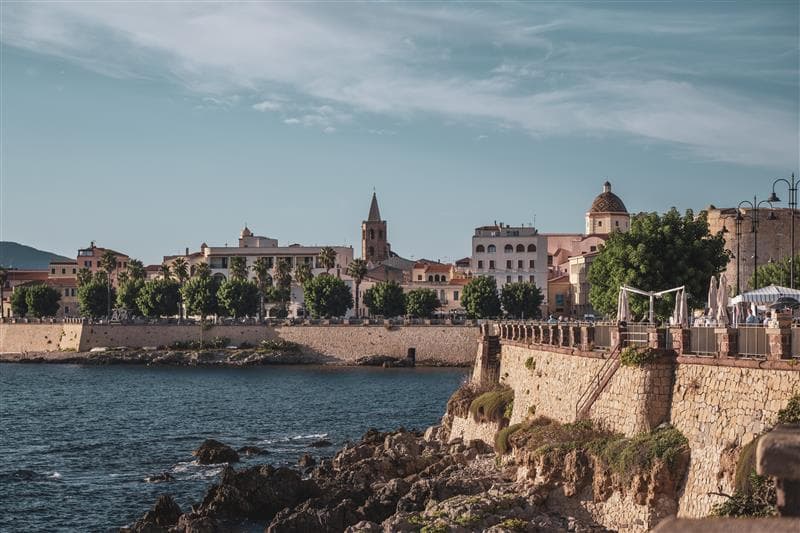
A flat, three-loop run that connects the harbor to the southern coastal road and the narrow alleys of the historic city center. Navigating the historic stone walls and cobblestones breaks your stride and tests your ankle stability. The course offers very little shade, exposing you directly to the intense Mediterranean afternoon sun.
03·AVG beginners' Training Timeline
From zero to the finish line
16 weeks
This 16-week plan is customized to prepare your body for Alghero's unique combination of high heat and physical technicality. We front-load structural and aerobic durability to protect your joints against the run's cobblestones, then transition into steep-climbing power on the bike and progressive heat acclimatization to ensure you can handle the 35°C Mediterranean sun.
Today · WK 0Race Day
WK 1–4
Aerobic Foundation
Build baseline endurance and open-water swimming comfort in calm waters.
WK 5–8
Strength & Technical Bike
Develop high-torque climbing capacity and bike handling on rough pavement.
WK 9–13
Race-Specific Build & Heat
Integrate heat-tolerance training, long brick workouts, and running on uneven cobblestones.
WK 14–16
Peak & Taper
Consolidate aerobic fitness, sharpen race-pace efforts, and rest up for race day.
Adapts to your fitness, schedule & recovery every week.
Expect intense heat between 30°C and 35°C with high humidity. Dump water and place ice under your kit at every run aid station to lower your core temperature, and wear a high-UV protective white cap.
Fuel & hydration
Target 500 to 1000 mg of sodium and 750 to 1000 ml of fluids per hour to offset heavy sweating in the Mediterranean humidity. Because there are only three bike aid stations, carry two large bottles and consume 60 to 90 grams of carbohydrates hourly.
Pacing
Ride conservatively during the first half to save matching power for the brutal 17% Capo Caccia climb around kilometer 65. Avoid over-surging on the rolling coastal stretches and hold a steady, heat-adjusted heart rate or wattage on the run.
Gear & logistics
Equip your bike with a climbing-friendly cassette, such as an 11-30 or 11-32, to spin up the 17% slopes. Fly directly into Alghero Fertilia Airport, stay near San Giovanni Beach for easy walkability, and confirm regional airline bike baggage limits.
Frequently Asked Questions
How hard is the IRONMAN 70.3 Alghero bike course?
The bike course has a moderate-to-difficult rating of 7/10 and features a single 90 km loop with 772 meters of climbing. You will face rolling terrain, strong coastal winds, technical descents where you must stay off the aerobars, and rough inland pavement. A major challenge is a short, 400-meter climb near Capo Caccia with a 17% average gradient and pitches exceeding 20%, which requires low gearing.
What is the water temperature and wetsuit rule for the swim in Alghero?
The average water temperature in Alghero's sheltered bay is around 18°C (64°F). This means the 1.9 km swim starting and finishing at San Giovanni Beach is wetsuit-legal for age-group athletes. You can expect flat, calm, and highly transparent turquoise waters because the harbor blocks major open-ocean currents.
What are the weather conditions and temperatures for IRONMAN 70.3 Alghero?
While early June typically averages a comfortable 22°C (72°F), race day can experience hot and humid conditions with peak temperatures soaring between 30°C and 35°C (86°F - 95°F). Overnight lows range from 13°C to 16°C (55°F - 61°F). You must also prepare for strong Mediterranean sea breezes that heavily impact the exposed coastal roads.
What is the run course like at IRONMAN 70.3 Alghero?
The run is a flat, 3-loop course spanning 21.1 km with 109 meters of total elevation gain (about 36 meters per loop). The route is highly technical as it winds through the narrow, rhythm-disrupting cobblestone alleys of Alghero's historic old quarter and along the stone seafront walls. There is very little shade, meaning you will be heavily exposed to the sun and intense Mediterranean heat.
What hydration and nutrition strategy should I use for this race?
Due to temperatures exceeding 30°C and high humidity, you should target 500–1000mg of sodium per hour depending on your sweat rate. Since there are only three aid stations on the bike leg, carry two large bottles and refuel efficiently at every opportunity. On the run, utilize every aid station to dump water on your head, take in ice, and consume 60–90g of carbohydrates per hour to combat the high-heat energy demands.
Your Personalized Plan
Stop guessing your intervals. Train for this course.
FE26 builds your plan around your Strava data, your real schedule, and the exact demands of IRONMAN 70.3 Alghero— then adapts every week to how you actually perform.