IRONMAN 70.3 HawaiiTraining Plan & Race Guide 2026
Kohala Coast, United StatesMay 30, 202670.3 mi — Half Distance2 min readPublished April 5, 2026Updated July 4, 2026
Share
01·Course Characteristics
The Crucible of Kohala Coast
Honu 70.3 demands mastery over extreme elements. You will fight severe trade winds on the legendary Hawi climb and battle oppressive tropical heat and humidity across an exposed, multi-surface run.
Climate
29°C
Peak air · water 24-26°C · late May
Conditions
Windy
Severe trade winds · 80-85% humidity · zero shade
Elevation
759-817 m
Bike climb to Hawi · run undulating
Difficulty
8 / 10
Earning an 8.0 due to brutal heat, relentless crosswinds, a non-wetsuit ocean swim, and an energy-sapping multi-surface run course.
This edition has passed
Training for a future IRONMAN 70.3 Hawaii?
Registration for the next edition opens on a rolling basis. Start building your base now and we'll size a full plan the moment a new date is set.
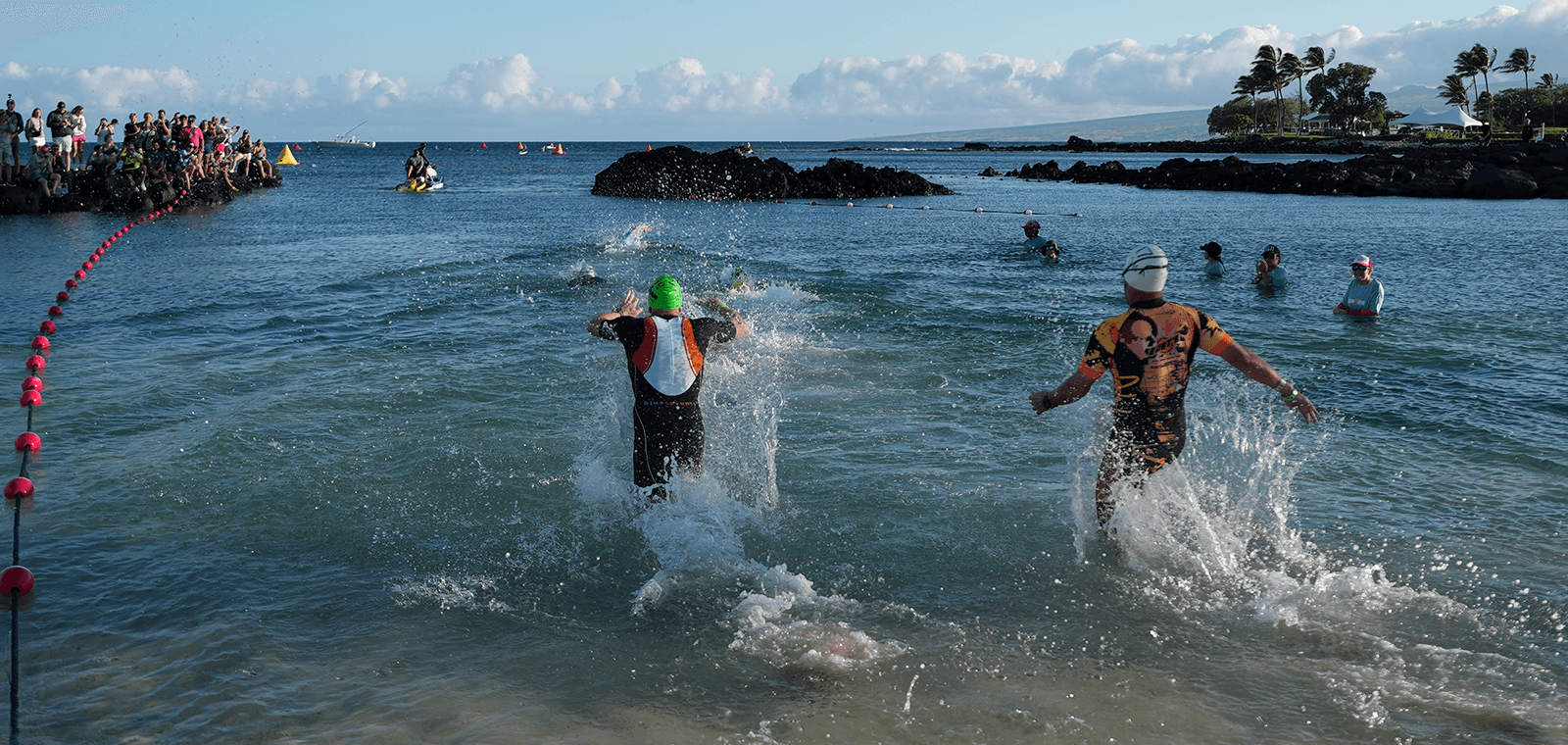
A single-loop clockwise rectangular swim in the crystal-clear waters of Pauoa Bay. Once you clear the sheltered bay, you will navigate ocean swells and a head-current. Sighting on the return stretch is particularly challenging as you swim directly into the rising morning sun.
02
Bike
The Hawi Climb
Queen Ka'ahumanu Highway to Hawi
DISTANCE
90 km
LOOPS
1
ELEVATION
759-817 m
SURFACE
Smooth asphalt
WIND
Severe crosswinds
A scenic but brutal out-and-back ride climbing 18 miles up to the historic town of Hawi on smooth asphalt. The defining challenge is extreme wind exposure, with severe Kama'kani and Mumuku crosswinds on the descent and a grueling headwind back to the resort.
03
Run
The Golf Course Rollers
Mauna Lani Resort & Golf Course
DISTANCE
21.1 km
LOOPS
2
ELEVATION
113-115 m
SURFACE
Turf & paths
SHADE
None
PEAK TEMP
29°C
A two-loop run winding entirely within the resort grounds and the golf course, featuring concrete roads, asphalt paths, and spongy, energy-sapping fairways. The course has virtually no shade, and temperatures radiating off the lava rocks can easily exceed a real-feel of 32°C.
03·AVG beginners' Training Timeline
From zero to the finish line
16 weeks
This 16-week progression is tailored specifically for the harsh elements of the Kohala Coast. We start by building a strong aerobic base and stabilizing muscles for the soft golf course turf, then transition to long sustained climbing and heat adaptation, concluding with a targeted taper to ensure you arrive fresh and heat-ready.
Today · WK 0Race Day
WK 1–4
Aerobic & Strength Foundation
Build baseline aerobic fitness and strengthen core stabilizers for the uneven run turf.
WK 5–8
Climbing & Handling Strength
Introduce long, gradual sustained bike efforts to prepare for the Hawi climb.
WK 9–12
Specific Build & Wind Prep
Practice riding in windy conditions and introduce multi-surface brick runs on grass.
WK 13–14
Peak Heat & Core Prep
Incorporate heat-acclimatization runs and peak-volume brick sessions under simulated race conditions.
WK 15–16
Taper & Sharpen
Reduce training volume to shed fatigue while maintaining intensity to stay sharp for race day.
Adapts to your fitness, schedule & recovery every week.
With high humidity and real-feel temperatures exceeding 32°C on the exposed lava, heat management is critical. Use every single aid station to take in ice, douse your head and neck, and stuff ice down your tri-suit to keep your core temperature down.
Fuel & hydration
High sweat rates require a high-sodium intake of 500-1000mg and 750ml to 1000ml of fluid per hour on the bike. Use easily digestible carbohydrates like gels or liquids, and freeze your bike bottles overnight to ensure cold fluids early in the ride.
Pacing
Control your effort on the long 18-mile climb to Hawi to avoid burning out before the windy descent. Keep your run pace conservative on the spongy golf course turf, as the grass sections will drastically sap your energy and slow your pace.
Gear & logistics
Equip your bike with shallow or mid-depth front wheels, such as 40mm, and completely avoid deep-section or disc wheels due to severe crosswinds. Wear a highly breathable, UV-protective race kit and apply water-resistant mineral sunscreen at both transitions.
Frequently Asked Questions
What is the water temperature for the IRONMAN 70.3 Hawaii swim?
The water temperature in Pauoa Bay typically averages between 75°F and 78°F (24°C to 26°C), making it a non-wetsuit swim for competitive age groupers. You will want to wear a textile swimskin instead, and be prepared to sight carefully on the return loop as you swim directly into the rising morning sun.
How hard is the IRONMAN 70.3 Hawaii bike course?
The 56-mile bike course is moderately challenging, featuring a long, gradual 18-mile climb up to Hawi with an overall elevation gain of 2,490 to 2,682 feet. Your biggest obstacle will be the severe Kama'kani and Mumuku crosswinds on the descent, making shallow to mid-depth front wheels (around 40mm) highly recommended over deep-section or disc wheels.
What is the run course surface like for IRONMAN 70.3 Hawaii?
The 13.1-mile run is highly undulating and technical, consisting of a unique mix of concrete resort roads, asphalt cart paths, and energy-sapping golf course turf. To prepare your stabilizer muscles for the unique fatigue of the fairways, you should incorporate trail or grass running into your pre-race training.
What should my nutrition and hydration strategy be for Honu 70.3?
With real-feel temperatures exceeding 90°F (32°C) and high humidity up to 85%, you must target a high fluid intake of 750ml to 1,000ml per hour on the bike alongside 500-1000mg of sodium. On the run, prioritize lowering your core temperature at every aid station by stuffing ice down your tri-suit and dousing your head and neck with cold water.
Where is the best place to stay for IRONMAN 70.3 Hawaii?
The host hotel, the Fairmont Orchid, offers the ultimate logistical convenience since both transitions, the swim start, and the finish line are located on the property. Vacation condos within the Mauna Lani Resort or hotels in the nearby Waikoloa Beach Resort are also excellent alternatives, as they are serviced by free race-day shuttles.
Your Personalized Plan
Stop guessing your intervals. Train for this course.
FE26 builds your plan around your Strava data, your real schedule, and the exact demands of IRONMAN 70.3 Hawaii— then adapts every week to how you actually perform.