IRONMAN 70.3 VictoriaTraining Plan & Race Guide 2026
Victoria, CanadaMay 24, 202670.3 mi — Half Distance2 min readPublished April 5, 2026Updated July 4, 2026
Share
01·Course Characteristics
The Test of Saanich Peninsula
A cold lake swim leads into a highly technical, rolling bike course and a shaded, roots-and-gravel trail run. Success here demands sharp bike handling, cold-weather resilience, and off-road running durability.
Climate
16°C
Peak air temperature · water 15-18°C · cool morning start at 9°C
A single, calm freshwater loop in Elk Lake starting from Hamsterly Beach. While generally free of currents and highly predictable, the water is cold and requires a wetsuit. Be mentally prepared for a potential duathlon format due to historic blue-green algae risks.
02
Bike
Saanich Peninsula Loop
Saanich Peninsula single-loop
DISTANCE
90 km
ELEVATION
915 m
LOOPS
1
CLIMB
Willis Point Road
SURFACE
Variable pavement
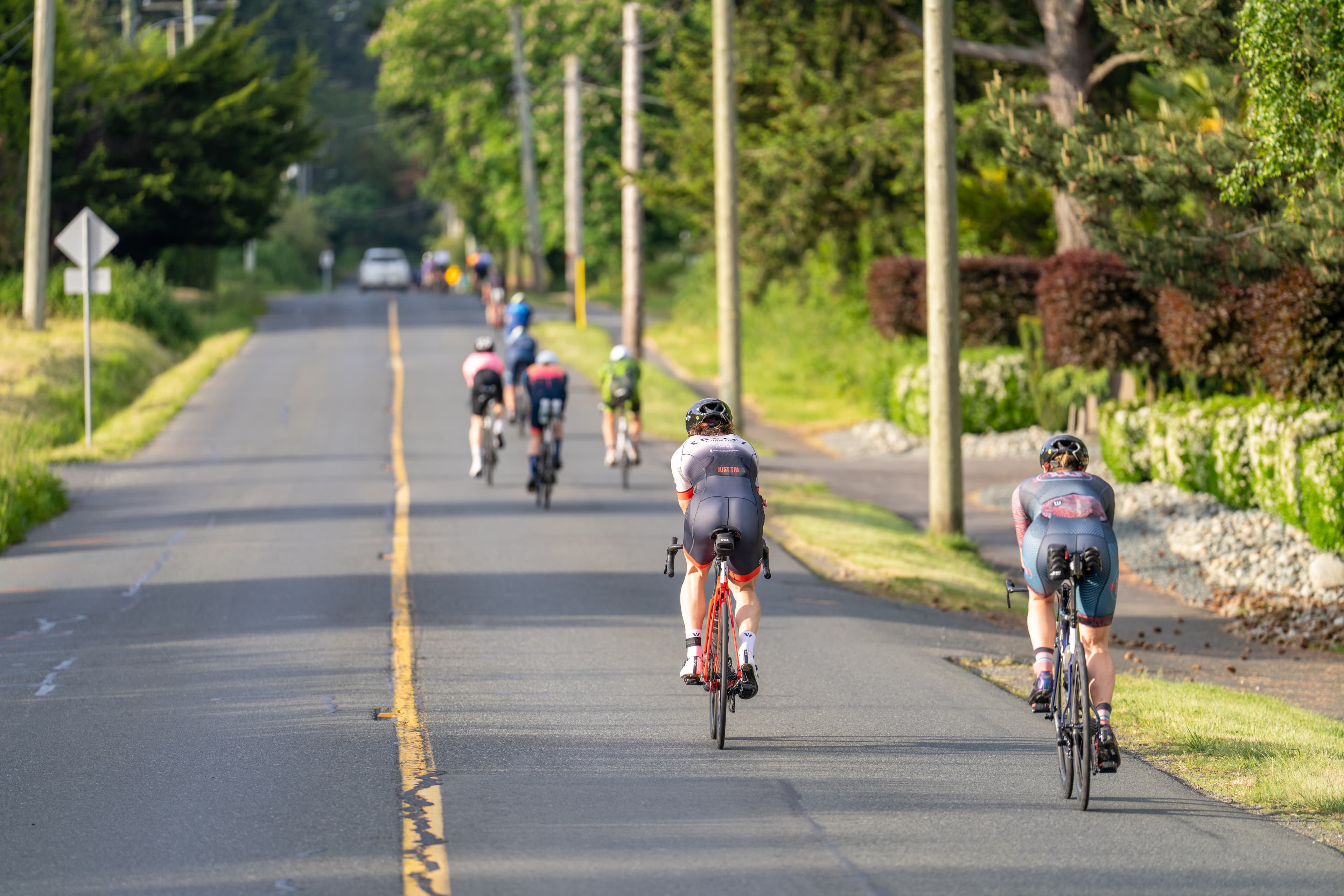
A highly technical, rolling single loop with almost no flat sections to settle into aero bars. You will face rough, vibrating pavement on Hunt and Old West Saanich Roads, capped by the challenging 2.5 km Willis Point Road climb at 5% average grade and its fast descent.
03
Run
Elk Lake Trail
Elk/Beaver Lake regional trail
DISTANCE
21.1 km
LOOPS
2
ELEVATION
117 m
SURFACE
97% dirt & gravel
SHADE
80% forest canopy
A scenic two-loop clockwise course on hard-packed dirt and gravel surrounding Elk Lake. You will navigate rolling micro-hills, tree roots, and tight corners under a heavy forest canopy that provides 80% shade.
03·AVG beginners' Training Timeline
From zero to the finish line
16 weeks
This 16-week progression is specifically designed to prepare you for Victoria's unique demands. Early phases focus on joint durability for the unpaved trail run, followed by dedicated hill strength to tackle the Saanich Peninsula's constant rollers, finishing with cold-water preparation and race-pace pacing strategies.
Today · WK 0Race Day
WK 1–5
Aerobic Base & Stability
Build baseline aerobic volume and introduce off-road running to adapt joints to trail surfaces.
WK 6–10
Strength & Rolling Power
Develop cycling torque for punchy hills and incorporate low-cadence climbing sets.
WK 11–14
Race-Specific Build
Simulate cold-water swims and execute technical brick workouts on rolling terrain.
WK 15–16
Taper & Sharpen
Reduce training volume while keeping neuromuscular systems active and practicing cold-weather gear logistics.
Adapts to your fitness, schedule & recovery every week.
Expect cool, damp conditions with morning temperatures starting around 9°C and peaking near 14°C to 16°C. High humidity and a 24% chance of light drizzle mean cooling is rarely an issue, but keeping warm and dry is critical.
Fuel & hydration
Because cold, damp conditions suppress natural thirst signals, execute a strict, time-based fueling schedule aiming for 60 to 90 grams of carbohydrates per hour. Use gel flasks or pre-cut gel packets to bypass the difficulty of opening standard packaging with cold, numb fingers.
Pacing
Avoid over-surging on the non-stop rolling hills of the Saanich Peninsula and save matches for the 2.5 km Willis Point climb at 70 km. On the run, accept that the trail terrain will be slower than flat asphalt; maintain a steady effort rather than forcing a pavement-equivalent pace.
Gear & logistics
Equip your bike with tightly secured cages to survive rough pavement, and pack a cycling gilet, arm warmers, and gloves for the chilly start. Opt for stable, high-traction running shoes rather than stiff carbon plates to handle the loose gravel and potential mud.
Frequently Asked Questions
How hard is the IRONMAN 70.3 Victoria bike course?
The 90 km bike course is rated moderate to high in difficulty, featuring non-stop rolling hills and approximately 3,000 feet (915 meters) of total elevation gain. It is highly technical with numerous turns, roundabouts, and variable road surfaces that limit your time in the aero bars. You should also prepare for the challenging Willis Point Road climb at the 70-75 km mark, which is a 2.5 km ascent at an average 5% grade followed by a fast descent.
What is the water temperature for the IRONMAN 70.3 Victoria swim?
The freshwater swim in Elk Lake features cold water temperatures typically ranging from 15°C to 18°C (59°F to 64°F), making it strictly wetsuit-legal. Because of the cold water and a 9°C (48°F) morning air temperature, you should prepare for a cold start to your day. Additionally, keep in mind that the lake occasionally experiences blue-green algae blooms, so it is wise to mentally prepare for a potential duathlon alternative just in case.
What are the trail conditions for the IRONMAN 70.3 Victoria run?
The 21.1 km run is a true trail run consisting of two loops around Elk Lake on a surface that is 97% unpaved hard-packed gravel and dirt. The course is heavily forested with about 80% shade canopy and features rolling micro-hills, tight corners, and occasional tree roots. Because the trail can become muddy and slick if it rains, you should opt for light trail shoes or road shoes with excellent grip rather than stiff carbon-plated racing shoes.
How should I plan my nutrition for IRONMAN 70.3 Victoria?
With chilly morning air temperatures around 9°C (48°F), you may not feel thirsty, so you must stick to a strictly timed hydration and fueling plan rather than relying on bodily cues. Aim for a consistent intake of 60 to 90 grams of carbohydrates per hour to tackle the demanding rolling terrain. Because cold, numb fingers can make opening gel packets difficult on the bike, it is highly recommended to pre-cut your packets or use a gel flask.
Where is the transition zone and parking for IRONMAN 70.3 Victoria?
The race features a single, consolidated transition zone (T1 and T2) located on the grassy lawns near Hamsterly Beach at Elk/Beaver Lake Regional Park. Because parking is not available directly at the race venue, you will need to utilize the official event shuttle bus service running from designated parking areas. Be sure to prepare your transition gear for heavy morning dew, as early humidity levels hover around 74%.
Your Personalized Plan
Stop guessing your intervals. Train for this course.
FE26 builds your plan around your Strava data, your real schedule, and the exact demands of IRONMAN 70.3 Victoria— then adapts every week to how you actually perform.