IRONMAN 70.3 KraichgauTraining Plan & Race Guide 2026
Kraichgau, GermanyMay 31, 202670.3 mi — Half Distance2 min readPublished April 5, 2026Updated July 4, 2026
Share
01·Course Characteristics
The Land of 1,000 Hills
Prepare for an honest, rhythm-disrupting test. A punchy, relentless bike course with 1,000 meters of climbing leads into a highly exposed, sun-drenched three-loop run where pacing and heat management dictate your success.
Climate
27°C
Peak air · average 16-22°C · water 18-22°C
Conditions
Exposed
Unshaded run · fast technical bike descents · low wind
Elevation
1000 m
Relentless short climbs · bike gain · flat-to-rolling run
Difficulty
7.5 / 10
Earning its reputation as the climber's 70.3, the relentless rolling bike profile disrupts rhythm while the unshaded run compounds heat fatigue.
This edition has passed
Training for a future IRONMAN 70.3 Kraichgau?
Registration for the next edition opens on a rolling basis. Start building your base now and we'll size a full plan the moment a new date is set.
Swim a single clockwise loop in the calm, clean waters of the Hardtsee. Lacking currents, tides, or waves, this fully enclosed lake offers flat and predictable conditions with a rolling start.
02
Bike
Land of 1,000 Hills
Ubstadt-Weiher to Bad Schönborn
DISTANCE
90 km
LOOPS
1-loop point-to-point
ELEVATION
1000 m
TERRAIN
Relentless rolling hills
SURFACE
Asphalt & minor cobbles
WIND
Low to light crosswinds
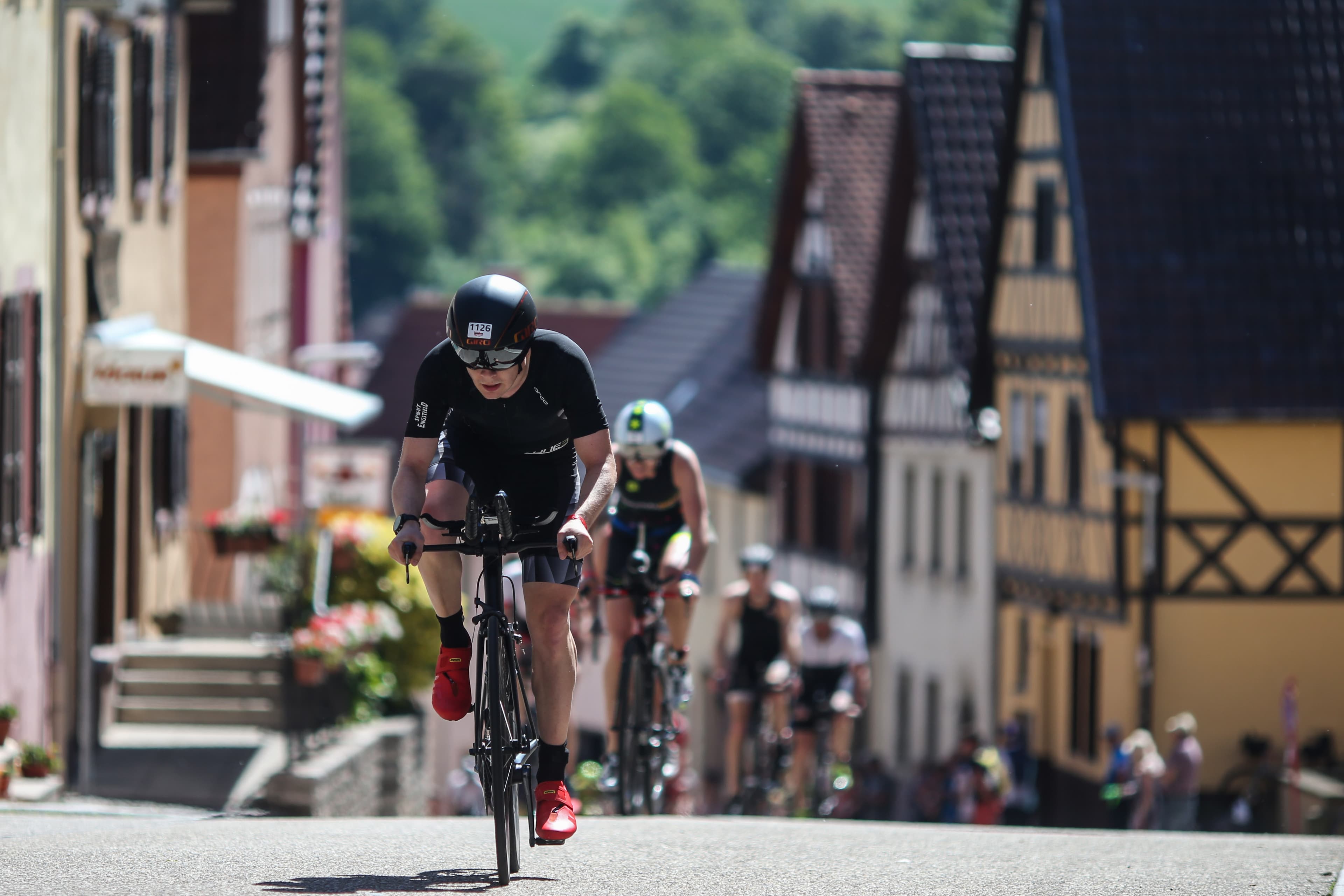
A highly physical point-to-point course through Germany's vineyards and woodlands, featuring short, punchy 1-to-3 minute climbs like the famous Schindelberg. High-speed descents over 60 km/h end abruptly in sharp, technical turns within historic villages.
03
Run
The Exposed Kurpark Loops
Bad Schönborn
DISTANCE
21.1 km
LOOPS
3 loops
ELEVATION
120-150 m
SURFACE
Asphalt & paved paths
SHADE
Very little
PEAK TEMP
Up to 27°C
A flat to gently rolling three-loop course centered in Bad Schönborn that weaves through the scenic Kurpark. The terrain offers virtually no shade, leaving you highly exposed to the afternoon sun while passing roaring crowds twice before the finish.
03·AVG beginners' Training Timeline
From zero to the finish line
16 weeks
Our 16-week plan is specifically engineered to prepare you for Kraichgau's relentless hills and hot run. We front-load climbing endurance and transition into high-carb fueling rehearsals, technical cornering practice, and heat adaptation, ensuring you possess the leg strength and resilience to tackle the run with confidence.
Today · WK 0Race Day
WK 1–4
Aerobic Base & Swim Efficiency
Build initial endurance and master calm lake swim pacing.
WK 5–8
Hill Strength & Muscular Endurance
Develop climbing strength to handle the relentless 1,000m of elevation.
WK 9–12
Race-Specific Build & Heat Prep
Combine punchy bike efforts with run-off-the-bike bricks under simulated heat.
WK 13–14
Peak Intensity & Technical Skills
Sharpen handling for high-speed village descents and lock in race-day nutrition.
WK 15–16
Taper & Sharpen
Reduce training volume while maintaining intensity to arrive fresh and ready.
Adapts to your fitness, schedule & recovery every week.
Prepare for late-May temperatures that can spike to 27°C or higher under direct sun. Maximize cooling by utilizing every single aid station for cold sponges, ice, and water to keep your core temperature down on the unshaded run.
Fuel & hydration
Target a high-carbohydrate strategy of 80 to 100 grams of carbs per hour to counter the demanding bike climbs. Plan your drinking carefully; prioritize flat sections of the road for reaching for bottles, as the fast, turning descents make drinking highly technical.
Pacing
Restrain your effort on the bike's short 1-to-3 minute climbs to avoid blowing up your legs before the run. Keep your power smooth and steady through the rolling hills, saving energy for the heat of the three-loop run.
Gear & logistics
This is a split-transition race, so pack separate T1 and T2 bags and check in early. Use the convenient local S-Bahn trains to travel the 15 km between Ubstadt-Weiher and Bad Schönborn, and opt for deep-section wheels since wind is generally low.
Frequently Asked Questions
How hard is the IRONMAN 70.3 Kraichgau bike course?
The bike course is rated as moderately hard to hard, earning a reputation as the 'climber's 70.3' due to its relentless series of short, punchy 1-to-3 minute climbs totaling 1,000 meters of elevation gain. This constant rolling terrain prevents you from settling into a comfortable time-trial rhythm and heavily fatigues your legs before the run. Additionally, you must navigate technical descents reaching over 60 km/h that terminate directly into sharp turns inside local villages.
What is the water temperature and wetsuit policy for IRONMAN 70.3 Kraichgau?
The water temperature in the Hardtsee typically ranges between 18°C and 22°C (64°F to 72°F), making the swim almost always wetsuit legal for age-group athletes. You will swim a calm, single-loop 1.9 km clockwise course in this freshwater lake, which features no currents or tides. The start uses a rolling format, allowing athletes to enter the water in small batches based on self-seeded times.
How do logistics work for the split-transition at IRONMAN 70.3 Kraichgau?
Because this is a split-transition race, Transition 1 is located at the swim start in Ubstadt-Weiher, while Transition 2 and the finish line are situated 15 km away in Bad Schönborn. You can easily travel between the two locations using the local S-Bahn trains, which run every 15 to 30 minutes. Be sure to plan your bike check-in and gear bag drops ahead of time to accommodate this two-site setup.
What should I expect from the IRONMAN 70.3 Kraichgau run course?
The run is a 3-loop, 21.1 km course on flat to gently rolling asphalt roads and paved paths through Bad Schönborn and the scenic Kurpark. The course has very little natural shade and is highly exposed to the sun, meaning afternoon temperatures can feel intense. You will need to utilize every aid station for hydration, electrolytes, and cold sponges to combat potential heat exhaustion.
What is the recommended nutrition strategy for the bike course?
Because of the demanding 1,000 meters of climbing, a high carbohydrate intake of 80 to 100 grams per hour is highly recommended to prevent premature glycogen depletion. You should plan your hydration carefully and prioritize the flatter sections for drinking, as the frequent technical descents and rapid shifting out of the aero bars make reaching for frame bottles difficult.
Your Personalized Plan
Stop guessing your intervals. Train for this course.
FE26 builds your plan around your Strava data, your real schedule, and the exact demands of IRONMAN 70.3 Kraichgau— then adapts every week to how you actually perform.