IRONMAN 70.3 AugustaTraining Plan & Race Guide 2026
Augusta, United StatesSeptember 27, 202670.3 mi — Half Distance2 min readPublished April 5, 2026Updated July 23, 2026
Share
01·Course Characteristics
Speed and heat in Augusta
A blisteringly fast downstream swim in the Savannah River gives way to rolling Georgia hills and a flat, hot, and highly humid run through downtown Augusta.
Climate
30°C
Peak air · water 22-24°C · late September
Conditions
Humid
Thick southern humidity · fully exposed run · light winds
Elevation
580 m
Rolling bike · flat run course
Difficulty
5.2 / 10
The current-assisted swim and flat run lower the difficulty, but late September Georgia heat and humidity present a stern pacing challenge.
There's still hope!
Only 4 weeks to go — but it's not too late.
The ideal build for this course is 16 weeks, and you have 4. We'll compress the essentials into your remaining time, prioritizing the demands that matter most on this course to get you to the finish line.
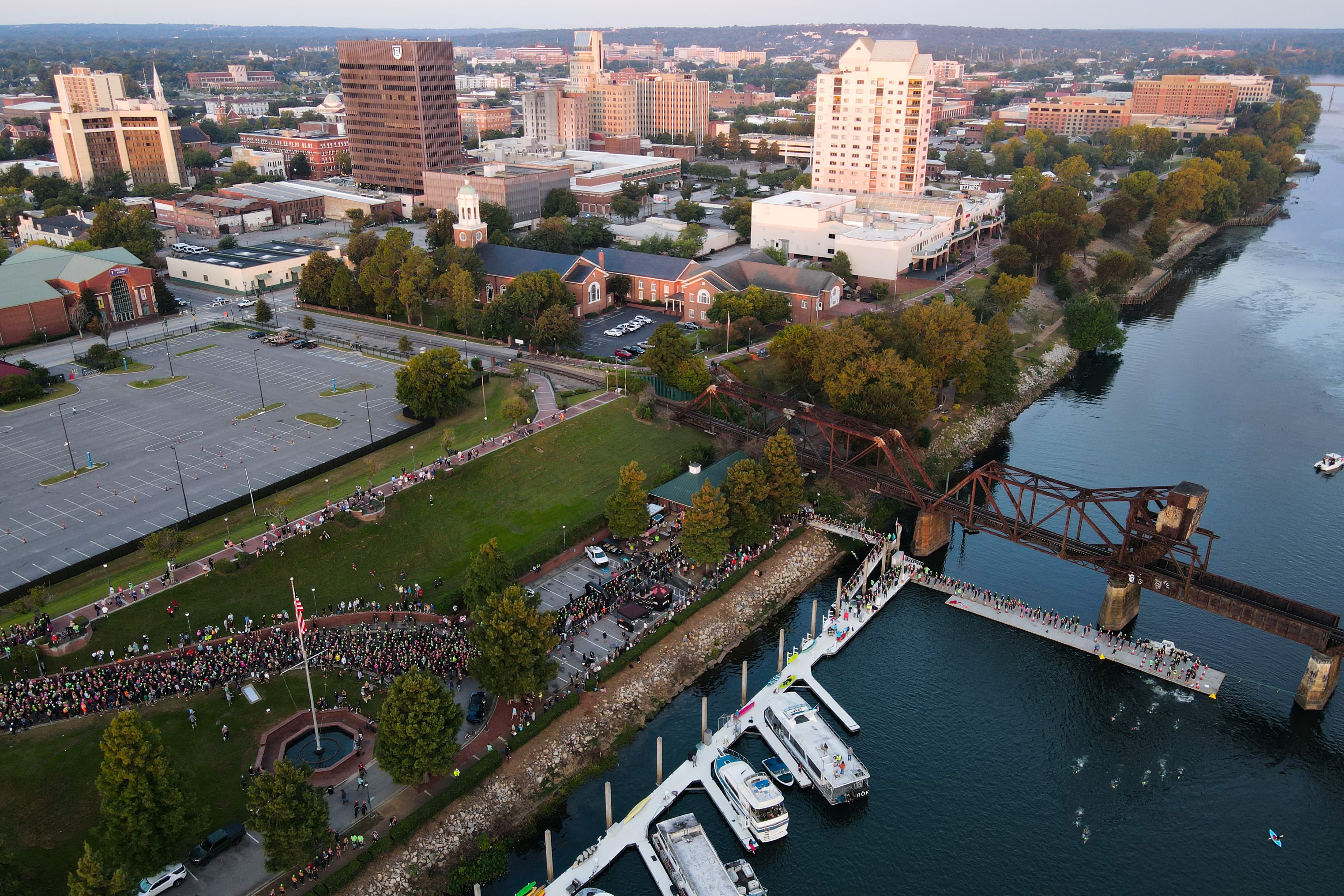
An incredibly fast, point-to-point swim aided by a consistent downstream current in the Savannah River. Sighting is simple as you follow the riverbank, making it ideal for beginners and PR seekers.
02
Bike
Rolling Georgia Roads
Augusta & South Carolina Loop
DISTANCE
90 km
ELEVATION
580 m
TERRAIN
Rolling hills
SURFACE
Chip-seal & asphalt
LOOPS
1 loop
A scenic single-loop course crossing into South Carolina, featuring constant rollers but no major sustained climbs. Road surfaces vary from smooth asphalt to vibrating chip-seal.
03
Run
Downtown Heat
Augusta Flat City Streets
DISTANCE
21.1 km
ELEVATION
40 m
LOOPS
2 loops
SHADE
Minimal
PEAK TEMP
30°C
A flat, spectator-friendly two-loop run through downtown Augusta. The main challenges are the lack of shade and the intense midday Georgia heat and humidity.
03·AVG beginners' Training Timeline
From zero to the finish line
16 weeks
This 16-week plan is specifically structured to build the strength needed for Augusta's rolling bike course while preparing your aerobic system and thermal tolerance for the hot, humid run. By progressively increasing your volume and introducing heat-prep protocols, you will arrive at the start line confident and fully adapted.
Today · WK 0Race Day
WK 1–4
Aerobic Foundation
Build baseline endurance and get comfortable with structured, low-intensity training.
WK 5–8
Strength & Rolling Power
Develop muscular endurance on the bike to handle the constant South Carolina rollers.
WK 9–13
Race-Specific Build
Simulate long-course efforts and begin heat-acclimatization protocols for the Georgia climate.
WK 14–16
Taper & Sharpen
Reduce volume while maintaining intensity to peak fresh and ready for race day.
Adapts to your fitness, schedule & recovery every week.
Expect high humidity and temperatures climbing toward 30°C. Utilize every aid station for ice and cold water to douse your head and chest, keeping your core temperature down.
Fuel & hydration
Aim for 80-90g of carbohydrates and 800-1000ml of fluid per hour on the bike to offset heavy sweat rates. Increase sodium intake to replace minerals lost to the oppressive southern humidity.
Pacing
Do not over-torque the rolling hills on the bike; keep your power capped at 75% of FTP. Save your legs for the run, where the heat will artificially inflate your heart rate.
Gear & logistics
Bring both a sleeved trisuit for sun protection and a tinted goggle lens for the bright Georgia morning. Arrive on Friday to easily navigate the split transition layout.
Frequently Asked Questions
What is the swim course like at IRONMAN 70.3 Augusta?
The swim for IRONMAN 70.3 Augusta in Augusta, United States, is highly unique because it takes place in the Savannah River, which offers a point-to-point, downstream course. This means athletes typically benefit from a fast, current-assisted swim. However, because it is in a river, you should still prepare for potentially varying water flow rates depending on the local conditions leading up to the race.
How difficult is the IRONMAN 70.3 Augusta bike course?
The bike course in Augusta features a rolling terrain that winds through the scenic Georgia countryside, offering a mix of flat sections and moderate climbs. While it is not considered a mountain course, the persistent rollers require smart pacing and gear selection to avoid burning out your legs before the run. Be prepared for some open sections where wind can become a factor.
What can I expect from the run course at IRONMAN 70.3 Augusta?
The run course in Augusta is flat, fast, and highly spectator-friendly, taking you through the historic downtown streets of Augusta, United States. Because the course is flat, it is an excellent opportunity to lock into your target half-marathon pace. The lack of shade on certain sections means you must stay on top of your hydration and cooling strategies, especially if temperatures rise.
Is the swim at IRONMAN 70.3 Augusta wetsuit legal?
Wetsuit eligibility for this race is determined by the water temperature of the Savannah River on race morning, which historically hovers near the wetsuit-legal threshold. To be safe, you should pack both your wetsuit and a skin suit, and practice swimming in both during your training block. Keep a close eye on official event communications in the days leading up to the race for official temperature readings.
What are the typical weather conditions for IRONMAN 70.3 Augusta?
The weather in Augusta, United States, during late September is typically warm and humid, with average high temperatures often reaching into the mid-to-high 80s Fahrenheit. Because the humidity can make the air feel much warmer, executing a disciplined salt and fluid intake plan on both the bike and run is critical for your success. Be sure to train in similar warm, humid conditions during your peak preparation weeks.
Your Personalized Plan
Stop guessing your intervals. Train for this course.
FE26 builds your plan around your Strava data, your real schedule, and the exact demands of IRONMAN 70.3 Augusta— then adapts every week to how you actually perform.