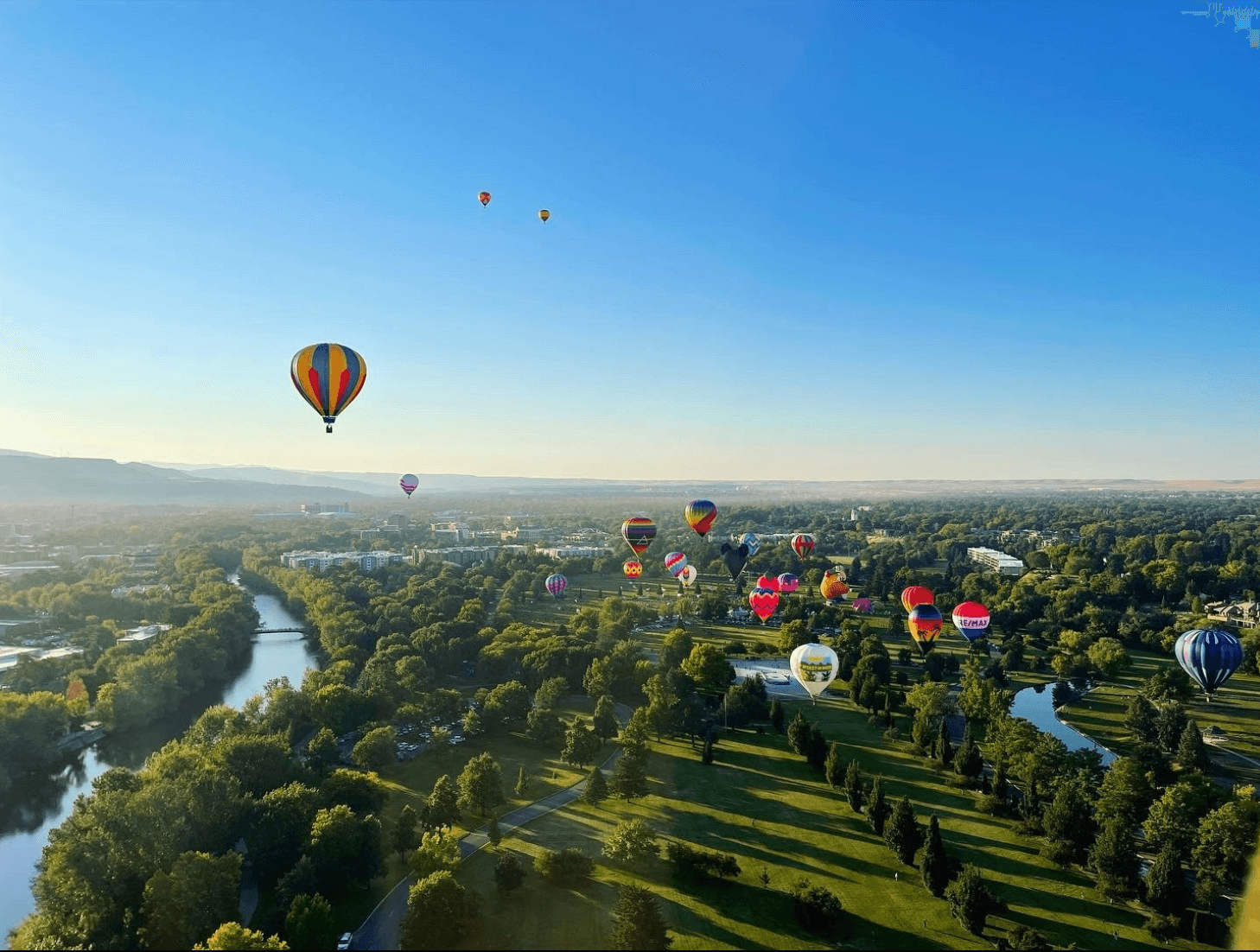
Boise, United StatesJuly 25, 202670.3 mi — Half Distance2 min readPublished July 8, 2026
Share
01·Course Characteristics
The high-desert test of Boise
Athletes face a high-altitude reservoir swim followed by a rapid, technical descent into a rolling bike leg. The real battle lies in managing the extreme 33°C late-July heat, dry air, and split-transition logistics across Boise.
Climate
33°C
Peak air · water 18-21°C · late July
Conditions
Exposed
High-altitude sun · dry heat · desert winds
Elevation
550 m
Bike gain · rolling · steep initial descent
Difficulty
6 / 10
Elevated by intense late-July heat, 3,000 feet altitude, split-transition logistics, and a high-risk descent.
This edition has passed
Training for a future IRONMAN 70.3 Boise?
Registration for the next edition opens on a rolling basis. Start building your base now and we'll size a full plan the moment a new date is set.
A single-loop, diamond-shaped swim starting at Turner Gulch and finishing at Barclay Bay in the clean, calm waters of Lucky Peak Reservoir. Late-morning winds can kick up surface swells and chop, while the 914-meter elevation tests your breathing early.
02
Bike
The Descent & Roll
Lucky Peak to Julia Davis Park
DISTANCE
90 km
ELEVATION
550 m
LOOPS
1
TERRAIN
Rolling
SURFACE
Asphalt & chip-seal
WIND
Farmland crosswinds
Begins with a fast, high-risk steep descent down the dam road before transitioning to rolling rural roads in Southeast Boise. The single-loop course features a brief climb on Highway 21 around kilometer 24, with aid stations situated on the left side.
03
Run
Greenbelt Canopy
Boise River Greenbelt Trail
DISTANCE
21.1 km
LOOPS
2
ELEVATION
26 m
SHADE
60% canopy
PEAK TEMP
33°C
A flat, fast, two-loop course along the paved and gravel paths of the scenic Boise River Greenbelt. The path starts and finishes at Julia Davis Park, providing dense tree cover and massive spectator support.
03·AVG beginners' Training Timeline
From zero to the finish line
16 weeks
This 16-week progression is custom-calibrated for the unique demands of Boise. Early weeks establish an aerobic cushion to handle the thin, high-desert air. The middle phases transition into rolling bike power and descending safety, followed by intensive heat preparation to ensure your body can survive and perform in the late-July valley sun.
Today · WK 0Race Day
WK 1–5
Aerobic Base & Altitude Prep
Build a strong aerobic engine and respiratory efficiency to handle the 914m swim altitude.
WK 6–10
Descending Skill & Rolling Strength
Develop technical descending skills and high-torque climbing power for the rolling bike course.
WK 11–14
Heat Acclimation & Left-Hand Prep
Execute specific heat-simulation workouts and left-hand fueling drills while hitting race-pace targets.
WK 15–16
Taper & Sharpen
Reduce training volume while keeping intensity high to peak for the dry, hot Boise climate.
Adapts to your fitness, schedule & recovery every week.
With peak air temperatures reaching up to 33°C, take ice and cold water at every aid station on the run. The 60% shade canopy on the Greenbelt is protective, but the dry desert air demands active cooling from the start.
Fuel & hydration
Target 200-300 calories per hour on the bike and consume 500-1000 mg of sodium per hour to counter heavy sweating in the dry heat. Master left-hand bottle handoffs during training as bike aid stations are configured on the left.
Pacing
Control your adrenaline during the initial high-risk bike descent down the dam road, then settle into a conservative pacing plan. Save your legs on the rolling bike course to unleash a fast, flat run along the river.
Gear & logistics
Book downtown accommodations to be near the finish line and T2, as no parking is allowed at the swim start. Remember that this is a split transition: prepare your blue T1 bag for Lucky Peak and red T2 bag for Julia Davis Park the day before.
Frequently Asked Questions
What is the water temperature and wetsuit status for the IRONMAN 70.3 Boise swim?
The water temperature in Lucky Peak Reservoir typically ranges from 64°F to 70°F (18°C to 21°C) in late July, which comfortably makes it wetsuit-legal for age-group athletes. The 1.2-mile, single-loop swim is held at an altitude of approximately 3,000 feet and utilizes a self-seeded rolling start. Note that there are no wetsuit peelers available in transition 1, so you will need to remove your own suit.
How hard is the IRONMAN 70.3 Boise bike course?
The 56-mile bike course is rated as moderate, featuring about 1,800 feet of total elevation gain over mostly rolling, non-technical terrain. However, the route begins with a high-risk, steep descent down the Lucky Peak Reservoir dam road that requires extreme caution and technical control. Additionally, you will face open-air wind exposure across high-desert farmlands and must prepare for left-hand aid station bottle grabs since riders travel in the left lane.
What are the logistics for the split transition at IRONMAN 70.3 Boise?
Because this is a point-to-point race, you must check your bike and T1 gear (blue bag) at Barclay Bay the day before the race, and your T2 gear (red bag) at downtown's Julia Davis Park. On race morning, there is absolutely no athlete parking at the Lucky Peak State Park swim start. You must take the official event shuttle buses from downtown Boise to the swim start to get to the starting line on time.
What is the run course like for IRONMAN 70.3 Boise?
The run is a flat, fast, two-loop out-and-back course along the paved and gravel paths of the Boise River Greenbelt Trail with only 85 feet of total elevation gain. It begins and ends in Julia Davis Park and is highly spectator-friendly. Crucially for the late-July heat, approximately 60% of the course is covered by a dense, protective tree canopy, though you must still proactively hydrate at every aid station.
How hot does it get during IRONMAN 70.3 Boise and how should I prepare?
Late July in Boise brings warm to hot summer weather, with average peak afternoon temperatures reaching 90°F to 93°F (32°C to 34°C) and occasionally exceeding 100°F (38°C). To manage this dry heat and the 2,700-foot city elevation, you should target high sodium intake of 500-1000mg per hour and consume 200-300 calories per hour on the bike. Take advantage of the ice and fluids at every single run aid station, even if the shaded canopy makes you feel deceptively cool.
Your Personalized Plan
Stop guessing your intervals. Train for this course.
FE26 builds your plan around your Strava data, your real schedule, and the exact demands of IRONMAN 70.3 Boise— then adapts every week to how you actually perform.