IRONMAN 70.3 LuxembourgTraining Plan & Race Guide 2026
Moselle, LuxembourgJuly 12, 202670.3 mi — Half Distance2 min readPublished April 5, 2026Updated July 23, 2026
Share
01·Course Characteristics
The measure of Luxembourg
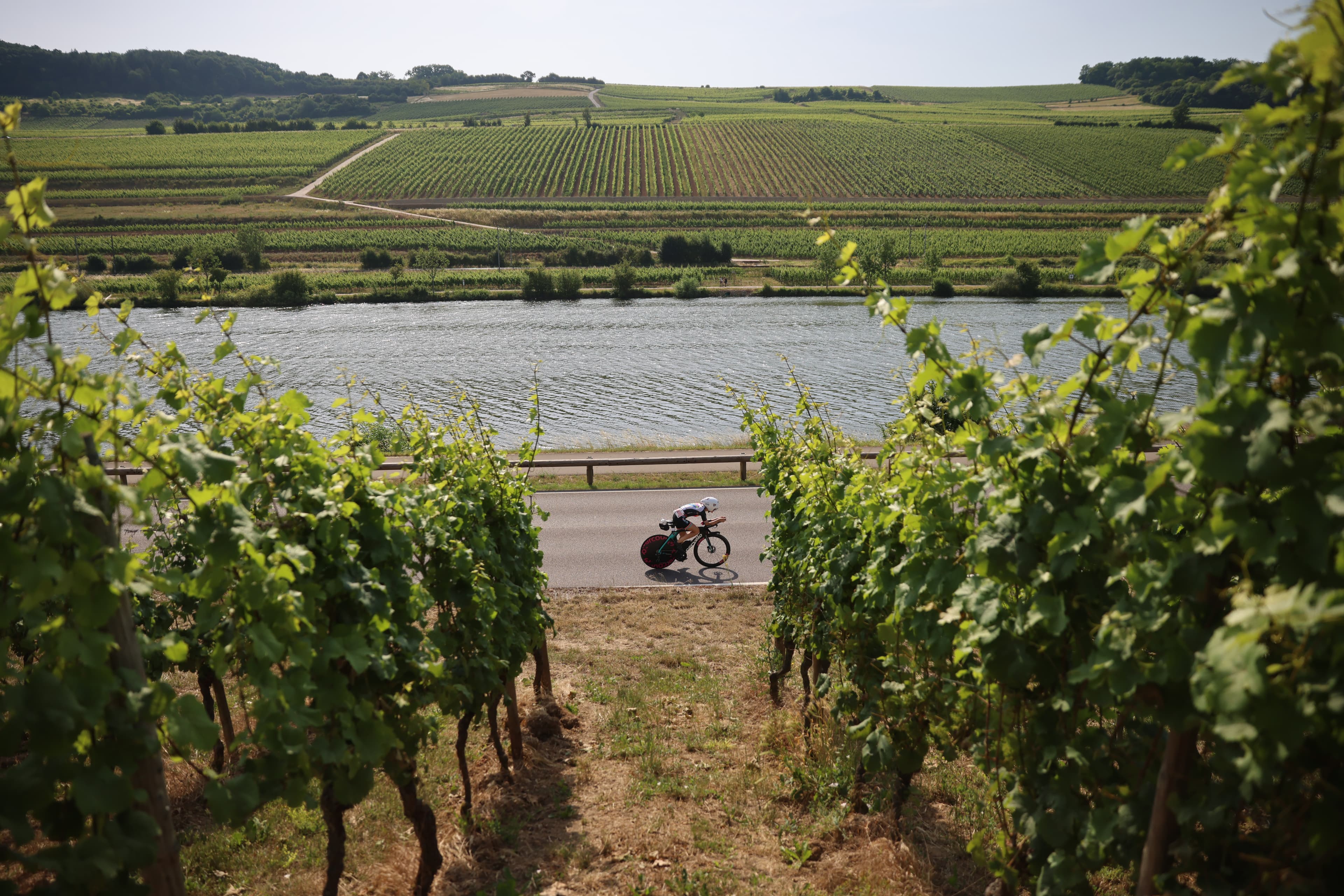
A swift river swim transitions into a demanding, scenic bike leg through rolling vineyards, followed by a flat, high-exposure run along the Moselle River.
Climate
25°C
Peak air · water 19-21°C · mid-July
Conditions
Exposed
River current · wind in vineyards · no run shade
Elevation
850 m
Bike gain · rolling hills · flat run
Difficulty
6.2 / 10
Moderate river swim and flat run are balanced by a challenging 850 m climbing effort on the bike through the vineyards.
This edition has passed
Training for a future IRONMAN 70.3 Luxembourg?
Registration for the next edition opens on a rolling basis. Start building your base now and we'll size a full plan the moment a new date is set.
A point-to-point swim in the scenic Moselle River, crossing international borders between Luxembourg and Germany. The current is typically mild, but can vary depending on recent rainfall and river lock management.
02
Bike
Vineyards & Valleys
Moselle Wine Region
DISTANCE
90 km
LOOPS
1
ELEVATION
850 m
TERRAIN
Flat start then rolling hills
SURFACE
Excellent asphalt
WIND
Moderate in open valley
The first 30 km flat section along the river allows for high speeds before you climb into the steep vineyard hills. Expect technical descents, sharp turns, and rolling terrain before a fast return to the valley.
03
Run
The Riverbank Loops
Remich Esplanade
DISTANCE
21.1 km
LOOPS
4
ELEVATION
Flat
SURFACE
Asphalt & concrete
SHADE
Minimal
PEAK TEMP
25°C
A highly spectator-friendly, four-loop run course flatly laid out along the Moselle River. The lack of shade means you will be fully exposed to the afternoon sun, making temperature management critical.
03·AVG beginners' Training Timeline
From zero to the finish line
16 weeks
Your 16-week plan is designed to transition you from building basic aerobic durability to mastering the specific elevation of the Luxembourg vineyards. We front-load low-intensity volume and back-load hill-climbing power on the bike coupled with flat, heat-acclimatizing runs.
Today · WK 0Race Day
WK 1–5
Base Aerobic Capacity
Build a solid cardiovascular foundation with low-intensity, high-volume swim, bike, and run training.
WK 6–10
Strength & Rolling Hills
Introduce muscular endurance and hill climbing strength on the bike to handle the vineyard terrain.
WK 11–14
Race-Specific Build
Execute race-pace brick workouts on flat run courses to build durability under simulated fatigue.
WK 15–16
Taper & Sharpen
Reduce training volume while maintaining high intensity to ensure peak freshness and physical readiness.
Adapts to your fitness, schedule & recovery every week.
With afternoon temperatures averaging 25°C and zero shade on the run, dump water over your head and shoulders at every aid station. Wear a white cap, sunglasses, and high-quality SPF 50 sunscreen to mitigate solar load.
Fuel & hydration
Target 80-90g of carbohydrates and 700-900ml of fluids per hour on the bike to prep for the hot run. Utilize the flat river sections on the bike to easily access and consume nutrition without interrupting your rhythm.
Pacing
Keep your effort strictly capped during the first 30 km flat bike stretch to save matching power for the steep vineyard climbs. On the run, lock into a sustainable target pace early; do not over-pace the first flat loop.
Gear & logistics
Opt for a mid-depth front wheel (45-60mm) and a deeper rear wheel to balance aerodynamics against valley winds. Ensure a wetsuit is packed, but prepare for warm water that could trigger a last-minute non-wetsuit decision.
Frequently Asked Questions
How hard is the IRONMAN 70.3 Luxembourg bike course?
The bike course features a fast, flat opening 36 kilometers along the Moselle River before heading into the hilly region of "La Petite Suisse Luxembourgeoise," which includes several challenging climbs. Athletes will tackle approximately 900 meters of total elevation gain, making a geared setup with a 11-28 or 11-30 cassette highly recommended. The final stretch descends back to the river valley, offering a fast finish to transition two.
What is the expected water temperature for the swim in the Moselle River?
Historically, the water temperature in the Moselle River during mid-July ranges between 19°C and 22°C (66°F to 72°F). This means the swim is highly likely to be wetsuit-allowed for age-group athletes. However, you should prepare for the possibility of a non-wetsuit swim if an unexpected heatwave warms the river above the 24.5°C threshold.
What is the run course profile like for IRONMAN 70.3 Luxembourg?
The run course is exceptionally flat and fast, consisting of four laps along the scenic banks of the Moselle River. The terrain is entirely paved, offering excellent traction and minimal elevation change to help you maintain a consistent pacing strategy. Spectator zones are highly concentrated along this multi-lap route, providing high energy and motivation throughout the half marathon.
When should I arrive in Remich for the race weekend?
You should aim to arrive in Remich by Friday morning, July 10, 2026, to allow ample time for athlete check-in and mandatory briefings. Arriving early gives you Friday afternoon and Saturday morning to complete a practice swim in the Moselle, drive the hilly sections of the bike course, and rack your gear without feeling rushed. This schedule ensures a stress-free transition into race day on Sunday, July 12.
Where is the transition area located for IRONMAN 70.3 Luxembourg?
This race utilizes a single transition area located along the Route du Vin in Remich, right next to the swim exit on the Moselle River. Having a single transition zone simplifies your logistics immensely, as you will rack your bike and drop off both your run and bike gear bags in the same venue on Saturday. On race morning, you will have easy access to your bike for final tire pressure checks and computer setup.
Your Personalized Plan
Stop guessing your intervals. Train for this course.
FE26 builds your plan around your Strava data, your real schedule, and the exact demands of IRONMAN 70.3 Luxembourg— then adapts every week to how you actually perform.