IRONMAN 70.3 BoltonTraining Plan & Race Guide 2026
Bolton, United KingdomJune 7, 202670.3 mi — Half Distance2 min readPublished April 9, 2026Updated July 4, 2026
Share
01·Course Characteristics
The grit of Bolton
A calm reservoir swim gives way to a highly technical, punchy bike course exposed to unpredictable winds and rough asphalt. Success hinges on disciplined pacing through the moors before tackling the persistent climbs on the run.
Climate
16°C
Peak air · water 14-18°C · early June
Conditions
Exposed
Lancashire moors wind · speed bumps · potholes
Elevation
840 m
Bike gain · punchy climbs · 184 m run gain
Difficulty
7 / 10
Calm swim offset by a technical 840 m bike course with punchy climbs, rough tarmac, wind, and a rolling run.
This edition has passed
Training for a future IRONMAN 70.3 Bolton?
Registration for the next edition opens on a rolling basis. Start building your base now and we'll size a full plan the moment a new date is set.
A single counter-clockwise loop in a calm, sheltered freshwater lake. Early morning mist and low sun angles can make sighting challenging, requiring consistent bilateral breathing.
02
Bike
The Moorland Test
Flat villages to Lancashire Moors
DISTANCE
90 km
ELEVATION
840 m
LOOPS
Multi-loop
SURFACE
Asphalt with potholes
WIND
Avg 20 km/h
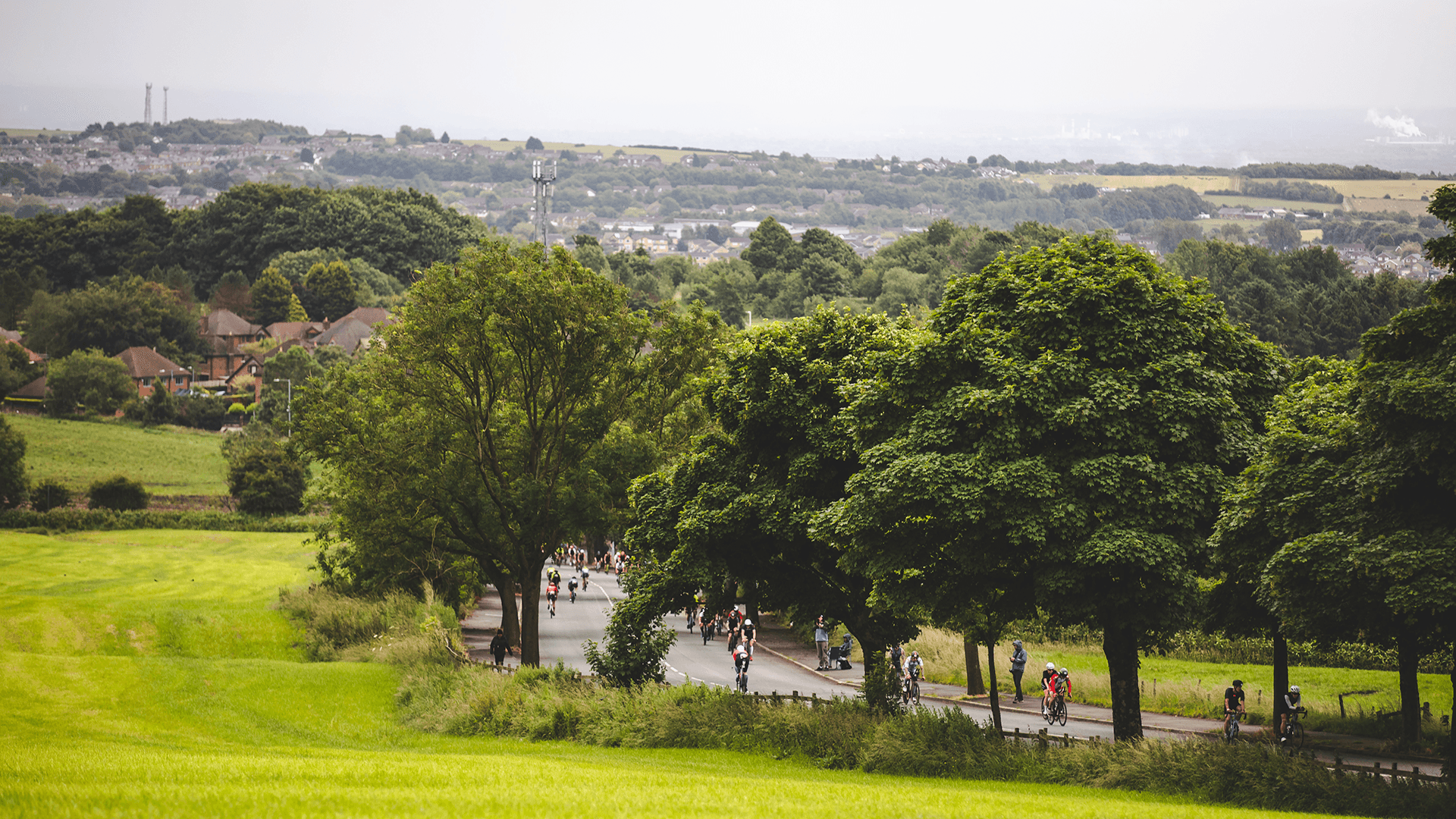
A tale of two halves, starting with two flat village loops before heading north into the exposed Lancashire moors for two hilly loops. Expect punchy climbs on Victoria Road and Old Kiln Lane, technical lanes, speed bumps, and strong winds.
03
Run
The Town Hall Ascent
Queens Park to Victoria Square
DISTANCE
21.1 km
LOOPS
Two loops
ELEVATION
184 m
SURFACE
Paved road and path
SHADE
Mixed
PEAK TEMP
15-17°C
A two-loop rolling urban course starting from Queens Park, winding through the historic town centre, and climbing steadily up Chorley New Road. The massive, electric crowd support builds to a spectacular finish at the historic Bolton Town Hall.
03·AVG beginners' Training Timeline
From zero to the finish line
16 weeks
Your 16-week journey is custom-built for Bolton's demanding terrain. We start with aerobic durability before transitioning into course-specific strength work to tackle the 840 meters of punchy climbing on the bike. The final phases build the technical handling and pacing required to excel on the Lancashire moors.
Today · WK 0Race Day
WK 1–5
Aerobic Foundation
Establish a consistent, low-intensity training volume across all three disciplines to build durability.
WK 6–10
Strength & Rolling Power
Introduce low-cadence bike climbs and hill running to prepare for Bolton's 840 m bike elevation.
WK 11–14
Race-Specific Build
Simulate race-pace efforts in windy conditions and execute brick runs on tired legs.
WK 15–16
Taper & Sharpen
Reduce volume to shed fatigue while maintaining intensity to peak for race day.
Adapts to your fitness, schedule & recovery every week.
Be prepared for typical British early-summer weather ranging from 9°C to 16°C with potential rain. While the peak run temperatures of 15°C to 17°C are mild, dress in layers for the chilly, exposed bike leg over the moors.
Fuel & hydration
With relentless climbing on the bike, start fueling within the first 20 minutes aiming for 60-90 grams of carbs per hour. Use highly concentrated carb bottles on cold, wet days to prevent over-drinking fluid, and take a settling gel 30 minutes before the swim.
Pacing
Do not burn your matches on the flat first half of the bike. Save energy for the punchy climbs of Victoria Road and Old Kiln Lane, then pace the steady run climb up Chorley New Road conservatively to finish strong in Victoria Square.
Gear & logistics
This is a split-transition race with T1 and T2 located 12 miles apart, requiring split bag racking on Friday or Saturday. On race morning, use the mandatory free shuttle buses from central Bolton to reach the swim start at Pennington Flash.
Frequently Asked Questions
How hard is the bike course at IRONMAN 70.3 Bolton?
The 56-mile bike course is a demanding test of pacing with a total elevation gain of 840 meters (2,756 feet) and a course difficulty rating of 7/10. While the first half is relatively flat, the second half features two challenging, punchy loops through the Lancashire moors, including climbs up Victoria Road and Old Kiln Lane. You should prepare for technically demanding surfaces with speed bumps and potholes, along with strong headwinds on the highly exposed moors.
What is the expected water temperature and swim setup for IRONMAN 70.3 Bolton?
The 1.2-mile single-loop swim takes place in the calm, sheltered freshwater reservoir of Pennington Flash, where water temperatures typically sit between 14°C and 18°C (57°F to 64°F). Wetsuits are mandatory if the water temperature is below 16°C (60.8°F) and are almost always required for this race. Because of early morning mist and low sun angles, practicing consistent bilateral breathing is highly recommended to navigate sighting challenges.
How do the split transitions work on race day at Bolton 70.3?
This event operates with split transitions, meaning T1 is located at Pennington Flash in Leigh and T2 is 12 miles away at Queens Park in Bolton. You must complete your mandatory bike and bag racking at both locations on Friday and Saturday before the race. Because there is absolutely no vehicle parking at T1 on race morning, you must take the official free shuttle buses from Great Moor Street in central Bolton between 3:45 AM and 5:45 AM.
What should my nutrition and hydration strategy be for the Bolton 70.3 course?
Due to the relentless, rolling climbs on the bike leg, you should start fueling within the first 20 minutes and target 60 to 90 grams of carbohydrates per hour using a mix of energy bars and gels. Because the early June weather can range from a cool 9°C (48°F) to a warmer 16°C (61°F), you should practice a flexible hydration strategy. Use highly concentrated carbohydrate mixes in your bottles on cold days to avoid over-drinking, and prioritize electrolyte hydration if the weather warms up.
What is the run course profile and elevation for IRONMAN 70.3 Bolton?
The 13.1-mile run is a two-loop, rolling urban course with a total vertical gain of 184 meters (604 feet). Starting from T2 in Queens Park, you will tackle a persistent, steady climb through the park's tree-lined avenues up to Chorley New Road on each lap before descending back to the town centre. While the park sections offer mixed shade, the town centre sections are fully exposed to the elements, though the legendary local crowd support will help carry you to the finish line at Victoria Square.
Your Personalized Plan
Stop guessing your intervals. Train for this course.
FE26 builds your plan around your Strava data, your real schedule, and the exact demands of IRONMAN 70.3 Bolton— then adapts every week to how you actually perform.