IRONMAN South AfricaTraining Plan & Race Guide 2026
Port Elizabeth, South AfricaApril 19, 2026140.6 mi — Full Distance2 min readPublished April 2, 2026Updated July 4, 2026
Share
01·Course Characteristics
The Windy City Endurance Battle
Prepare for a grueling battle against fierce coastal winds, a choppy ocean swim, and power-sapping road vibrations on the bike, contrasted by a flat, high-energy beachfront marathon.
Climate
23°C
Peak air temperature · water 19-21°C · mid-April autumn transition
Undulating bike gain · 5-10% key climbs · flat marathon run
Difficulty
8 / 10
A demanding ocean swim with strong rip currents, combined with relentless coastal headwinds and energy-sapping chip-sealed roads, pushes the overall difficulty to an 8.
This edition has passed
Training for a future IRONMAN South Africa?
Registration for the next edition opens on a rolling basis. Start building your base now and we'll size a full plan the moment a new date is set.
A two-lap rectangular course starting from Hobie Beach in the Indian Ocean. Navigating parallel to Shark Rock Pier demands caution due to strong rip currents, and the open sea is highly prone to choppy, wavy conditions.
02
Bike
Windy Coastal Loops
Marine Drive to Seaview
DISTANCE
180 km
LOOPS
3
ELEVATION
1,540 m
SURFACE
Rough chip-seal
WIND
Extreme
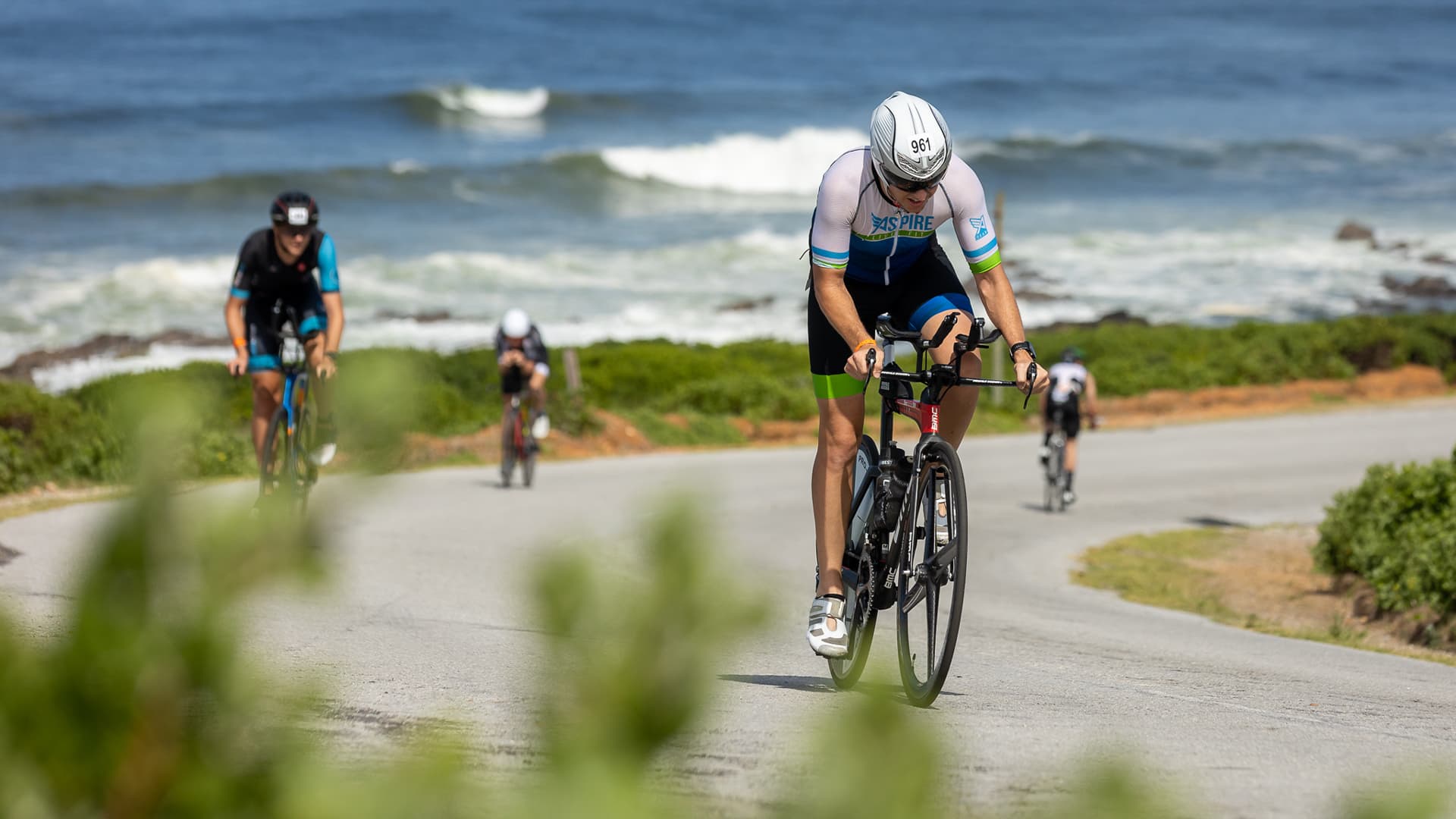
A grueling three-loop route featuring a rolling profile with key climbs of 5% to 10% gradient through Seaview. The primary challenges are the extreme, unpredictable coastal winds and a heavily chip-sealed road surface that vibrates aggressively, inducing early muscle fatigue.
03
Run
The Beachfront Marathon
Summerstrand & Humewood
DISTANCE
42.2 km
LOOPS
4
ELEVATION
Flat
SHADE
None
PEAK TEMP
23°C
A fast and flat four-loop course tracking the scenic beach pathway and crossing the beach bridge. There is practically zero shade to escape the afternoon sun, but the dense, festive crowds provide incredible energy.
03·AVG beginners' Training Timeline
From zero to the finish line
24 weeks
Your 24-week plan focuses on building structural durability to survive the vibrating road surface and severe coastal winds. The front-loaded base transitions into high-torque bike strength and unshaded run simulation, ensuring you arrive in Port Elizabeth prepared for the heavy wind and ocean currents.
Today · WK 0Race Day
WK 1–8
Aerobic Base & Adaptability
Develop a strong aerobic base and adapt your joints to early running and swimming volume.
WK 9–16
Strength & Vibro-Tolerance
Build core strength and muscular endurance to handle the severe chip-seal bike vibrations and rolling elevation.
WK 17–21
Wind & Specificity Build
Optimize aerodynamic positioning and sustained pacing against simulated headwinds.
WK 22–24
Taper & Strategy Execution
Reduce volume while keeping intensity high to peak for race day, finalizing your hydrogel fueling plan.
Adapts to your fitness, schedule & recovery every week.
With temperatures averaging 23°C and zero shade on the run, heat management is vital. Pour water over your head at aid stations and use sponges to cool down under the direct autumn sun.
Fuel & hydration
On-course nutrition features Maurten hydrogels and bars. The extreme coastal wind and intense bike vibrations require a high-sodium hydration strategy to prevent severe muscle cramping.
Pacing
Conserve energy on the bike by maintaining a steady power output into the brutal headwinds, refusing to fight the gale. Save your legs on the rough chip-seal to attack the flat, fast beachside marathon.
Gear & logistics
Expect a clean transition with designated blue and red gear bags; no gear is allowed by your bike. Pack a full sleeve wetsuit for the 19-21°C ocean water, and choose a mid-depth front wheel to handle the coastal gusts.
Frequently Asked Questions
What is the water temperature and swim format for IRONMAN South Africa?
The swim at Hobie Beach in Nelson Mandela Bay averages a water temperature between 19°C and 20.9°C (66°F to 69.6°F), making it almost always wetsuit-legal. The 3.8 km (2.4-mile) course is a 2-lap rectangular ocean swim utilizing a self-seeded rolling start format. You should prepare for potentially choppy ocean conditions, waves, and rip currents that run parallel to the Shark Rock Pier.
How hard is the IRONMAN South Africa bike course?
The 180 km (112-mile) bike course is highly challenging, featuring 1,540 m (5,052 ft) of elevation gain across three rolling loops. It is notoriously demanding due to extreme coastal wind exposure and a rough, heavily chip-sealed tarmac road surface that causes severe, power-sapping vibrations. You will face key climbs like Maitlands and Seaview, which present gradients ranging from 5% to 10%.
What are the typical weather conditions for IRONMAN South Africa in April?
Port Elizabeth is known as the 'Windy City,' and wind is the primary defining variable on race day, with prevailing Easterlies causing tough head-winds and Westerlies offering fast tailwinds. Air temperatures typically range from a low of 16.7°C (62.1°F) to an average high of 23°C (73.4°F), though temperatures can occasionally spike up to 30°C (86°F). Humidity averages around 71% with a low probability of rainfall during this autumn transition.
What is the run course profile and atmosphere like at IRONMAN South Africa?
The run is a flat, fast 4-loop marathon along the Summerstrand and Humewood beach fronts with minor rollers and a total elevation gain of approximately 358 m. There is very little shade, exposing you directly to the autumn sun, but the legendary crowd support along the beach pathway creates an incredibly dense, energetic 'party' atmosphere. The only major elevation change is a short, spicy incline at Happy Valley on each lap.
What nutrition is provided on the course and what strategy should I use?
Maurten is the official on-course sports nutrition partner, providing Gel 100, Gel 100 Caf 100, Gel 160, and Solid bars. Due to the high wind exposure, dry coastal air, and intense road vibrations on the bike, you must prioritize a high-sodium hydration strategy to prevent cramping. You should practice fueling with these specific hydrogels during your training blocks to adapt your gut to high-carbohydrate intake at race intensity.
Your Personalized Plan
Stop guessing your intervals. Train for this course.
FE26 builds your plan around your Strava data, your real schedule, and the exact demands of IRONMAN South Africa— then adapts every week to how you actually perform.