The Woodlands, United StatesApril 18, 2026140.6 mi — Full Distance2 min readPublished April 1, 2026Updated July 4, 2026
Share
01·Course Characteristics
Flat, Fast, and Famously Humid
While Texas offers an incredibly flat and fast profile, the real challenge lies in the relentless humidity, exposed headwinds on the toll road, and a lack of coasting that tests your mental and physical stamina.
Climate
30°C
Peak air · water 23-24.4°C · mid-April
Conditions
Humid
High morning humidity · heavy wind · little shade
Elevation
245-275 m
Bike gain · ultra-flat toll road · relentless pedaling
Difficulty
7 / 10
Flat but demanding. High humidity, strong winds, and zero coasting on the bike elevate the physical toll despite the lack of climbing.
This edition has passed
Training for a future IRONMAN Texas?
Registration for the next edition opens on a rolling basis. Start building your base now and we'll size a full plan the moment a new date is set.
You will navigate a single-loop course in Lake Woodlands, starting with murky, silty water and low visibility. The final 1.2 kilometers take you through a narrow canal lined with cheering spectators, creating a stadium-like finish.
02
Bike
The Hardy Toll Road
Town Green Park to Hardy Toll Road
DISTANCE
180 km
LOOPS
2 loops
ELEVATION
245-275 m
TERRAIN
Flat and exposed
SURFACE
Smooth asphalt and concrete
WIND
16-24 km/h
An initial ride out of The Woodlands leads to two flat out-and-back loops on the fully closed Hardy Toll Road. The smooth asphalt is exceptionally fast, but it is completely exposed to solar radiation and tough Texas headwinds.
03
Run
Hippie Hollow Loops
Woodlands Waterway
DISTANCE
42.2 km
LOOPS
3 loops
ELEVATION
122 m
SURFACE
Pavement and crushed granite
SHADE
Very little shade
PEAK TEMP
28-30°C
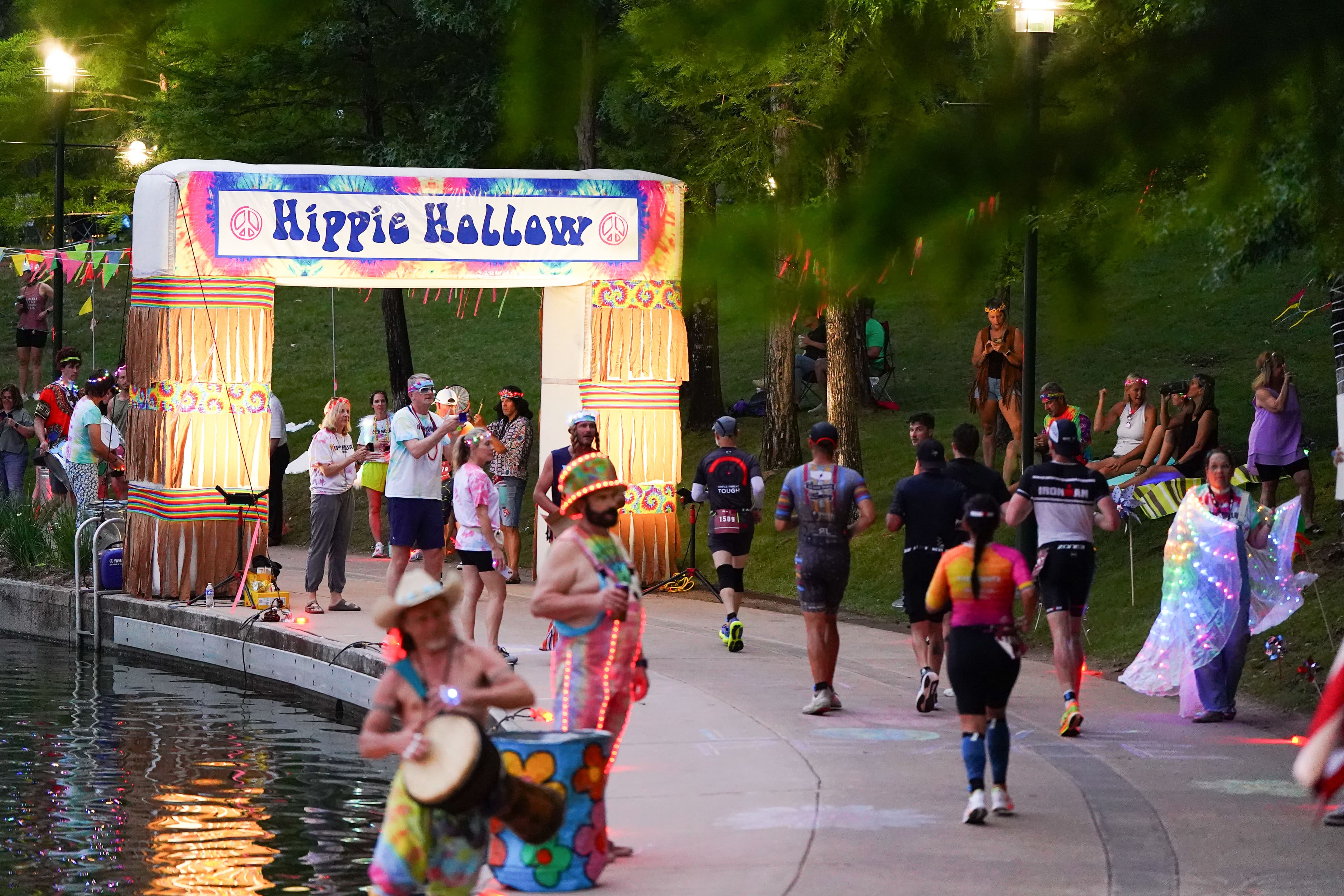
A three-loop spectator-packed run along the scenic waterways of The Woodlands. The course offers massive crowd support, especially at Hippie Hollow, but exposes you to direct afternoon heat and rising temperatures.
03·AVG beginners' Training Timeline
From zero to the finish line
24 weeks
Your 24-week path to Texas focuses on building extreme posture endurance for the flat, non-coasting bike, alongside a progressive heat-acclimatization block. By prioritizing high-cadence flat running and consistent fueling early on, you will arrive at the start line ready to conquer the humidity.
Today · WK 0Race Day
WK 1–8
Aerobic Foundation
Build a resilient cardiovascular engine and baseline endurance.
WK 9–16
Aerobic Power
Develop metabolic efficiency and endurance in the aero position.
WK 17–21
Heat & Wind Build
Incorporate heat-acclimation strategies and high-cadence running on flat terrain.
WK 22–24
Taper & Sharpen
Reduce volume to shed fatigue while maintaining key high-intensity efforts.
Adapts to your fitness, schedule & recovery every week.
Expect humid mornings transitioning to direct, hot sunlight in the afternoon with temperatures up to 30°C. Regularly douse yourself with cold water at aid stations to keep your core temperature down and maintain cooling.
Fuel & hydration
Due to oppressive humidity, target 500mg to 1000mg+ of sodium per hour based on your sweat rate. Consume 70g to 120g of carbohydrates hourly, relying on Maurten on-course nutrition to avoid gastrointestinal issues in the heat.
Pacing
Avoid over-biking on the fast, flat toll road where the temptation is high but there is no coasting to recover. Save your energy for the grueling run, pacing the first loop conservatively to survive the afternoon heat.
Gear & logistics
Fly into George Bush Intercontinental Airport and book accommodation near Town Green Park for easy transition access. Since T1 and T2 are split, plan your gear bag logistics carefully ahead of race morning.
Frequently Asked Questions
What is the water temperature and wetsuit policy for the IRONMAN Texas swim?
Water temperatures in Lake Woodlands typically hover between 74°F and 76°F (23°C to 24.4°C), putting the race right on the border of the 76.1°F wetsuit-legal cutoff. The point-to-point swim has a rolling start in murky freshwater with near-zero visibility, finishing in a narrow canal where spectators cheer you on from just feet away.
How hard is the IRONMAN Texas bike course?
While the bike course is rated flat and fast with only 806 to 901 feet of total elevation gain, it is highly demanding and has a 3.5 out of 5 difficulty rating. Because of the flat profile, you will have to pedal constantly with no opportunity to coast, which can cause early muscle fatigue if not paced disciplined. Additionally, the Hardy Toll Road section has zero shade and is highly exposed to strong Texas winds and intense solar radiation.
What is the run course like at IRONMAN Texas?
The 26.2-mile run is a flat, fast, three-loop course on paved roads, concrete waterways, and brief stretches of crushed granite. It is world-renowned for its incredible spectator density and electric atmosphere, particularly around the Woodlands Waterway and the famous 'Hippie Hollow' section. However, there is very little shade on the course, and you will likely face direct sunlight and afternoon temperatures reaching the mid-80s F (28-30 C).
What should my nutrition and hydration strategy be for IRONMAN Texas?
Due to the oppressive Texas humidity and high dew points, you should target a proactive hydration strategy of 500mg to 1000mg+ of sodium per hour depending on your sweat rate. For carbohydrates, the relentless pedaling on the flat bike course requires a highly consistent intake of 70-100g/hour for women and 90-120g/hour for men. On the run, you can utilize the on-course Maurten gels and hydration products to help manage sensitive digestion in the heat.
Which airport should I fly into for IRONMAN Texas and where should I stay?
You should fly into George Bush Intercontinental Airport (IAH), which is located about 20 miles south of the race venue. For the most convenient logistics, book your accommodations along the Woodlands Waterway or near Town Green Park. This puts you within walking distance of transition, registration, the expo, and local restaurants, which is especially helpful since T1 and T2 are at separate locations.
Your Personalized Plan
Stop guessing your intervals. Train for this course.
FE26 builds your plan around your Strava data, your real schedule, and the exact demands of IRONMAN Texas— then adapts every week to how you actually perform.