IRONMAN 70.3 BoulderTraining Plan & Race Guide 2026
Boulder, United StatesJune 13, 202670.3 mi — Half Distance2 min readPublished April 22, 2026Updated July 4, 2026
Share
01·Course Characteristics
The High-Altitude Crucible of Boulder
Set at over 1500 meters, this fast course tests your aerobic limits. The real battles are fought against intense solar radiation, dry mountain air, and a completely unshaded run.
Climate
29°C
Peak air · water 22°C · mid June
Conditions
Arid
High altitude · low humidity · high UV · zero run shade
Elevation
692 m
Bike gain · rolling · peak altitude 1737 m
Difficulty
7 / 10
The moderate rolling terrain is amplified by the 1580-meter altitude, which accelerates dehydration and lowers your aerobic threshold.
This edition has passed
Training for a future IRONMAN 70.3 Boulder?
Registration for the next edition opens on a rolling basis. Start building your base now and we'll size a full plan the moment a new date is set.
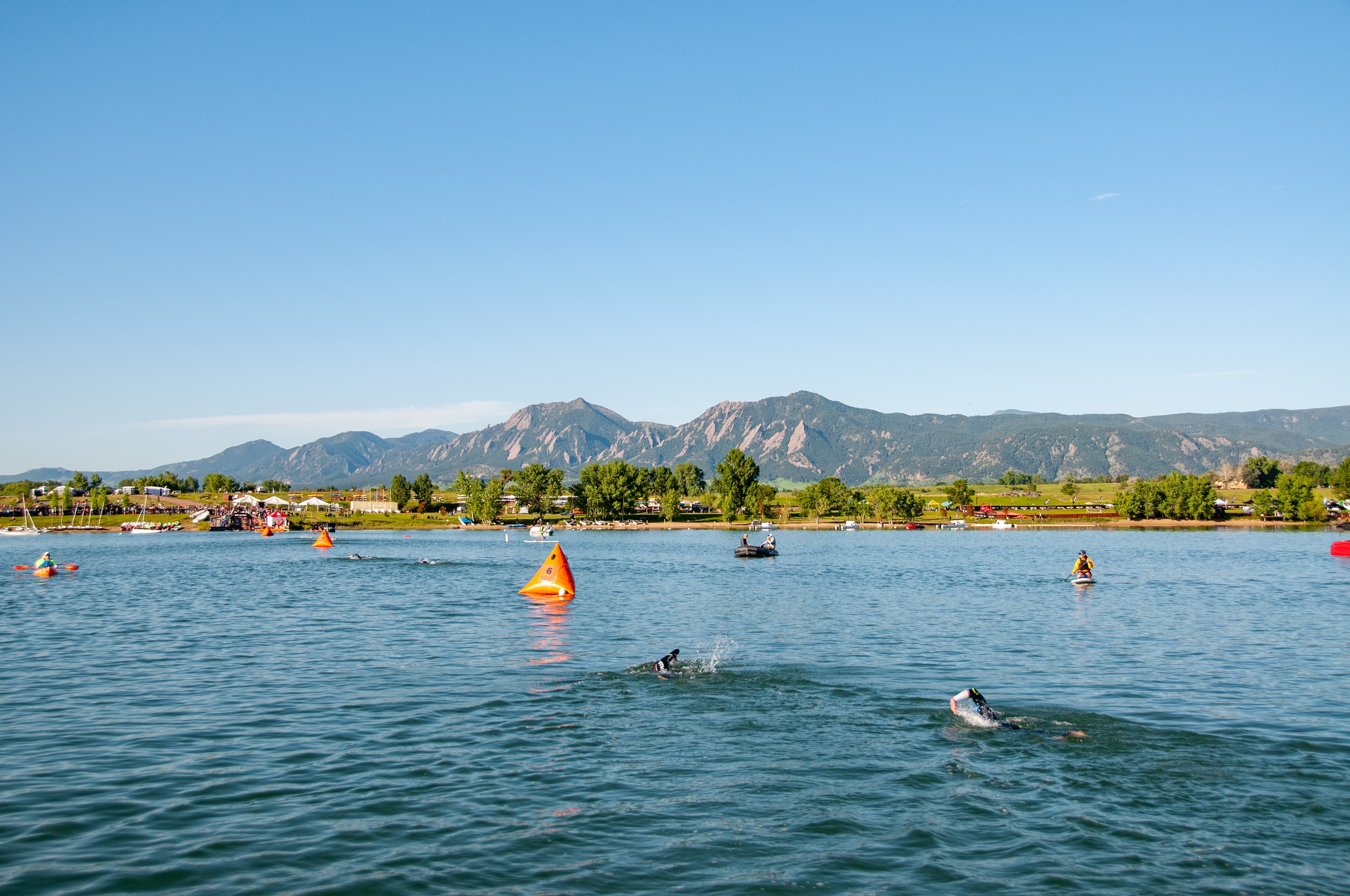
A single-loop, counterclockwise freshwater swim with direct sighting. The water is calm with no currents, but you must swim directly into the bright morning sun on the return.
02
Bike
Wind-Swept Agricultural Rollers
Boulder County Highways
DISTANCE
90 km
LOOPS
2
ELEVATION
692 m
TERRAIN
Rolling
SURFACE
Asphalt & chip-seal
A fast, two-loop route through agricultural corridors featuring short, punchy rollers that rarely exceed 4% grade. The open farm roads are highly exposed to gusty winds, requiring a stable aero position.
03
Run
The Exposed Reservoir Perimeter
Boulder Reservoir Multi-use Paths
DISTANCE
21.1 km
LOOPS
2
ELEVATION
120 m
SURFACE
Packed dirt & gravel
SHADE
None
A flat, two-loop counterclockwise run on packed dirt and gravel roads surrounding the reservoir. There is virtually zero shade, leaving you completely exposed to intense solar radiation and dry, midday heat.
03·AVG beginners' Training Timeline
From zero to the finish line
16 weeks
This 16-week progression is specifically tailored to mitigate the physiological toll of Boulder's 1580-meter elevation. We front-load aerobic volume and respiratory efficiency, build strength for the rolling terrain, and finish with heat-stress preparation to ensure your hydration and pacing strategies are fully dialed for the unshaded run.
Today · WK 0Race Day
WK 1–4
Aerobic Base & Altitude Prep
Build a robust aerobic engine and respiratory strength to handle thin mountain air.
WK 5–8
Strength & Rolling Power
Develop muscular endurance for the punchy bike rollers and flat dirt running.
WK 9–12
Specific Heat & Sustained Pace
Integrate heat-adaptation protocols and sustained pacing strategies under fatigue.
WK 13–14
Peak & Simulating the Course
Execute race-pace brick workouts with focused high-sodium hydration trials.
WK 15–16
Taper & Freshen
Reduce training volume while maintaining intensity to arrive fresh and fully acclimated.
Adapts to your fitness, schedule & recovery every week.
The altitude increases UV intensity and dry air masks sweat loss through rapid evaporation. Proactively use ice from every aid station in your hat and tri-suit, and apply water-resistant SPF 50+ before the race.
Fuel & hydration
Target 600 to 1000 mg of sodium and 750 to 1000 ml of fluid per hour to counteract rapid, dry-altitude dehydration. Front-load your hydration on the bike so you do not enter the unshaded run in a deficit.
Pacing
Reduce your target power and pace by 5 to 8 percent compared to sea-level metrics to avoid hitting your aerobic redline prematurely. Keep your heart rate under strict control on the rolling bike segments; recovery at altitude takes far longer.
Gear & logistics
Use deep-section wheels with caution if gusty winds are forecast for the agricultural roads. Plan to arrive either 10 to 14 days early for full altitude acclimatization, or 36 to 48 hours prior to race day to bypass mid-acclimation fatigue.
Frequently Asked Questions
What is the water temperature and wetsuit policy for the IRONMAN 70.3 Boulder swim?
The water temperature in the Boulder Reservoir typically averages 71°F (22°C), meaning the swim is comfortably wetsuit-legal under standard USA Triathlon and IRONMAN rules. The 1.2-mile, single-loop swim features no currents and straightforward sighting, though you should wear dark goggles to block the bright morning mountain sun. The start uses a rolling, self-seeded format from the east boat ramp.
How hard is the IRONMAN 70.3 Boulder bike course?
The 56-mile bike course is rated as moderate to challenging, featuring 2,270 feet of total elevation gain and a peak elevation of 5,699 feet. Rather than long climbs, you will encounter short, punchy rollers with grades rarely exceeding 3% to 4% that reward a sustained aerodynamic position. Be prepared for high wind exposure on the open farm roads and a riding surface of smooth asphalt mixed with standard Colorado chip-seal.
What is the run course terrain and elevation like for IRONMAN 70.3 Boulder?
The 13.1-mile run is a two-loop, counterclockwise course tracing the Boulder Reservoir with a total elevation gain of under 400 feet. Approximately 90% of the terrain consists of hard-packed dirt and gravel roads, which are easier on your joints but can be slightly slower than asphalt. The course is almost entirely flat but features virtually zero shade, exposing you directly to the intense high-altitude sun.
How does the altitude and weather affect my nutrition strategy for IRONMAN 70.3 Boulder?
At an altitude of 5,200 to 5,430 feet, the dry mountain air causes sweat to evaporate almost instantly, which can easily mask your actual fluid loss. You should proactively execute a high-volume hydration plan targeting 600 to 1,000mg of sodium per hour, front-loading your fluids on the bike before the run. Additionally, use ice at the run aid stations inside your hat and kit to manage your core body temperature in the intense, unshaded sun.
When should I arrive in Colorado for the IRONMAN 70.3 Boulder race?
To manage the effects of high altitude, you should either arrive at least 10 to 14 days early to fully acclimate, or arrive just 36 to 48 hours before the race to compete before mid-acclimation fatigue sets in. On race morning, make sure to arrive at the Boulder Reservoir by 5:30 AM. This early arrival is critical to avoid severe traffic bottlenecks that frequently occur on the Diagonal Highway leading to the entrance.
Your Personalized Plan
Stop guessing your intervals. Train for this course.
FE26 builds your plan around your Strava data, your real schedule, and the exact demands of IRONMAN 70.3 Boulder— then adapts every week to how you actually perform.