IRONMAN 70.3 BrasiliaTraining Plan & Race Guide 2026
BrazilApril 26, 202670.3 mi — Half Distance2 min readPublished April 1, 2026Updated July 4, 2026
Share
01·Course Characteristics
The Measure of IRONMAN 70.3 Brasília
Prepare for a deceptively challenging race at 1,000 meters altitude. Dry air, intense tropical sun, and a rolling course demand disciplined pacing and aggressive hydration strategies.
Climate
29°C
Peak air · water 22-24.5°C · late April
Conditions
Dry
High altitude · low relative humidity · extremely high UV
Elevation
600 m
Bike gain · rolling · run gain 116 m
Difficulty
6 / 10
Deceptively challenging due to 1,000m altitude, lack of run shade, and rolling terrain.
This edition has passed
Training for a future IRONMAN 70.3 Brasilia?
Registration for the next edition opens on a rolling basis. Start building your base now and we'll size a full plan the moment a new date is set.
A single-loop, freshwater swim in Lake Paranoá starting via a narrow access ramp. The water is typically warm enough that wetsuits are banned for pros but allowed for amateurs. High morning sun glare on the return stretch will test your sighting.
02
Bike
Highways and Monuments
Two-loop course via JK Bridge
DISTANCE
90 km
LOOPS
2 loops of 45 km
ELEVATION
600 m
TERRAIN
Deceptively rolling
SURFACE
Smooth pavement
WIND
High exposure, head/crosswinds
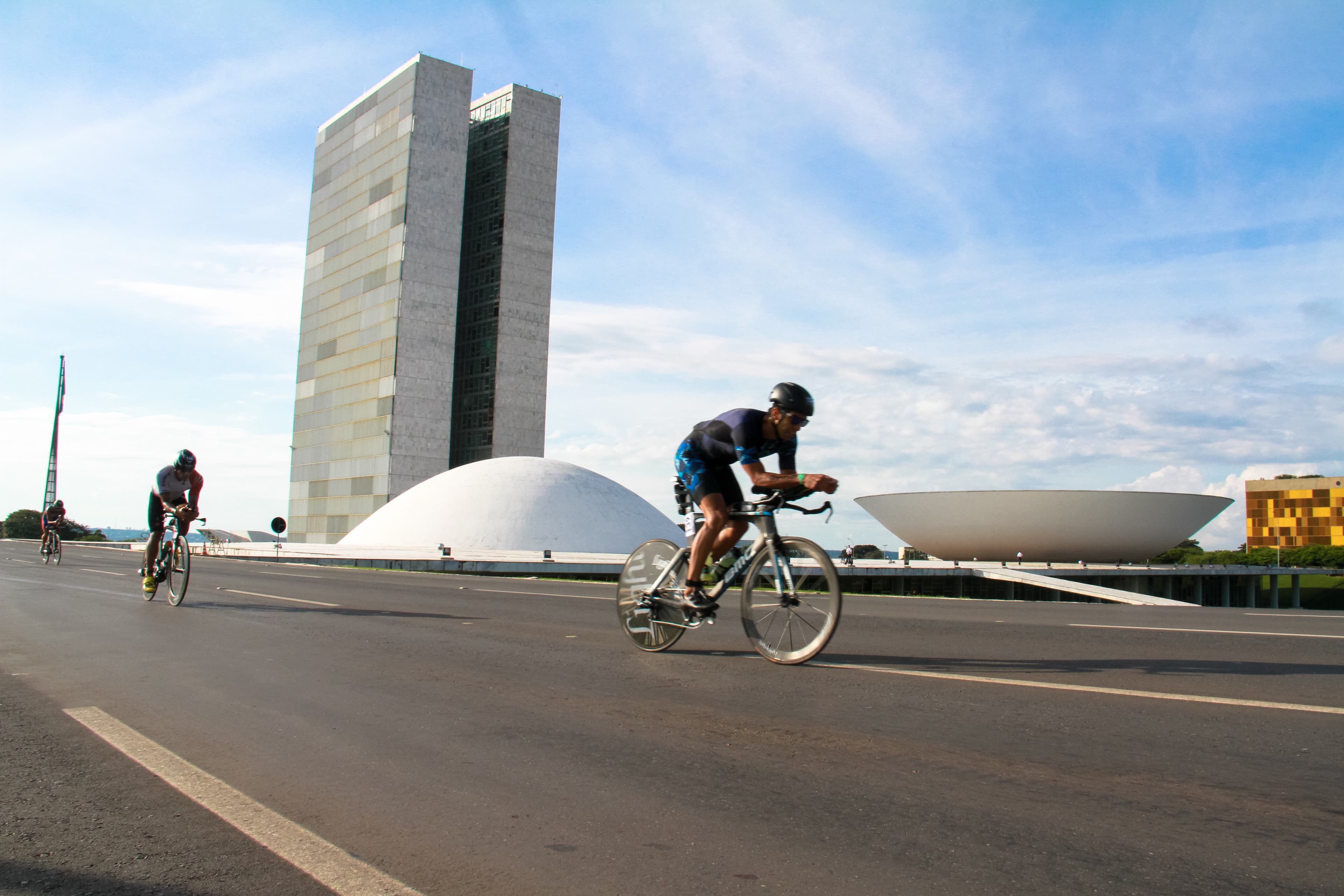
A fast two-loop course traversing wide highways, the architecturally stunning JK Bridge, and the Esplanada dos Ministérios. Expect a short, steep 50 to 70-meter climb requiring low gearing, alongside high wind exposure on return highway segments.
03
Run
The Exposed Peninsula
Península dos Ministros
DISTANCE
21.1 km
LOOPS
3 loops of 7 km
ELEVATION
116 m
SURFACE
Paved roads
SHADE
None
PEAK TEMP
29°C
A three-loop course through the Península dos Ministros characterized by constant rolling hills and a total elevation gain of 116 meters. There is virtually no shade, leaving you fully exposed to the blazing midday sun and thin, dry air.
03·AVG beginners' Training Timeline
From zero to the finish line
16 weeks
This 16-week plan systematically prepares you for Brasília's high altitude and dry heat. We begin with a solid aerobic foundation, transition to rolling hill strength, introduce heat-simulation protocols, and finish with a progressive taper to ensure you arrive fresh and fully acclimated.
Today · WK 0Race Day
WK 1–4
Altitude & Base Build
Develop aerobic capacity and basic muscular endurance.
WK 5–8
Strength & Rolling Hills
Build low-cadence climbing power for the bike rollers.
WK 9–13
Heat & Altitude Specificity
Incorporate dry heat simulation runs and long, sustained efforts.
WK 14–16
Taper & Sharpen
Reduce volume to shed fatigue while maintaining race-pace intensity.
Adapts to your fitness, schedule & recovery every week.
The dry climate causes sweat to evaporate instantly, masking your true fluid loss. Pour water over your head and shoulders at every aid station on the run to lower your core temperature in the unshaded 29°C heat.
Fuel & hydration
Target 80-100 grams of carbohydrates per hour on the bike, utilizing the three aid stations per loop. Elevate your sodium intake to counter the high sweat rates triggered by the dry Cerrado climate and 1,000-meter altitude.
Pacing
Respect the 1,000-meter altitude early on the swim and bike, as oxygen pressure is lower. Save your energy on the rolling highway climbs and run segments to avoid blowing up on the unshaded final loops.
Gear & logistics
Arrive 3 to 4 days early to adapt to the thin, dry air. Pack mirrored or dark-tinted goggles to combat severe morning sun glare on the swim, and secure your bike bottle cages tightly to prevent ejections on highway bumps.
Frequently Asked Questions
What is the water temperature and wetsuit policy for the IRONMAN 70.3 Brasília swim?
Water temperatures in Lake Paranoá typically average between 72F and 76F (22C to 24.5C). While wetsuits are generally prohibited for professional athletes because temperatures exceed the 21.9C (71.4F) cutoff, they are usually legal for age-group competitors since the water remains below the 24.5C (76.1F) threshold. Because you will face intense morning sun glare on the return stretch of this freshwater course, wearing mirrored or dark-tinted goggles is highly recommended.
How hard is the bike course at IRONMAN 70.3 Brasília?
Although the bike course is often advertised as flat, it is actually a deceptively rolling two-loop route featuring a total of 600 meters (1,968 feet) of elevation gain. You will ride on mostly smooth, high-quality pavement but must prepare for a short, steep climb of 50 to 70 meters on the Esplanada dos Ministérios that requires low gearing. Additionally, high wind exposure on the open highways means you should expect head and crosswinds on the return segments.
What is the difficulty of the IRONMAN 70.3 Brasília run course?
The three-loop run course covers 13.1 miles (21.1 km) of paved roads through Península dos Ministros and is rated as moderately to deceptively challenging. With 116 meters (380 feet) of elevation gain, the course is mostly rolling and features virtually no shade. You will be fully exposed to the blazing midday sun, high UV radiation, and dry air, making a disciplined pacing and hydration strategy absolutely critical.
How does the altitude and climate in Brasília affect hydration strategy?
Because Brasília sits at an altitude of approximately 1,000 meters (3,300 feet) where the climate is exceptionally dry, sweat evaporates very quickly and can mask high sweat rates. You must aggressively manage your hydration and electrolyte levels, targeting high sodium intake and consuming 80 to 100 grams of carbohydrates per hour on the bike. Make sure all your bike bottle cages are tightly secured, or use rubber bands, to prevent your bottles from ejecting on the highway rollers.
How early should I arrive in Brasília before the race?
It is highly recommended that you arrive in Brasília at least 3 to 4 days prior to the race on April 26, 2026. This buffer allows your cardiorespiratory system time to adapt to the thin, dry air of the region's 1,000-meter altitude. Brasília International Airport (BSB) is very convenient, located just a 10- to 15-minute drive from the host venue at Pontão do Lago Sul.
Your Personalized Plan
Stop guessing your intervals. Train for this course.
FE26 builds your plan around your Strava data, your real schedule, and the exact demands of IRONMAN 70.3 Brasilia— then adapts every week to how you actually perform.