IRONMAN 70.3 Les Sables d'OlonneTraining Plan & Race Guide 2026
Les Sables d'Olonne, FranceJuly 5, 202670.3 mi — Half Distance2 min readPublished April 5, 2026Updated July 23, 2026
Share
01·Course Characteristics
The speed of Les Sables d'Olonne
A unique canal swim and rolling, windy bike course lead to an exposed, spectator-lined run along the promenade. Pacing the coastal wind is key to surviving this fast race.
Climate
24°C
Peak air · water 17-19°C · early July
Conditions
Windy
Atlantic coastal breeze · exposed run · canal current
Elevation
600 m
Bike gain · rolling countryside · flat run
Difficulty
5.2 / 10
Fast but challenging due to potential headwind on the bike and high sun exposure on the run.
This edition has passed
Training for a future IRONMAN 70.3 Les Sables d'Olonne?
Registration for the next edition opens on a rolling basis. Start building your base now and we'll size a full plan the moment a new date is set.
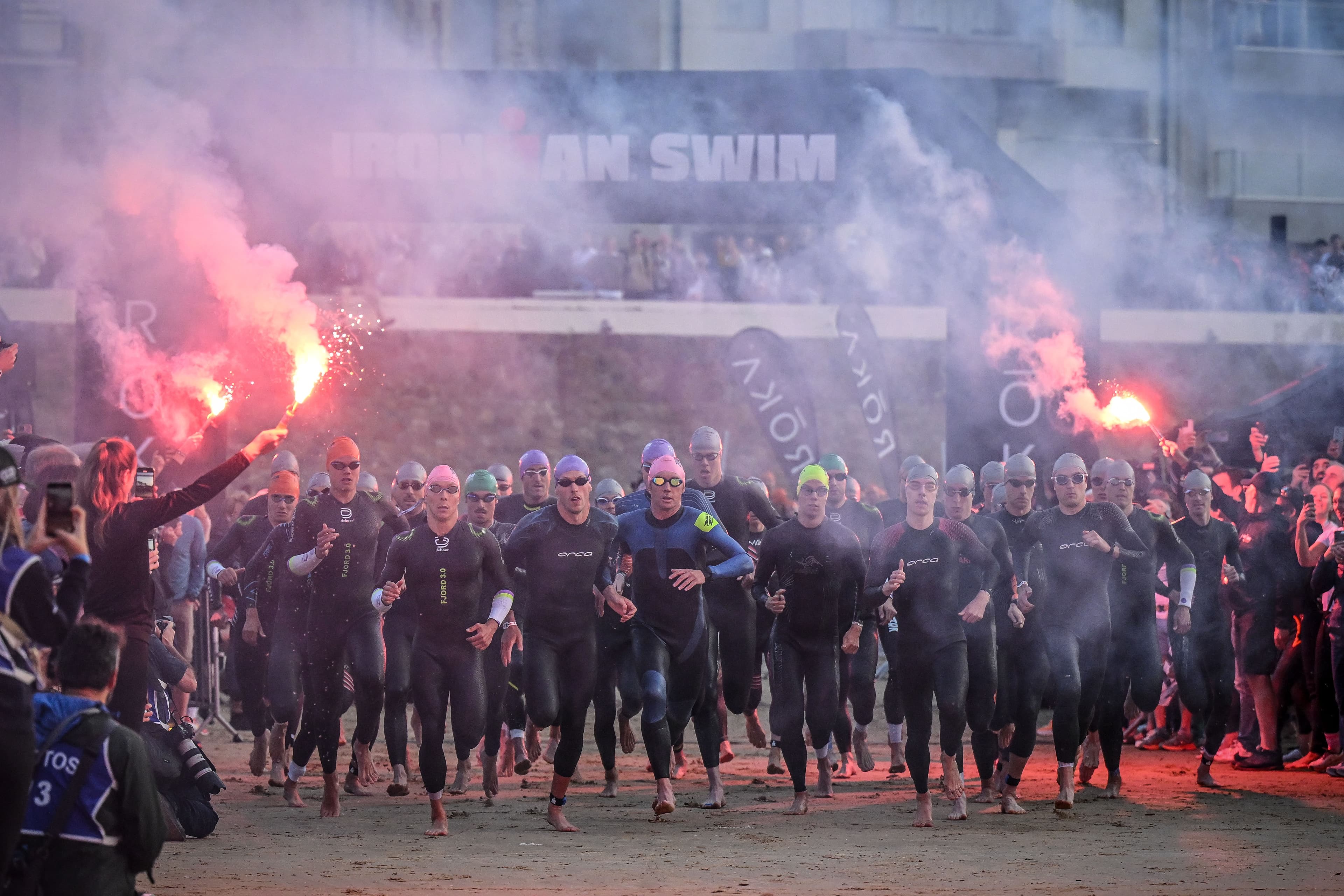
You start on the beach and swim straight into the legendary Vendée Globe canal. The canal protects you from ocean swells, but you will experience a unique point-to-point flow with high spectator lining along the docks.
02
Bike
The Rolling Vendée Loop
Olonna Forest & Countryside
DISTANCE
90 km
LOOPS
1
ELEVATION
600 m
TERRAIN
Rolling
WIND
Moderate to High
A single-loop course that winds through the Olonna forest and coastal countryside. While the total elevation is modest, rolling hills and persistent coastal headwinds can quietly drain your legs if over-biked.
03
Run
The Sun-Drenched Promenade
Le Remblai & Lac de Tanchet
DISTANCE
21.1 km
LOOPS
3
ELEVATION
Flat
SHADE
None
SURFACE
Pavement
A flat, multi-loop run along the Atlantic Ocean promenade and around Lake Tanchet. The atmosphere is electric with spectators, but there is zero shade, leaving you fully exposed to the midday sun and wind.
03·AVG beginners' Training Timeline
From zero to the finish line
16 weeks
This 16-week plan systematically builds your endurance from a modest base to meet the unique demands of Les Sables. By combining early aerobic volume with wind-resistance bike work and heat-adapted run prep, you will arrive at the start line ready to tackle the canal and conquer the windy coast.
Today · WK 0Race Day
WK 1–4
Aerobic Base
Establish aerobic capacity and comfortable swim endurance.
WK 5–8
Strength & Rolling Power
Develop bike power for rolling hills and resistance against coastal winds.
WK 9–12
Race-Specific Build
Build run durability and practice race-pace bricks in exposed conditions.
WK 13–16
Peak & Taper
Fine-tune pacing, taper volume, and lock in your nutrition strategy.
Adapts to your fitness, schedule & recovery every week.
With temperatures reaching 24°C and zero shade on the run, heat management is vital. Grab ice and water at every aid station to douse your head and keep your core temperature down.
Fuel & hydration
Aim for 80-90g of carbohydrates and 750-1000ml of fluids per hour on the bike to offset the drying coastal wind. Carry extra salt tablets to counter heavy sweating under the high UV sun.
Pacing
Do not burn your matches fighting the coastal headwinds during the first half of the bike. Keep your power capped at 75-80% FTP on the rolling sections to preserve your legs for the fast, flat half marathon.
Gear & logistics
Choose a medium-depth front wheel to handle gusty crosswinds along the coastline. Arrive at least two days early to practice the unique canal entry and exit logistics in transition.
Frequently Asked Questions
What is the swim course like at IRONMAN 70.3 Les Sables d'Olonne?
The swim starts with a unique departure from the Grande Plage beach, taking you directly into the Atlantic Ocean before entering the town's historic harbor channel. You will swim down the famous Chenal des Sables d'Olonne, the same channel used by the Vendée Globe yacht racers, which offers a highly spectator-friendly run-up to the first transition.
How hilly is the IRONMAN 70.3 Les Sables d'Olonne bike course?
The single-loop 90 km bike course is relatively fast but features rolling terrain through the Vendée countryside, accumulating roughly 600 meters of total elevation gain. You will navigate a mix of coastal flats and short, punchy climbs, meaning a well-paced effort and staying aerodynamic on the flatter sections are key to saving your legs.
What should I expect on the IRONMAN 70.3 Les Sables d'Olonne run course?
The run is a flat, three-loop course that takes you along the scenic Remblai promenade, offering massive crowd support and beautiful ocean views. Because the course is entirely paved and lacks significant elevation changes, it is highly conducive to a fast half-marathon split if you manage your pacing early on.
Is the swim at IRONMAN 70.3 Les Sables d'Olonne wetsuit legal?
Yes, water temperatures in the Atlantic Ocean during early July typically hover between 16°C and 19°C (61°F to 66°F), making wetsuits highly likely to be mandatory or optional for age-group athletes. It is highly recommended to practice open-water swimming in your wetsuit beforehand to adapt to the ocean swells and potential tidal currents in the channel.
Where are the transition areas located for this race?
This race utilizes a single transition area located conveniently near the beach promenade in Les Sables d'Olonne. After exiting the swim channel, you will have a short run to your gear in Transition 1, and you will return to this same central hub to transition from the bike to the run.
Your Personalized Plan
Stop guessing your intervals. Train for this course.
FE26 builds your plan around your Strava data, your real schedule, and the exact demands of IRONMAN 70.3 Les Sables d'Olonne— then adapts every week to how you actually perform.