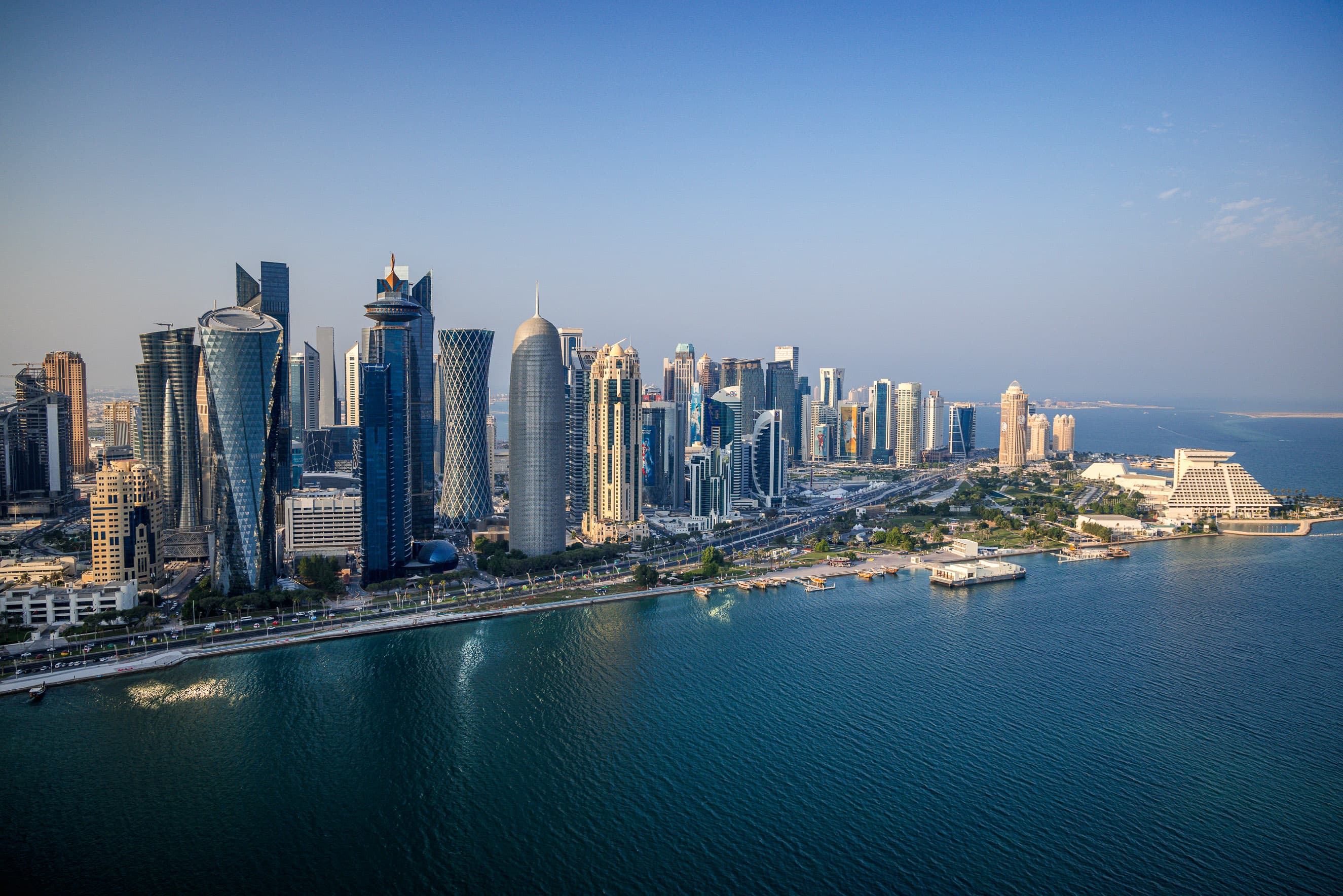
Doha, QatarJanuary 16, 202770.3 mi — Half Distance2 min readPublished May 19, 2026Updated July 4, 2026
Share
01·Course Characteristics
The Speed and Wind of Doha
Prepare for an ultra-flat, high-speed course where the real challenge is environmental. You must battle strong coastal Shamal winds on the bike and intense, unshaded solar heat on the run.
Climate
22-24°C
Peak air · water 19-21°C · dry desert climate
Conditions
Exposed
Strong Shamal winds · intense direct sun · no shade
Elevation
180-230 m
Bike gain · exceptionally flat · sustained aero position
Difficulty
6 / 10
Flat terrain is physically fast, but powerful coastal winds and unshaded desert heat present a demanding environmental challenge.
You're on track
You have 16 weeks until race day.
Build your 16-week plan for IRONMAN 70.3 Doha — we'll start it on Sep 26, 2026, free to preview.
Swim a single loop in the calm, sheltered harbor waters of the Old Doha Port. You will enjoy excellent natural buoyancy due to the high salinity of the Arabian Gulf. Sighting can be tricky early on as the rising sun creates significant glare over the horizon.
02
Bike
Exposed Coastal Highway
Old Doha Port to Simaisma
DISTANCE
90 km
ELEVATION
180-230 m
TERRAIN
Ultra-flat
SURFACE
Smooth asphalt
WIND
Shamal headwinds
An ultra-flat, high-speed out-and-back coastal route on exceptionally smooth, non-technical highway asphalt. Because there are almost no climbs or technical turns, you must remain in a static aerodynamic position. The primary obstacle is the powerful Shamal wind, which can deliver brutal headwinds and tricky crosswinds.
03
Run
Sun-Baked Promenade
Mina District and Waterfront
DISTANCE
21.1 km
LOOPS
Multi-lap
ELEVATION
30-50 m
SHADE
Virtually none
PEAK TEMP
22-24°C
A completely flat, paved multi-lap course along the scenic waterfront promenade. With virtually zero natural shade and high solar heat reflecting off the pavement, core temperatures can rise rapidly under the midday sun. The consistent surface allows for a steady gait if you manage the heat.
03·AVG beginners' Training Timeline
From zero to the finish line
16 weeks
This 16-week plan is specifically structured around Doha's ultra-flat but windy and hot environment. By progressively building your core endurance for the aero bars and simulating wind and heat, you will arrive at the start line ready to handle the elements.
Today · WK 0Race Day
WK 1–4
Aerobic Base & Core Strength
Build initial aerobic endurance and target core stability for prolonged aero riding.
WK 5–8
Aero & Resistance Build
Improve your capacity to hold a sustained aerodynamic position and handle simulated headwinds.
WK 9–13
Specific Heat & Speed
Develop race-pace efficiency and introduce heat acclimation training under simulated race conditions.
WK 14–16
Taper & Strategy Mastery
Reduce training volume while keeping intensity high and fine-tuning your hydration and pacing plans.
Adapts to your fitness, schedule & recovery every week.
Direct desert sun and high UV will elevate your core temperature rapidly. Utilize every run aid station to pour cold water and ice over your head to promote active cooling, as dry air evaporates sweat instantly.
Fuel & hydration
With dry air, your sweat will evaporate almost immediately, masking high fluid loss. Maintain an aggressive hydration strategy, targeting high-sodium electrolytes to prevent cramping and dehydration.
Pacing
Do not over-cook the flat bike leg; the constant pedaling in a static aero position without coasting is highly fatiguing. Save matches for the return bike leg into the Shamal wind, and start the unshaded run conservatively.
Gear & logistics
Equip your bike with deep-section wheels and a full aero setup to maximize speed on the flat highway. Apply water-resistant SPF 50+ sunscreen at both transitions, and arrive 4 to 5 days early to acclimate to the wind and dry heat.
Frequently Asked Questions
What is the water temperature and swim course like for IRONMAN 70.3 Doha?
The 1.9 km swim takes place in the sheltered, calm waters of the Old Doha Port, where water temperatures typically range from 19°C to 21°C (66°F to 70°F). This range means the swim is highly likely to be wetsuit-legal for age-group athletes. You will benefit from the high salinity of the Arabian Gulf, which provides excellent natural buoyancy, though you should prepare for potential sun glare while sighting as the sun rises.
How hard is the IRONMAN 70.3 Doha bike course?
The 90 km bike course is exceptionally flat with only 180m to 230m of total vertical gain, making it incredibly fast but deceptively fatiguing since you must maintain a static aerodynamic position without coasting. The main challenge comes from the environment, as the highly exposed coastal highway is subject to powerful northern 'Shamal' winds. These winds can create grueling headwinds on the return leg and tricky crosswinds, so deep-section wheels and a robust aero setup are highly recommended.
What should I expect on the IRONMAN 70.3 Doha run course?
The 21.1 km run is a flat, multi-lap route along the scenic waterfront of the Old Doha Port, featuring a consistent paved surface and a minimal elevation gain of 30m to 50m. However, there is virtually no natural shade along the promenade, exposing you directly to the intense midday sun and high UV radiation. You will need to manage your core temperature carefully by utilizing the on-course aid stations for hydration, ice, and water.
What is the best nutrition and hydration strategy for the dry Doha climate?
Because of Doha's dry desert air, your sweat will evaporate almost instantly, which can easily trick you into underestimating your fluid loss. To prevent dehydration and cramping, you must execute an aggressive hydration strategy using high-sodium electrolytes. Additionally, make sure to apply water-resistant, high-SPF (50+) sunscreen during transitions to protect yourself from the intense, unshaded solar radiation.
When should I arrive in Doha to acclimate for the race?
It is highly recommended that you arrive in Doha 4 to 5 days before the event on March 20, 2027. This window gives your body adequate time to acclimate to the dry desert heat, intense solar radiation, and strong coastal winds. Flying into Hamad International Airport is incredibly convenient, and staying near the Old Doha Port or West Bay will keep you close to the action.
Your Personalized Plan
Stop guessing your intervals. Train for this course.
FE26 builds your plan around your Strava data, your real schedule, and the exact demands of IRONMAN 70.3 Doha— then adapts every week to how you actually perform.