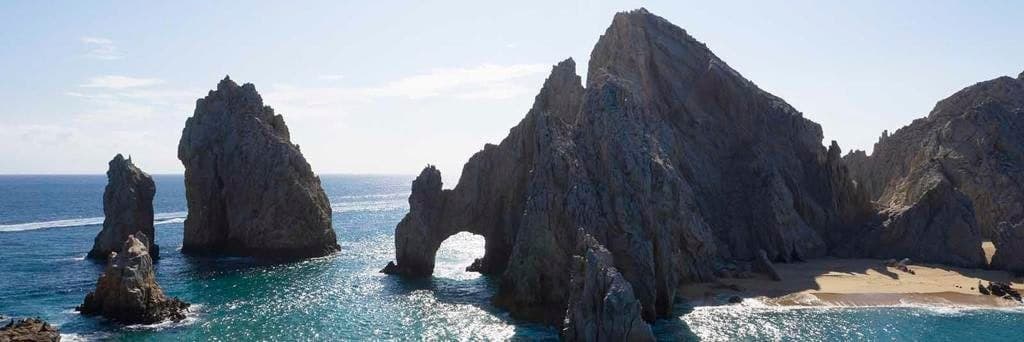
Starting from Palmilla Beach, you will swim a single out-and-back loop in the clear, buoyant waters of the Sea of Cortez. The enclosed cove provides natural protection from major Pacific swells, making it beginner-friendly and relatively calm.
02
Bike
The Transpeninsular Highway
San José del Cabo to Cabo San Lucas
DISTANCE
90 km
LOOPS
1
ELEVATION
1013 m
TERRAIN
Rolling hills
SURFACE
Smooth asphalt
WIND
12-20 km/h
This single-loop highway course is a roller coaster of long, steady, low-grade climbs and fast descents, notably around Cerro Colorado. While the asphalt is exceptionally smooth, the entirely exposed route is highly vulnerable to the strong El Coruel afternoon headwinds and crosswinds.
03
Run
The Desert Gauntlet
Downtown San José del Cabo
DISTANCE
21.1 km
LOOPS
2-3
ELEVATION
90 m
SURFACE
Paved streets
SHADE
None
PEAK TEMP
29°C
A multi-loop paved run through the historic streets and hotel zone. While the course is flat to gently rolling, you will face relentless midday temperatures up to 29°C, an intense UV index of 12, and heat radiating directly off the asphalt with zero shade.
03·AVG beginners' Training Timeline
From zero to the finish line
16 weeks
This 16-week progression is custom-built for the unique demands of Los Cabos. It prioritizes building early aerobic resilience before layering on specific highway climbing strength, culminating in high-heat training blocks to prepare your body for the unforgiving desert run.
Today · WK 0Race Day
WK 1–5
Aerobic Foundation
Establish consistent weekly volume and build swim buoyancy and basic aerobic running capacity.
WK 6–10
Strength & Rolling Power
Develop climbing strength for the 1013 m highway climbs and resistance to heavy headwind riding.
WK 11–14
Race-Specific Build
Execute long simulation bricks to adapt to the dry desert heat and refine high-sodium hydration schedules.
WK 15–16
Taper & Sharpen
Reduce training volume to shed fatigue while executing short, high-intensity efforts to stay sharp.
Adapts to your fitness, schedule & recovery every week.
Expect desert temperatures to surge from 15°C at dawn to 29°C by midday under an intense UV index of 12. At every run aid station, stuff ice into your tri-suit and cap, and hold it in your hands to actively lower your core temperature.
Fuel & hydration
Low desert humidity of 60% will mask your sweat rate. Follow a strict, time-based hydration schedule on the bike and consume sodium or salt tablets systematically to prevent severe dehydration and muscle cramping.
Pacing
Do not over-torque on the rolling highway climbs of the bike leg, as the afternoon headwind on the return will extract a high toll. Save your energy for the unshaded run, where disciplined early pacing is vital to surviving the heat.
Gear & logistics
This is a split-transition race, so rent a car to navigate between T1 at Palmilla Beach and T2 in town. Pack both a wetsuit and swimskin, and allocate over an hour for Saturday's bike check-in due to steep T1 hill restrictions.
Frequently Asked Questions
What is the water temperature and wetsuit rules for the IRONMAN 70.3 Los Cabos swim?
The water temperature in Palmilla Bay during late April typically hovers around 71°F to 73°F (21°C to 23°C), which makes the swim wetsuit-legal under IRONMAN rules. However, because the Sea of Cortez waters can warm up quickly, you should pack both a wetsuit and a swimskin in case water temperatures rise close to the 76.1°F (24.5°C) cutoff on race day.
How hard is the IRONMAN 70.3 Los Cabos bike course?
The 56-mile bike course is rated as medium-to-hard, featuring a roller-coaster profile with a significant 3,326 feet (1,013 meters) of elevation gain. While the smooth highway asphalt of the Transpeninsular Highway makes for fast rolling, you must pace yourself against steady climbs and prepare for strong afternoon 'El Coruel' headwind and crosswind resistance.
What is the run course like for IRONMAN 70.3 Los Cabos?
The 13.1-mile run is a flat to gently rolling multi-loop course paved with town streets through downtown San José del Cabo, featuring a modest elevation gain of 295 feet (90 meters). The primary challenge is the brutal desert heat, which reaches 82°F to 85°F (28°C to 29°C) by the afternoon with an intense UV index of 12 and virtually zero shade.
How should I manage my nutrition and hydration for the Los Cabos 70.3?
Because the dry desert heat and low humidity will mask how much you are sweating, you must stick to a strict, time-based hydration and sodium strategy on the bike to prevent severe cramping. Once on the run, make sure to utilize ice at the aid stations by stuffing it into your kit and cap to actively lower your core body temperature.
How do logistics work with the split transition at IRONMAN 70.3 Los Cabos?
The race utilizes a split-transition format, with T1 at Palmilla Beach and T2 located several miles away in downtown San José del Cabo, making a rental car or private car service highly recommended. For Saturday's bike check-in at T1, you should budget at least an hour of extra time because the transition zone is located at the bottom of a steep hill with highly restricted vehicle access.
Your Personalized Plan
Stop guessing your intervals. Train for this course.
FE26 builds your plan around your Strava data, your real schedule, and the exact demands of IRONMAN 70.3 Los Cabos— then adapts every week to how you actually perform.