IRONMAN 70.3 New ZealandTraining Plan & Race Guide 2027
Taupo, New ZealandMarch 6, 202770.3 mi — Half Distance2 min readPublished May 19, 2026Updated July 23, 2026
Share
01·Course Characteristics
The measure of Lake Taupo
Conquer a crystal-clear freshwater swim, a heavy rolling chip-seal bike leg, and an energy-sapping exposed lakefront run under a high-UV New Zealand sun.
Climate
22°C
Peak air · water 18-20°C · early March
Conditions
Exposed
Coarse chip-seal road · high UV · lake breezes
Elevation
650 m
Bike gain · rolling climbs · low-gradient rollers
Difficulty
5.5 / 10
An honest, dead-road bike course and high UV exposure on the run balance the benign, pristine freshwater swim.
You're on track
You have 22 weeks until race day.
Build your 16-week plan for IRONMAN 70.3 New Zealand — we'll start it on Nov 14, 2026, free to preview.
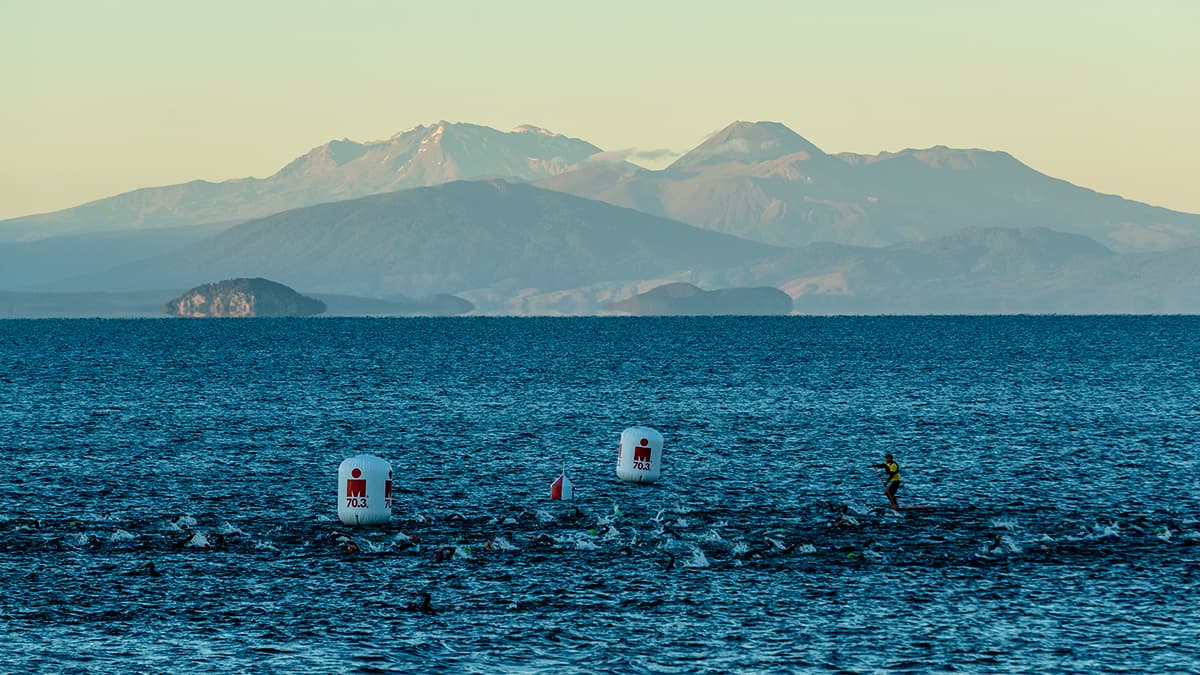
Swim in one of the most pristine lakes in the world, featuring exceptional water clarity and low salinity. The rolling start launches from the Yacht Club beach, heading out in a single clockwise loop.
02
Bike
The Broadlands Roll
Broadlands Road Out-and-Back
DISTANCE
90 km
LOOPS
1 loop
ELEVATION
650 m
SURFACE
Coarse chip-seal
WIND
Variable headwinds
An honest, rolling out-and-back course along Broadlands Road. The coarse New Zealand chip-seal road surface creates high rolling resistance, requiring constant pedaling and keeping you working even on the descents.
03
Run
The Lakefront Loop
Lake Terrace and Marine Parade
DISTANCE
21.1 km
LOOPS
2 loops
ELEVATION
110 m
SURFACE
Asphalt & concrete
SHADE
Very limited
A two-loop, spectator-friendly run course following the edge of Lake Taupo. While mostly flat with gentle rolling rises, the course is highly exposed to the afternoon sun and lake winds, offering little shade.
03·AVG beginners' Training Timeline
From zero to the finish line
16 weeks
This 16-week progression is specifically tailored to Taupo's unique physical demands. We begin by building a deep aerobic engine, transition into developing heavy rolling-power to combat the energy-sapping chip-seal bike course, and finish with race-pace transition runs designed to prepare you for the exposed, high-UV run.
Today · WK 0Race Day
WK 1–5
Base Aerobic & Strength
Establish a robust aerobic foundation and develop upper-body strength for the freshwater swim.
WK 6–10
Strength & Rolling Endurance
Build muscular endurance on rolling hills and adapt to low-cadence efforts simulating chip-seal roads.
WK 11–14
Race-Specific Build
Execute race-pace brick workouts and refine your high-UV heat management strategy.
WK 15–16
Taper & Specificity
Taper training volume while maintaining intensity to peak energy stores and sharpen pacing mechanics.
Adapts to your fitness, schedule & recovery every week.
The Southern Hemisphere sun has an exceptionally high UV index, making high-quality sunscreen application critical at T1 and T2. Keep cool by dumping water over your head at aid stations, and wear a white, highly breathable race kit with a cap.
Fuel & hydration
Aim for 60 to 90 grams of carbohydrates per hour on the bike, utilizing the coarse-road vibration periods to drink. With dry air and lake breezes, dehydration can sneak up; target 600 to 800 milliliters of fluid per hour containing sodium.
Pacing
Do not over-torque the rolling climbs on Broadlands Road; keep your power capped at 85% of FTP to save your legs. On the run, establish a conservative rhythm in the first 5 kilometers and prepare to push through the headwind sections along the lakefront.
Gear & logistics
Choose tires with excellent rolling resistance and run them at 5 to 10 psi lower than usual to absorb the harsh chip-seal vibrations. Pack a tinted goggle lens for the bright, low-angle morning sun on Lake Taupo.
Frequently Asked Questions
What is the water temperature for the IRONMAN 70.3 New Zealand swim?
The swim takes place in the pristine waters of Lake Taupo, where water temperatures typically range between 18°C and 20°C (64°F to 68°F) in early March. Under World Triathlon rules, a wetsuit is highly recommended and almost always legal for all athletes at this temperature. You will enjoy excellent clarity and a deep-water start, but practicing in open freshwater beforehand will help you adjust to the buoyant feel of your wetsuit.
How hard is the IRONMAN 70.3 New Zealand bike course?
The single-loop 90km bike course is rolling and honest, featuring a total elevation gain of approximately 750 meters. It takes you out along the Broadlands Road through scenic forestry, presenting a mix of steady climbs, smooth flats, and some chip-seal road surfaces that can increase rolling resistance. Proper pacing and maintaining an aerodynamic position on the chip-seal sections are key to saving your legs for the run.
What is the run course like for IRONMAN 70.3 New Zealand?
The run is a highly scenic, flat-to-rolling two-loop course that traces the lakefront of Lake Taupo, offering incredible spectator support. You will face a few gentle undulations, but the overall profile is very fast and entirely paved, making it ideal for finding a steady rhythm. The energetic crowd zones near the town centre will give you a major mental boost on each lap.
What weather should I expect for IRONMAN 70.3 New Zealand in March?
Taupo in early March offers ideal autumn racing conditions, with average high temperatures around 20°C (68°F) and morning lows near 10°C (50°F). While mornings can feel quite brisk at the transition area, the day typically warms up quickly under clear Kiwi skies. However, wind can pick up along the lakefront and on the exposed sections of the bike course, so you should prepare for potential headwinds.
When should I arrive in Taupo for the IRONMAN 70.3 New Zealand race?
We recommend arriving in Taupo at least three days before the race on Tuesday or Wednesday. This gives you ample time to check in at registration, complete a practice swim in Lake Taupo, test your bike on the local chip-seal roads, and adjust to the local timezone. Arriving early also helps you beat the peak athlete rush and keeps your pre-race logistics completely stress-free.
Your Personalized Plan
Stop guessing your intervals. Train for this course.
FE26 builds your plan around your Strava data, your real schedule, and the exact demands of IRONMAN 70.3 New Zealand— then adapts every week to how you actually perform.