IRONMAN 70.3 OceansideTraining Plan & Race Guide 2026
Oceanside, United StatesMarch 28, 202670.3 mi — Half Distance2 min readPublished April 1, 2026Updated July 4, 2026
Share
01·Course Characteristics
The Measure of Oceanside 70.3
A freezing harbor swim followed by steep military climbs inside Camp Pendleton and a punchy, fully exposed run make Oceanside an honest tactical test of early-season resilience.
Climate
21°C
Peak air · water 14-16°C · chilly morning lows 7-10°C
Conditions
Exposed
Marine layer fog · headwind on final bike stretch · zero run shade
Elevation
800 m
Bike gain · steep 10-12% military climbs · punchy run ramps
Difficulty
7.2 / 10
Very cold 14°C harbor water, steep 12% climbs on Camp Pendleton, rough road surfaces, and a punchy, fully exposed run warrant a demanding rating.
This edition has passed
Training for a future IRONMAN 70.3 Oceanside?
Registration for the next edition opens on a rolling basis. Start building your base now and we'll size a full plan the moment a new date is set.
A single-loop, clockwise swim starting from a boat ramp inside the protected waters of Oceanside Harbor. The water is exceptionally cold, ranging from 14°C to 16°C, which can cause instant breathing tightness. Expect dense traffic and sighting challenges as you make your way toward the harbor entrance.
02
Bike
Camp Pendleton Loop
Camp Pendleton & Coastal Route
DISTANCE
90 km
LOOPS
1
ELEVATION
800 m
TERRAIN
Rolling with steep climbs
SURFACE
Concrete seams & potholes
WIND
Coastal headwinds
A highly restricted single loop through the active US Marine Corps Base at Camp Pendleton, featuring three major climbs up to a 10-12% grade, including San Mateo Hill. You will encounter rough concrete seams, potholes, and a highly technical, mandatory no-passing descent down Basilone Road. Coastal headwinds typically build on the final stretch returning to the harbor.
03
Run
The Strand Two-Loop
Oceanside Pier & Coastal Streets
DISTANCE
21.1 km
LOOPS
2
ELEVATION
110 m
SHADE
None
PEAK TEMP
21°C
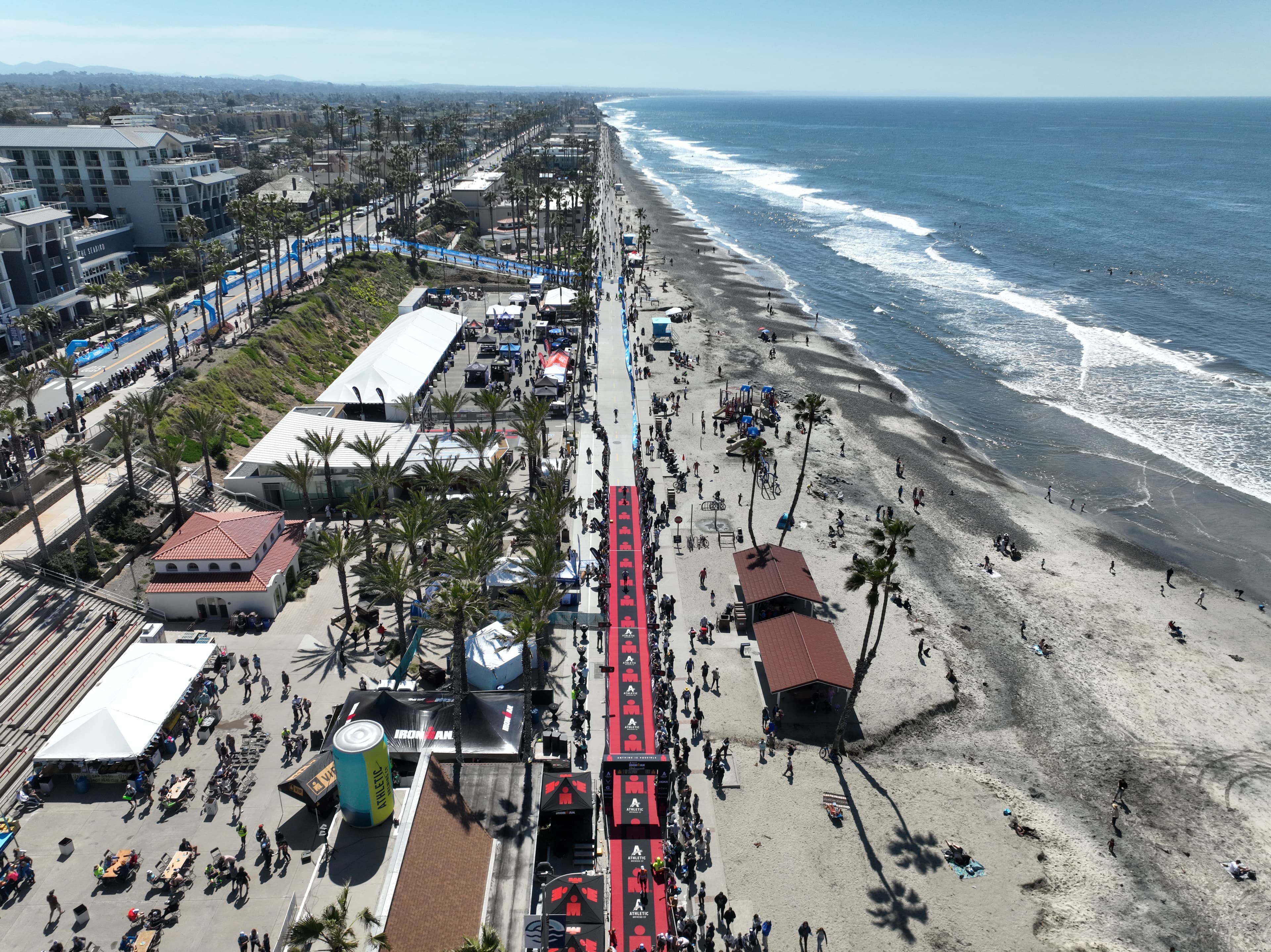
A scenic but mentally taxing two-loop out-and-back course along the beachfront Strand and surrounding coastal streets. Though mostly flat, it features sneaky, punchy ramps connecting the upper street level to the lower beach path. Expect total exposure to the Pacific sun and dense spectator crowds near the Oceanside Pier.
03·AVG beginners' Training Timeline
From zero to the finish line
16 weeks
This 16-week progression is specifically structured to prepare your body for Oceanside's unique challenges. We first build your aerobic engine, transition to high-torque climbing strength for Pendleton's 12% grades, and finish with specific heat and headwind simulations. This ensures you arrive at the harbor confident, durable, and ready to execute.
Today · WK 0Race Day
WK 1–5
Aerobic Base & Cold Adaptation
Build a strong aerobic engine and initiate cold-water acclimatization.
WK 6–10
Strength & Climbing Power
Develop high-torque climbing strength for the steep Camp Pendleton hills.
WK 11–14
Race-Specific Build
Simulate sustained flat power in headwinds and punchy run pacing.
WK 15–16
Taper & Sharpen
Reduce training volume to shed fatigue while maintaining intensity.
Adapts to your fitness, schedule & recovery every week.
Chilly mornings down to 7°C often feature heavy marine fog, transitioning rapidly to a sunny 21°C afternoon. Dress in removable layers for the early bike, and prepare for high UV on the run by using ice, cold water, and high-electrolyte fluids at aid stations to keep your core temperature down.
Fuel & hydration
Cold morning air and 14°C water will suppress your early thirst on the bike, making it critical to drink on a schedule. Aim for 60 to 90 grams of carbohydrates and 500-750 ml of fluid per hour, shifting to high-sodium electrolytes on the run to combat cramping.
Pacing
Control your effort on the steep 12% climbs of Camp Pendleton to save your legs for the technical Basilone Road descent and the final headwind section. On the run, pace yourself conservatively through the flat stretches and power steadily over the short, punchy ramps.
Gear & logistics
Pack a full wetsuit, neoprene cap, and booties for the freezing swim, and choose a versatile mid-depth wheelset to handle Pendleton's coastal winds. Complete your athlete check-in and mandatory bike drop-off before they close early on Friday afternoon.
Frequently Asked Questions
What is the water temperature and setup for the IRONMAN 70.3 Oceanside swim?
The swim takes place entirely within the protected waters of Oceanside Harbor, where water temperatures average a very cold 57°F to 60°F (14°C to 16°C). Because of these temperatures, wetsuits are highly recommended or mandatory, and many athletes choose to wear neoprene caps and booties. The course is a single-loop, clockwise, 1.2-mile swim starting from the beach or boat ramp in a self-seeded rolling format.
How hard is the IRONMAN 70.3 Oceanside bike course?
The single-loop, 56-mile bike course is moderately difficult, featuring approximately 2,400 to 2,720 feet of elevation gain on the active US Marine Corps Base at Camp Pendleton. You will face three major climbs, including the grueling San Mateo Hill with steep grades reaching up to 10-12%. Keep in mind that there is a strict 25 mph speed limit and a mandatory no-passing zone on the highly technical Basilone Road descent to prevent disqualification.
What is the run course profile like for IRONMAN 70.3 Oceanside?
The run is a highly scenic, two-loop, 13.1-mile flat-to-rolling course along the beachfront Strand and coastal neighborhood streets. While fast on paper, it features sneaky, punchy climbs and descents on the ramps connecting the upper street level to the lower beach path. You will also experience dense spectator support near the Oceanside Pier, but you must be prepared for direct, unshaded Pacific sun with temperatures reaching up to 70°F (21°C).
What nutrition strategy should I use for the cold morning weather at Oceanside?
With chilly morning air temperatures between 45°F and 50°F and very cold water, you will likely start the bike feeling cold, which can easily suppress your urge to drink. You must consciously start consuming fluids and carbohydrates early on the bike to meet your target of 60-90g of carbs per hour across the three aid stations. As you transition to the run under the warm, direct California sun, shift to high-electrolyte hydration at the aid stations to combat late-day dehydration and cramping.
When should I arrive in Oceanside for the race weekend logistics?
You should plan to arrive by Thursday to ensure a stress-free transition setup, as athlete check-in and mandatory bike drop-off close early on Friday at 5:00 PM and 5:30 PM respectively. Because the race weekend aligns with the busy spring break tourism season, you should book accommodations near the Oceanside Harbor or Pier many months in advance. Staying within walking distance allows you to easily navigate race-day road closures and parking restrictions.
Your Personalized Plan
Stop guessing your intervals. Train for this course.
FE26 builds your plan around your Strava data, your real schedule, and the exact demands of IRONMAN 70.3 Oceanside— then adapts every week to how you actually perform.